 Eden of the East
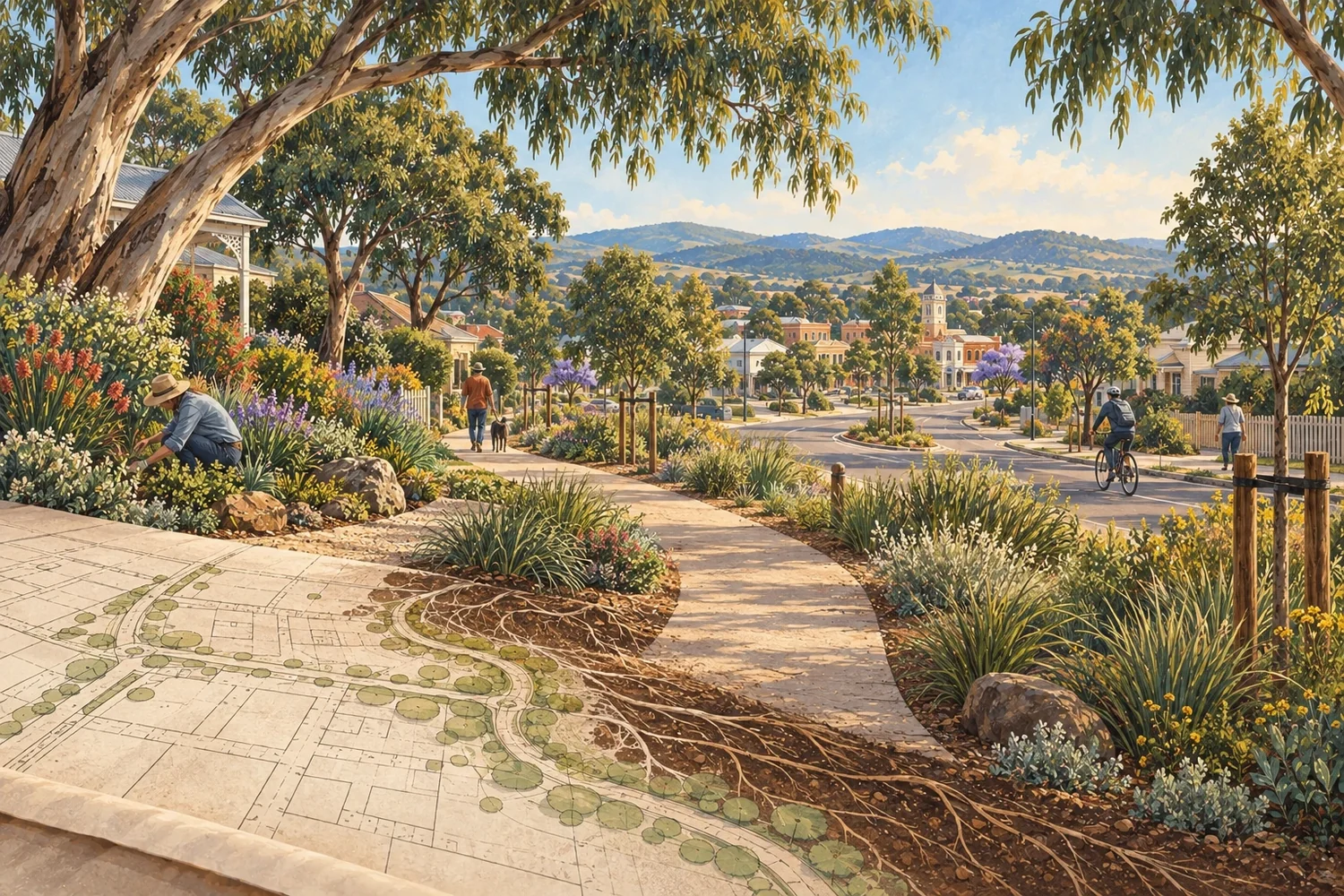
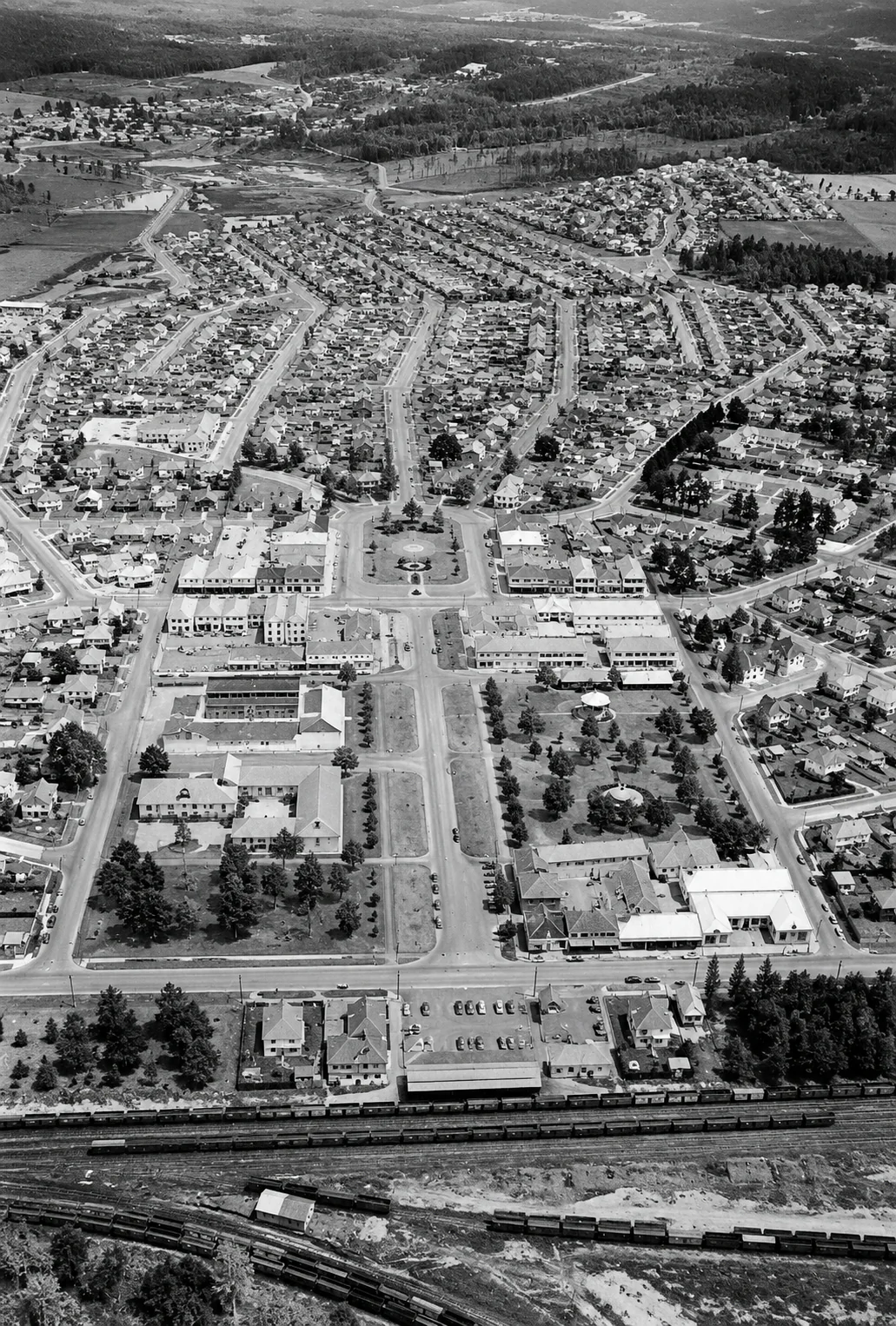
On Yallourn's 1921 plan, the town already has a shape. A civic square holds the centre. Streets radiate outwards with the land. Broadway connects the shopping centre and railway station. Homes, public buildings, parks and places for recreation sit within one organising form.
The plan assigns landscape a place. Time and care give the avenues their shade.
That distance between a line on paper and a living canopy matters. It shows how a region's character is made: through the relationship between design and daily life, then through the people who return to the work year after year.
The full source story, _The Plan Beneath the Trees_, follows the designers, builders, horticultural workers and residents who gave Yallourn's landscape its living form. Their work also gives Latrobe a way to recognise a quality that people often feel before they name it. Greenery has its greatest everyday value when it belongs to the journey between the places that make up a life.
State Electricity Commission architect A. R. La Gerche established Yallourn's organising plan. Landscape gardener Hugh Linaker designed its parks, gardens and extensive street planting. Together, their work placed landscape within the town's daily relationships.
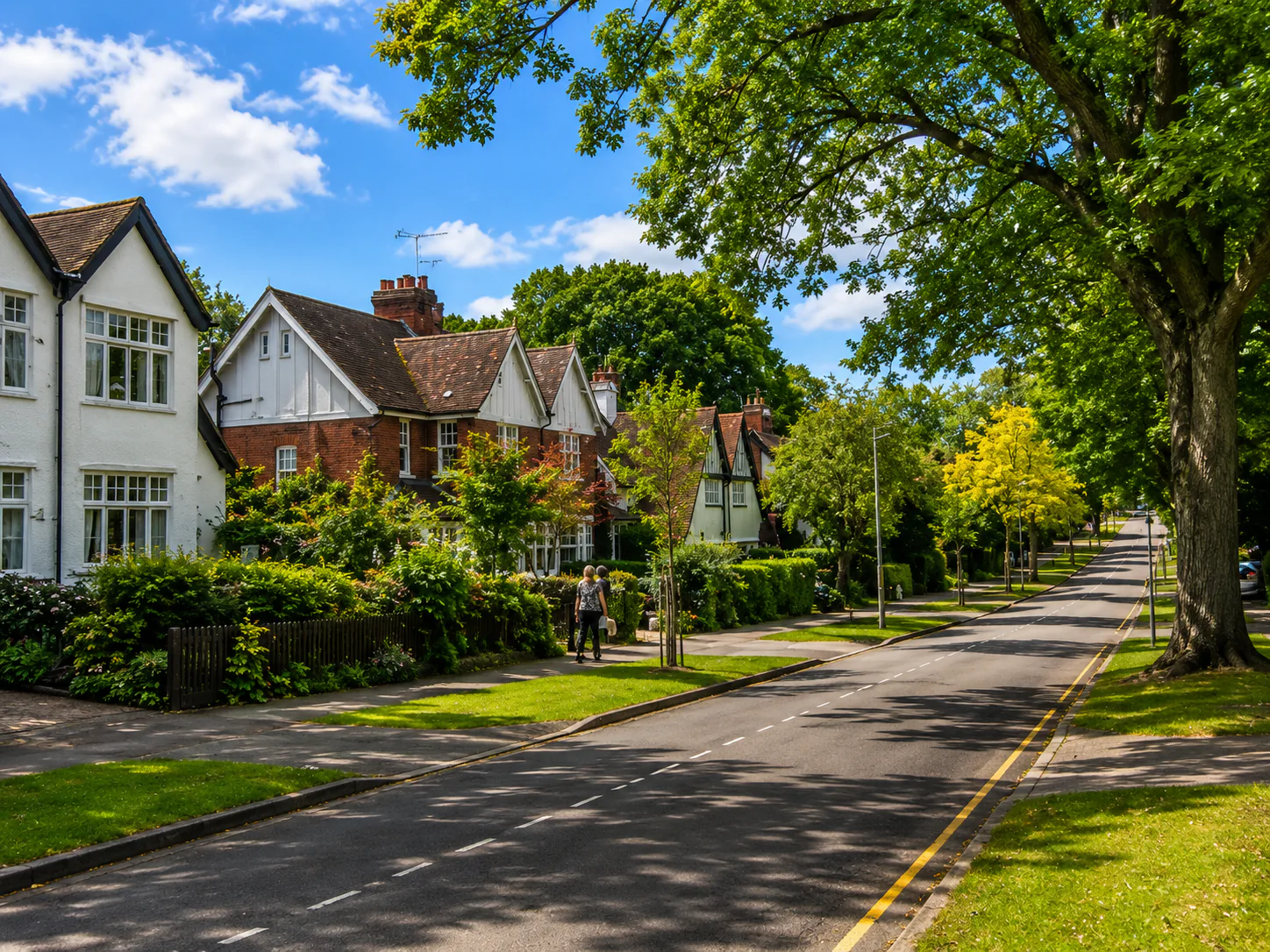
Broadway joined the shopping centre and railway station, with parks and formal planting forming part of the route. Homes, civic buildings, schools, recreation and green space were considered as parts of a whole. A trip with a practical purpose could also carry a person through the town's planted character.
People choosing where to visit, return or build a life need to picture the shape of an ordinary day. They need the café, the shop, the school, the oval, the meeting place and the route home. Trees, gardens and open spaces give those relationships identity. They help a series of destinations feel like one place.
For Latrobe, Yallourn offers one historical expression of an enduring regional promise: bring the useful parts of life into relationship, then let landscape accompany the movement between them.
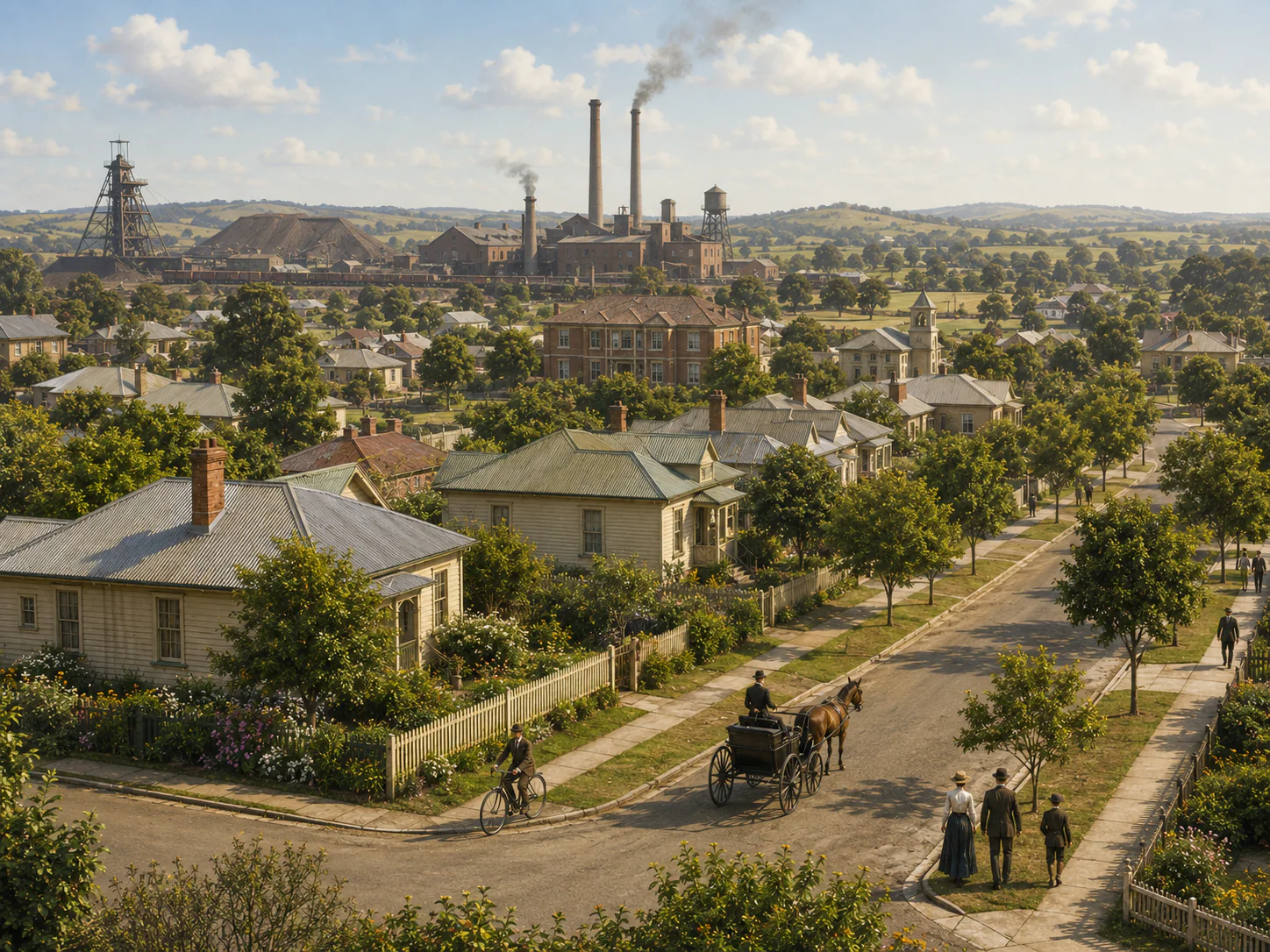
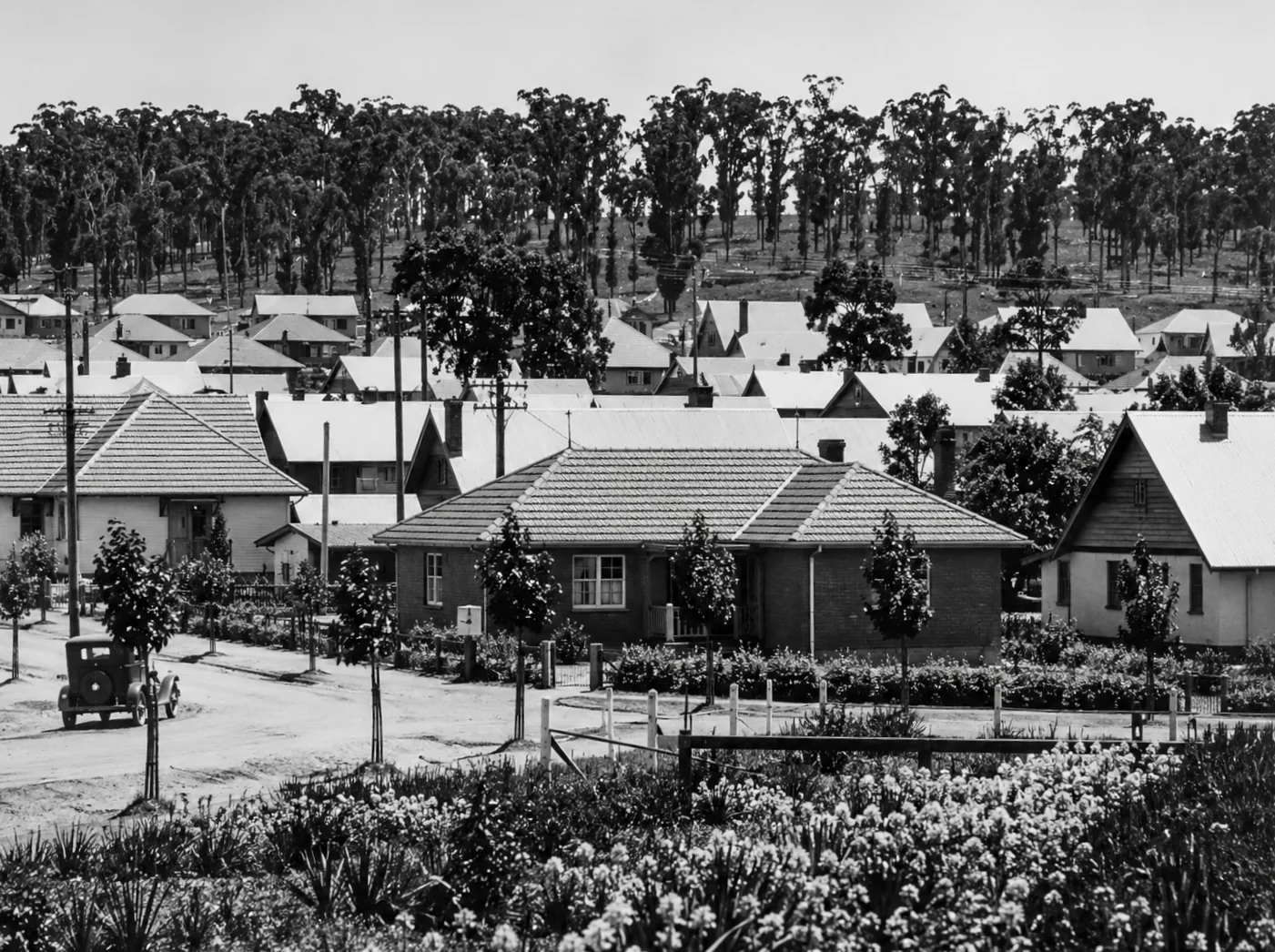
The plan created the starting conditions. Road crews formed streets. Builders raised houses and public buildings. Nursery workers propagated plants. Gardeners prepared ground, established trees, renewed beds, shaped hedges and maintained reserves.
Around the end of the 1920s, John “Jock” Lawson became part of that continuing work. His nursery and gardening teams supported streets, civic spaces, schools, reserves and sporting grounds. Their work joined propagation with planting, soil preparation, pruning and replacement. A planned landscape became a living system through repeated attention.
Residents added another kind of authorship. They grew vegetables and flowers, entered shows and shaped gardens around household needs and personal tastes. Public planting gave the town continuity. Private gardens brought variation. The larger plan left room for choices visible from one home to the next.
This is how green character becomes part of everyday life. Someone establishes the structure. Someone plants. Someone returns to prune, replace, divide, sow and begin again. The character people eventually experience is the accumulated result of those decisions.
The mature tree can make all of this effort look effortless. Its shade draws attention away from the years of establishment behind it. A clipped hedge conceals the hours that formed its line. A garden looks settled because people have kept responding to growth and change.
Yallourn's green relationships developed inside a town owned and administered by the State Electricity Commission. Employment, housing and civic authority were concentrated within the same institution. Coordinated planning enabled the town's organising form and extensive landscape work. The same arrangement limited how much control residents held over the place around them.
Both parts belong to the history. They make its present lesson more useful. Design can connect the parts of a town. Liveability also depends on agency, access, stewardship and room for people to shape the places they use.
Residents' gardens matter within that fuller account. Each one sat inside a larger planned landscape, yet carried decisions made at a household scale: what to grow, what to tend and what kind of character to show to the street. Those individual choices gave the town a texture no organising plan could specify in advance.
Latrobe can carry that principle forward in its own towns and landscapes. A regional identity becomes stronger when public planning, skilled horticultural work and personal care can all be seen within it. Greenery becomes part of the way a place understands itself—and part of what someone else can imagine joining.
Power of Colour gives current gardeners a public way to bring their own work into that regional story. Two of its Award pathways speak directly to the movement from shared structure to personal care.
The Garden with Character Award recognises a distinctive garden that expresses the gardener's personality and a strong sense of place. It makes room for the particular decisions that turn a garden into an expression of its setting and its maker.
The Biodiversity Garden Award recognises a garden that supports diverse planting, habitat and visible garden life. It directs attention to the living relationships a gardener can establish and continue tending on the ground available to them.
These are different expressions of the same regional possibility. One begins with personality and place. The other begins with planting, habitat and visible life. Each asks the gardener to work with a real piece of Latrobe and allow care to become visible.
That contribution may begin at the scale of one garden, yet it belongs to a wider picture. A visitor can notice the character of a street. A resident can see how private ground meets the public realm. Someone considering Latrobe can picture a region where the landscape carries both shared history and individual choice.
The Power of Colour Awards 2026 are scheduled for 14–15 November, with registration scheduled to open on 1 October. Current programme information and future participation details belong on the Power of Colour website.
A line on a plan can place a street beside a park. The life of the place grows through what follows: roots taking hold, gardeners returning and residents deciding what their own ground can become.
Latrobe carries that history beneath its green character. Power of Colour invites each of us to consider what we might add to the thread.

Power of Colour
Power of Colour Awards
Power of Colour celebrates Latrobe’s gardens, gardeners and shared creativity through garden visits, awards and community and industry showcases across 14–15 November 2026. This is Eden of the East Foundation’s editorial connection between the historical story and the current programme, not evidence that any historical subject participates in the 2026 Awards.
Explore the Power of Colour Awards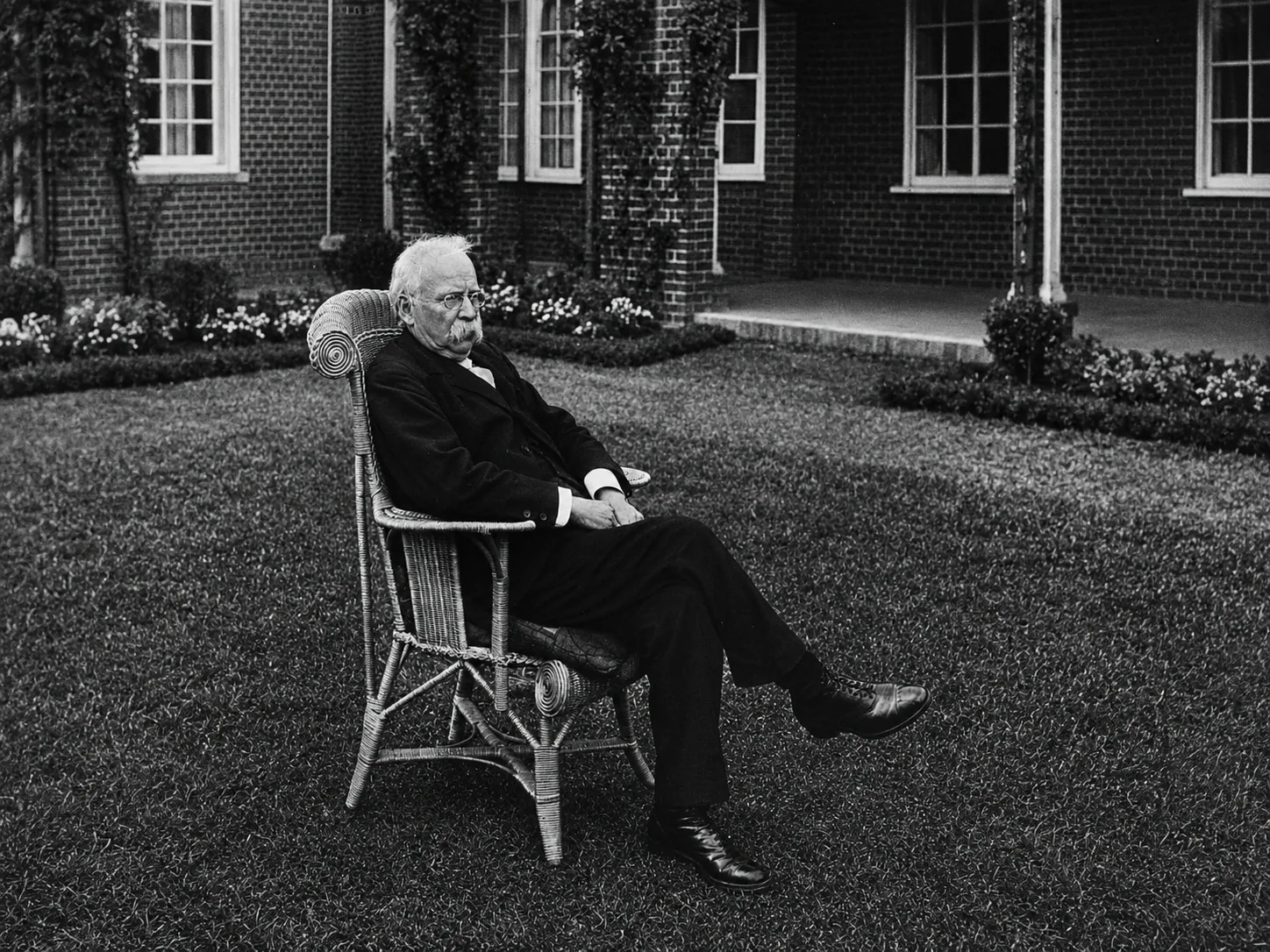

Sources
- Power of Colour — The Plan Beneath the Trees
- Latrobe City Council — Latrobe City Heritage Study (2010)
- Public Record Office Victoria — The town that was: Yallourn
- Virtual Yallourn — Yallourn: A Planned Town — The 1920s Part 1
- Kew Guild Journal — John Lawson obituary
- Sir John Monash Museum — Jock Lawson: Yallourn’s First Gardener
- Power of Colour Awards 2026
- Power of Colour Awards 2026 — main programme page