

Fae Lawson remembered seeing steam above Yallourn's power station before the whistle reached her family's home at the nursery. The sight arrived first. The sound followed.
Around the house lay five acres of nursery ground, with bush beyond it and stables for draught horses. Before utility vehicles took over, the horses pulled drays carrying plants towards Yallourn's streets, parks, schools and reserves. Fae's childhood memory places her family inside the working landscape that supplied the garden town.
Her father, John “Jock” Lawson, was born in South Queensferry, Scotland, in 1901. He worked at Glasgow Botanic Gardens while studying botany at night, then trained at the Royal Botanic Gardens, Kew. After coming to Australia and working at Ballarat Botanical Gardens, he joined the State Electricity Commission at Yallourn.
The surviving sources place his appointment in either 1928 or 1929. From then on, his responsibility extended across parks, gardens and reserves in a town whose landscape was still taking shape.
The nursery had to stay ahead of demand. Workers propagated plants for streets, schools, public gardens and seasonal beds. Garden teams established trees, clipped hedges, maintained reserves and prepared sporting surfaces. Failed plants needed replacements already growing. Brown-coal fire risk added fire-resistant planting and firebreak maintenance to the same horticultural brief.
Lawson's skill became unusually visible in 1955. He and his assistant Alf White prepared Yallourn Oval and its wicket for a match between an MCC touring side led by Sir Leonard Hutton and a Victorian Country XI. Local accounts record the praise that followed, including Hutton's comparison with the Adelaide Test pitch. The cricketers played on a living surface produced through soil, water, cutting, weather, timing and judgement.
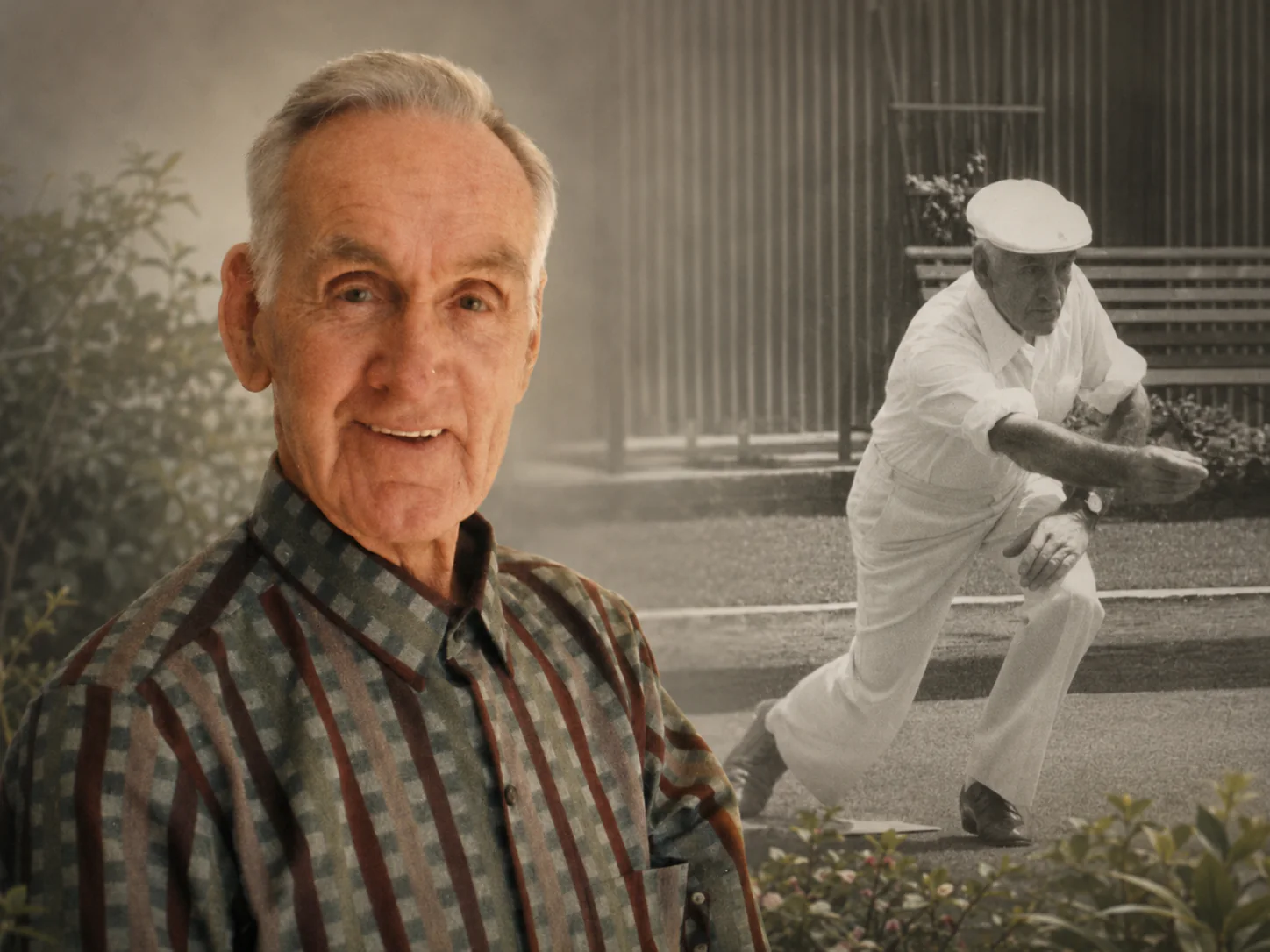
Lawson's responsibility continued beyond his employment. He served through the bowling club, horticultural society, recreation reserves and school council. The town became the place where his professional work and community life met. He retired in 1966 after nearly four decades with the Commission and received the British Empire Medal four years later for service to Yallourn.
He then lived through the removal of the landscapes he and his teams had maintained. As mining expanded, houses moved or were demolished and streets emptied. Fae described her father's response as philosophical. Her testimony records what she observed while leaving his full private experience his own.
The physical garden has gone, but photographs, plans, professional records and former residents' memories still reveal Lawson's standard of attention. His work held propagation, establishment, safety, recreation and seasonal change together over decades.
From the nursery, steam rose above the power station and the whistle travelled after it. Between sight and sound, workers tended the young plants that would leave through the gates and enter a town still growing towards shade.
The Evidence
- A07-S01Canonical SJMM story
- A07-S02Kew Guild Journal, John Lawson obituary
- A07-S03Virtual Yallourn, “Jock Lawson and the Yallourn Bowling Club”
- A07-S04Virtual Yallourn image record, “Jock Lawson — Head Gardener at Yallourn Nursery”
- A07-S05Latrobe City Heritage Study for Yallourn planning context