

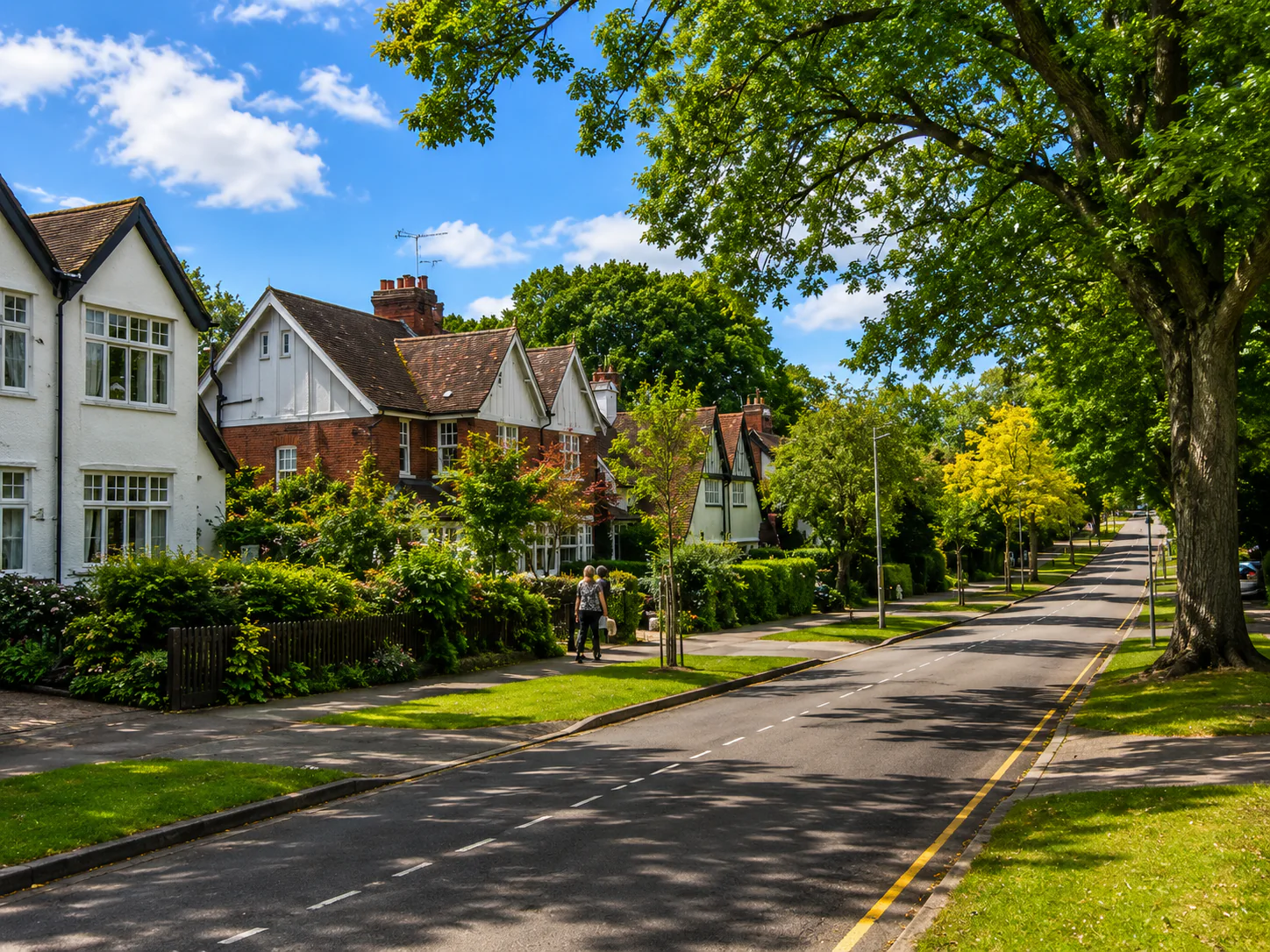
A mature street tree changes daily life in direct ways. It gives shade, marks the seasons and helps turn a road into a place people recognise. In Ebenezer Howard's garden city, that visible benefit belonged to a much larger arrangement.
Howard placed the settlement within an estate broad enough to hold town and country together. Homes, workplaces, shops, schools, libraries and recreation occupied the urban area. Protected agricultural land around it supported farms, orchards, market gardens, allotments and smallholdings. Rail connected the settlement with other garden cities and a wider network.
The physical plan answered only part of the problem. Howard also asked how the town would pay for what its residents shared.
The estate would be acquired for the settlement. As people arrived, buildings rose and the place became more useful, rental value would increase. That revenue would help repay development costs and support roads, schools, parks and other community purposes. The people who created value through living and working there would receive part of its benefit through the place around them.
This financial mechanism bound the garden to questions of ownership and stewardship. Homes depended on employment. Green space required continuing care. Walking and public transport depended on where shops, schools and recreation were placed. Food growing belonged within a wider natural and economic system.
Later developments often carried the parts that were easiest to see. Curving roads, grass verges, private gardens and ornamental trees created attractive surroundings. Howard's complete proposal also asked who controlled the land, where increasing value went and how the settlement would maintain its common life.
Yallourn reveals what happens when selected principles enter a different institution. The State Electricity Commission planned a civic centre, radiating streets, parks, sporting grounds, street planting and generous home blocks beside the brown-coal and power undertaking. Work, housing, recreation and landscape became parts of one designed town.
The Commission owned most land and buildings, administered Yallourn and employed much of its population. Residents lived within a green planned environment whose authority rested with the organisation responsible for electricity production. The result carried garden-city planning into the Latrobe Valley while leaving Howard's community land system behind.
Seen in that context, a tree-lined street is evidence of more than planting. It points towards the people who reserved the ground, financed the town, selected and established the trees, maintained them and lived beneath their growing canopy. The garden city becomes fully visible only when the system beneath the leaves comes into view.
The Evidence
- A03-S01Howard, Garden Cities of To-Morrow
- A03-S02TCPA, “The foundations of the Garden City Movement”
- A03-S03TCPA, “Garden City Principles”
- A03-S04TCPA, “Garden Cities: separating truth from myth”
- A03-S05Historic England, English Garden Cities
Sources reviewed 15 August 2026.