

Three circles organise Ebenezer Howard's best-known diagram. He labelled the first Town and surrounded it with employment, higher wages, libraries, theatres and social opportunity. Around the same circle he placed high rents, crowding and smoke. The city pulled people towards work and company while making healthy daily life harder to secure.
The second circle was Country. Howard gave it fresh air, beauty, open land and nearby food production. Lower wages, fewer opportunities and distance from society weakened its attraction.
The diagram turned an argument about planning into a pressure people could recognise. Town and country each offered something necessary, and each demanded a sacrifice. Howard's third circle changed the problem.
He called it Town-Country.
Homes and gardens would sit within reach of employment. Parks, schools, shops, public buildings and recreation would support daily life. Farms and open land would remain around the settlement, while rail connected one garden city with others. Howard described the relationship as a “joyous union”: a combination in which society, nature, work and food strengthened one another.
The simple image carried a demanding system. Howard proposed that land be held for the settlement and that rising rental value help repay development costs and support community purposes. The third magnet depended on finance, stewardship and transport as much as on trees and gardens.
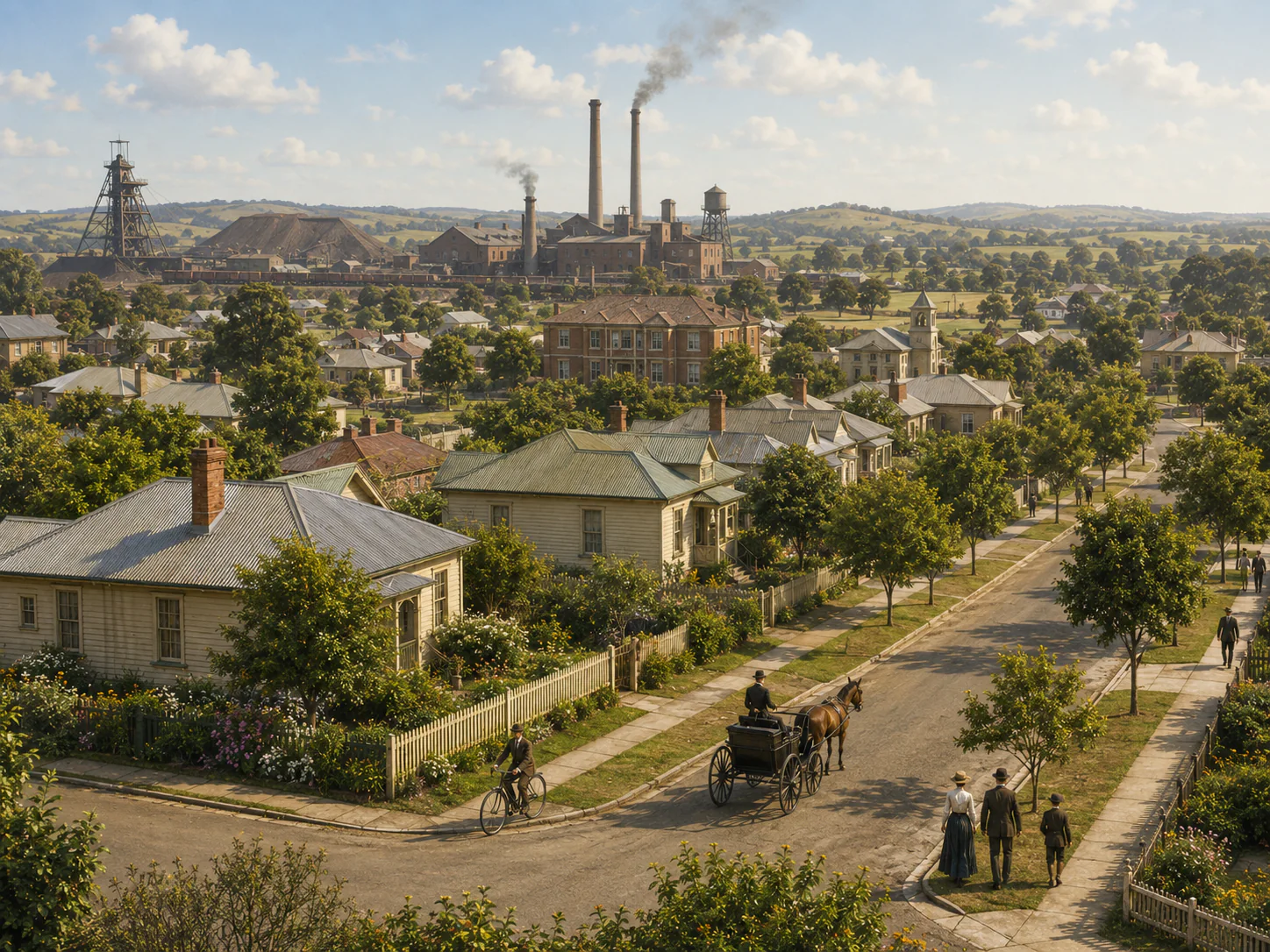
Its clarity helped the idea travel. It also allowed later planners to select some relationships and leave others behind. At Yallourn, State Electricity Commission planners brought a civic centre, radiating streets, parks, sporting grounds, public planting and domestic gardens into a town created beside a brown-coal mine and power station. Work, home and landscape met in a distinctive local form.
The Commission also owned and administered the town and employed much of its population. Yallourn therefore joined industry and green planning under concentrated institutional authority, while Howard's community land system remained outside the design.
That difference is part of the Three Magnets story. Howard did not draw a construction plan for every later garden city. He gave people a way to see relationships and to decide what kind of settlement they were prepared to build.
The forces on his page remain familiar. People still seek work, housing, nature, culture, health and belonging. The third magnet continues to ask whether communities will plan those needs as separate demands or as parts of one life.
The Evidence
- A02-S01Ebenezer Howard, Garden Cities of To-Morrow
- A02-S02Historic England, English Garden Cities: An Introduction
- A02-S03Town and Country Planning Association, “Garden City Principles”
- A02-S04UK Parliament, “The birth of town planning”
Sources reviewed 15 August 2026.