

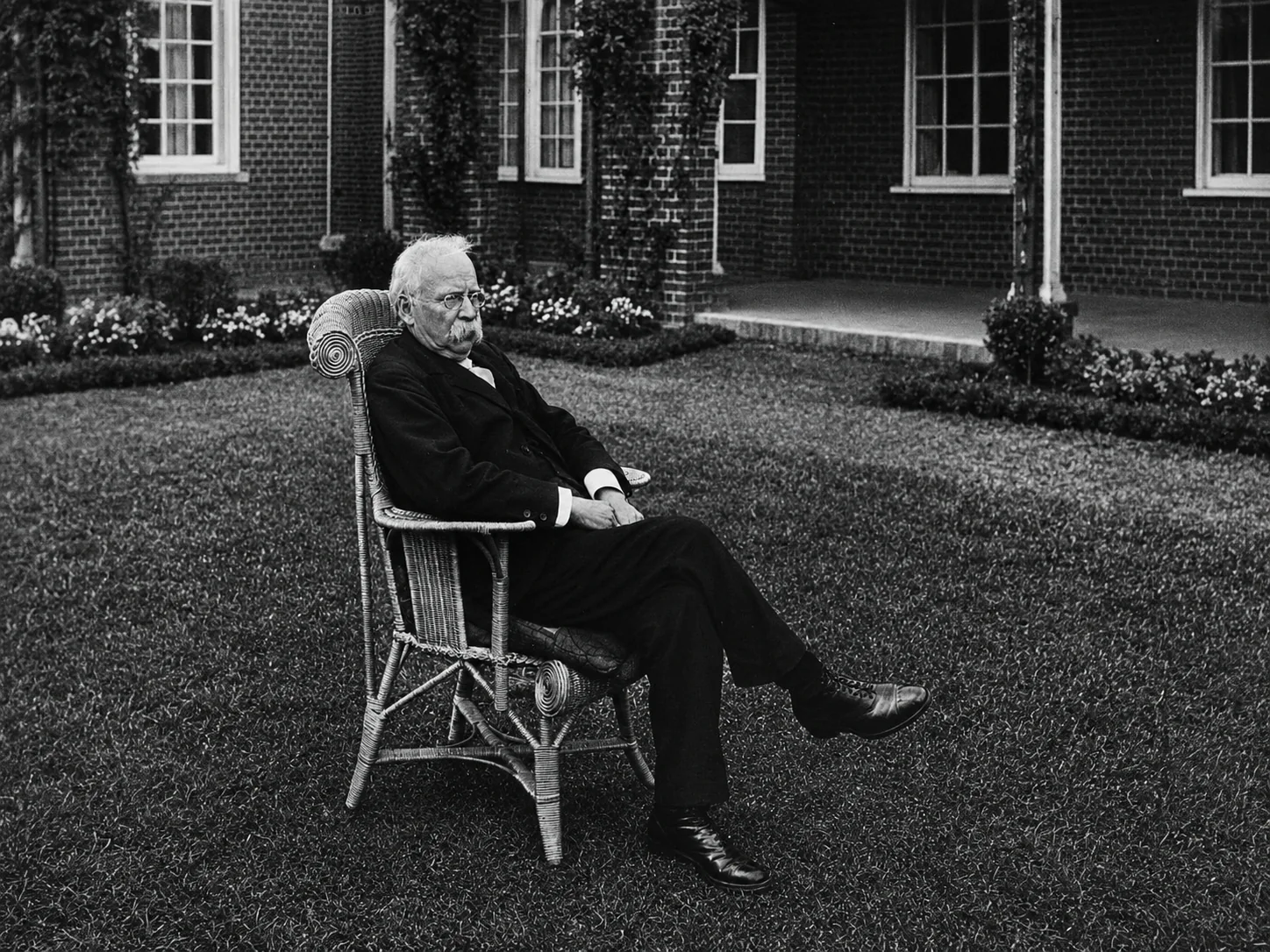
Ebenezer Howard worked with other people's words. As a shorthand writer preparing the official record of debates in the British Parliament, he listened, captured and transcribed while London grew around him. The city drew people towards employment, culture and company, then confronted many of them with smoke, overcrowding, high rents and little contact with nature.
Howard came to this problem from outside architecture and government. He had left school at fifteen, worked as a clerk and spent several years in the United States before returning to England. His parliamentary work demanded close listening and the ability to organise complicated arguments clearly. He brought those habits to a question with consequences far beyond the chamber: how could people gain the opportunities of the town and the beauty of the country within the same life?
In 1898, he published To-Morrow: A Peaceful Path to Real Reform. A revised edition appeared four years later as Garden Cities of To-Morrow. Howard's diagrams made the proposal easy to enter, but the idea reached well below the visible gardens. He connected homes and nearby work with parks, schools, culture, recreation, transport and food-producing land. As settlement increased the value of the estate, rents would help repay development costs and support community purposes.
Howard had assembled cooperation, healthy housing, land reform, beauty and practical finance into a proposition. Publication gave it language and form. Organisation gave it a chance to leave the page.
In 1899, he founded the Garden Cities Association, now the Town and Country Planning Association. Supporters gathered, finance was raised and work began at Letchworth in 1903. Welwyn Garden City followed in 1920. Surveyors, architects, investors, builders, gardeners and residents transformed the principles into places that people could inhabit.
Each translation changed the idea. Other countries adopted different parts of the model, and green planning often travelled further than Howard's arrangements for community stewardship and shared land value. In Victoria, State Electricity Commission planners drew selected garden-city principles into Yallourn, where housing, civic space, recreation and planting developed beside a major brown-coal and electricity undertaking. Howard never designed the town; his influence reached it through the planning movement his work had helped set in motion.
Howard spent much of his working life recording the words of powerful people. His own enduring contribution came from asking a question ordinary people could enter. Others supplied land, money, design, construction and care, and the answer began to take physical form.
The Evidence
- A01-S01Ebenezer Howard, Garden Cities of To-Morrow (1902), primary text
- A01-S02Town and Country Planning Association, “The foundations of the Garden City Movement”
- A01-S03Town and Country Planning Association, “Our history”
- A01-S04Historic England, English Garden Cities: An Introduction
- A01-S05European Route of Industrial Heritage, “Sir Ebenezer Howard (1850–1928)”
Sources reviewed 15 August 2026.