The old current from the municipal waterworks was switched off. A new supply was switched on. It had begun almost 300 miles away in the brown coal of the Latrobe Valley, passed through Yallourn Power Station and travelled north through a network of transmission lines and substations to the Murray.
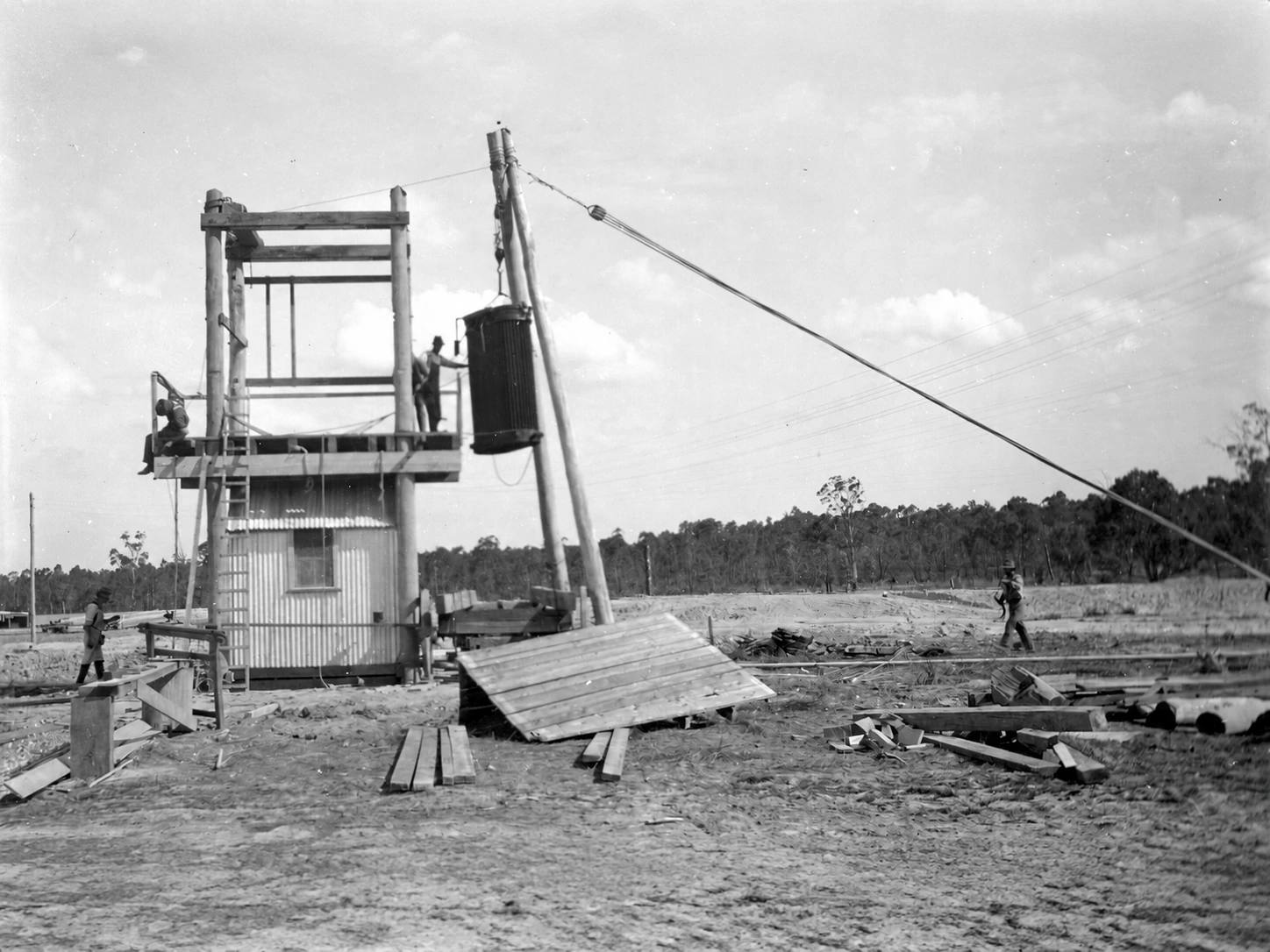
Outside Albury Town Hall, a civic gathering marked the occasion. A surviving photograph places Monash in the front row, fourth from the left, surrounded by the people who had received him. Other photographs show him with colleagues at the Wodonga substation construction site.
The pictures record a ceremony at the far end of an engineering system. They also capture the moment when Yallourn became part of daily life far beyond the Latrobe Valley.
The journey to that switch began in a Victoria served by a patchwork of local systems. Municipalities and private companies generated power for their own territories. Supplies differed from place to place, and much of the fuel came from black coal carried south from New South Wales.
The coal strike of 1916 exposed the weakness of that dependence. Fuel shortages restricted Victorian industry and public life. The experience strengthened the case for developing the immense brown-coal deposits of the Latrobe Valley as the basis of a state electricity system.
A government inquiry followed in 1917. The State Electricity Commission emerged from the legislation and planning that came after it, with responsibility for turning coal in the ground into an organised public supply.
Monash accepted the general managership of the electricity undertaking in 1920 and became chairman of the Commission early in 1921. The task drew on the people around him: fellow commissioners Robert Gibson, Thomas Lyle and George Swinburne, chief technical expert Hyman Herman, engineers, surveyors, administrators and a rapidly growing construction workforce.
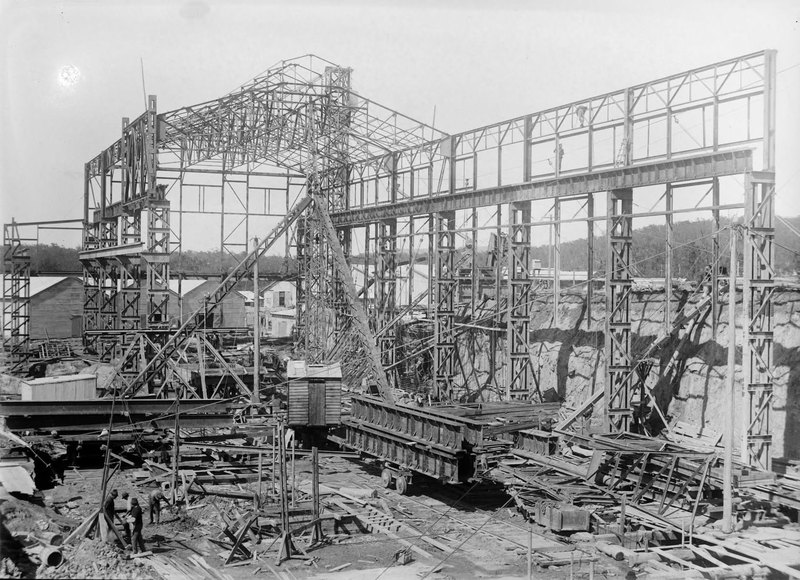
Their undertaking had to work as one system. Coal had to be uncovered and handled. Boilers and turbines had to be installed. A power station, open cut, briquette works, railway sidings, workshops and a town had to be built. Transmission towers had to carry high-voltage lines across country that had never before been joined electrically. The public result would eventually be as simple as pressing a switch; the system behind that switch had to be assembled.
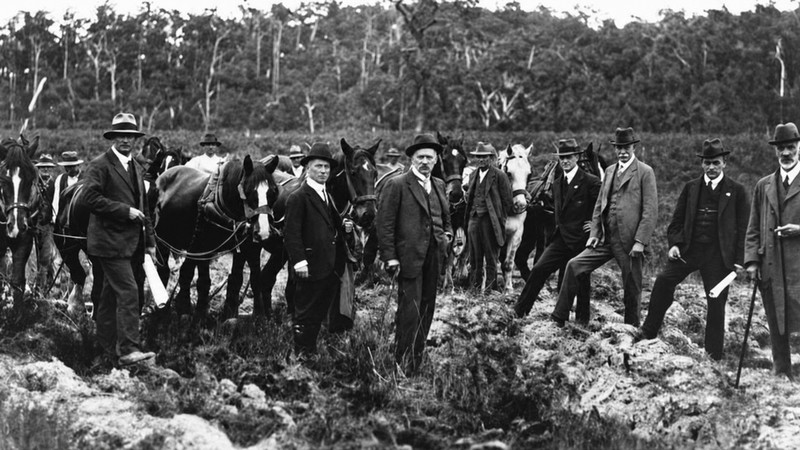
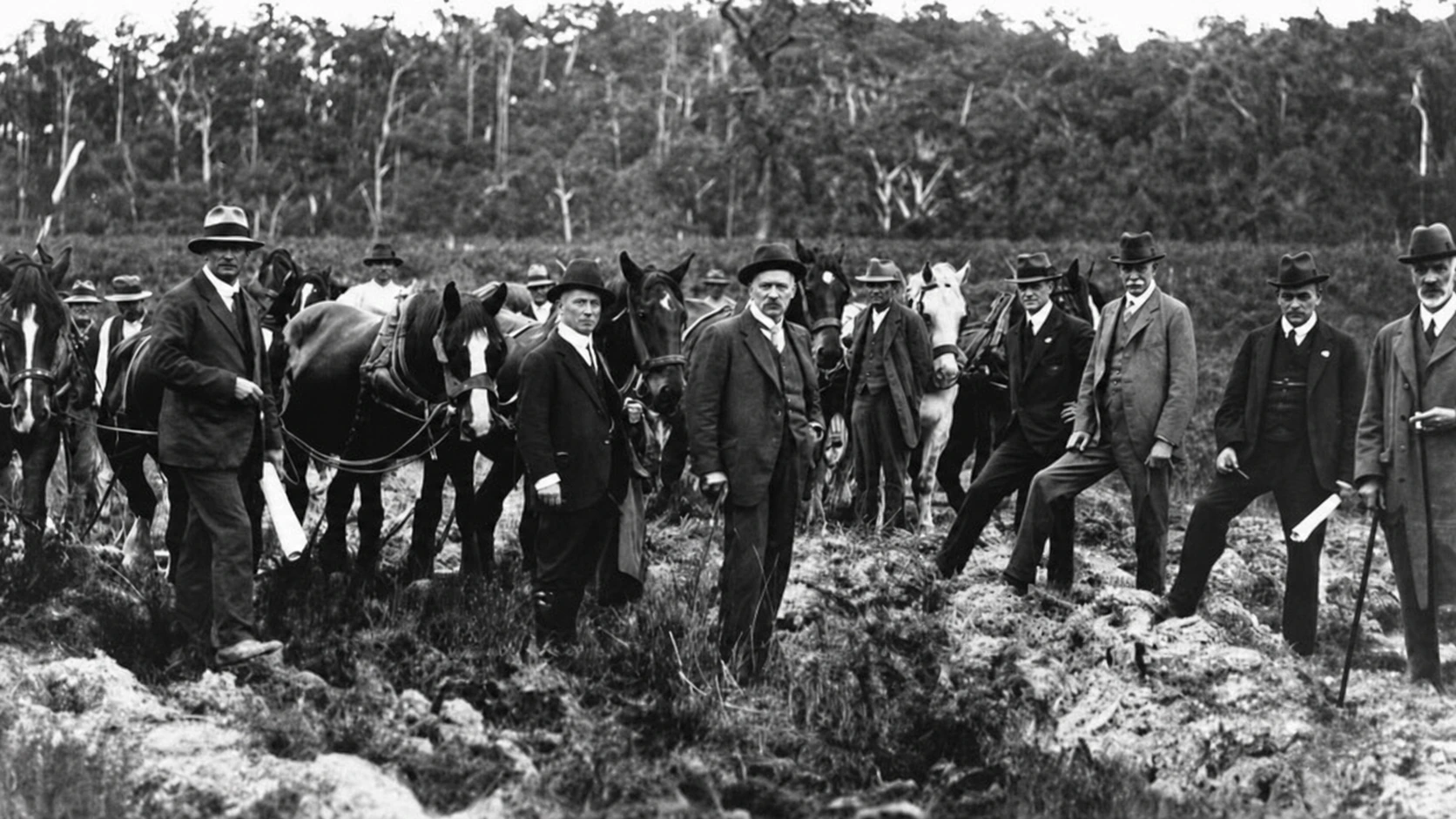
It began to take physical form at Yallourn. The first sod for the power station was turned on 5 February 1921. The ceremony showed commissioners and officials in coats and hats standing with workers, horses and earthmoving equipment on newly cleared ground.
Within eighteen months, the Commission recorded 943 workmen at Yallourn and another 126 on the transmission lines. It had built two large construction camps with sleeping quarters and equipped mess rooms, along with baths, showers and what its annual report called a complete modern system of sanitation. The scale belonged to an industrial project; the routines of living still had to fit around a working day.
The Commission handed the equipped mess rooms to committees representing the employees. Those committees controlled the finances and the practical work of providing meals on a co-operative basis, with the Commission stepping in only to supervise their successful operation. Each of the two main camps also had a provision store or canteen intended to sell goods and materials to employees as cheaply as possible. The operating costs were kept small, and profits were returned to extending what the stores could provide.
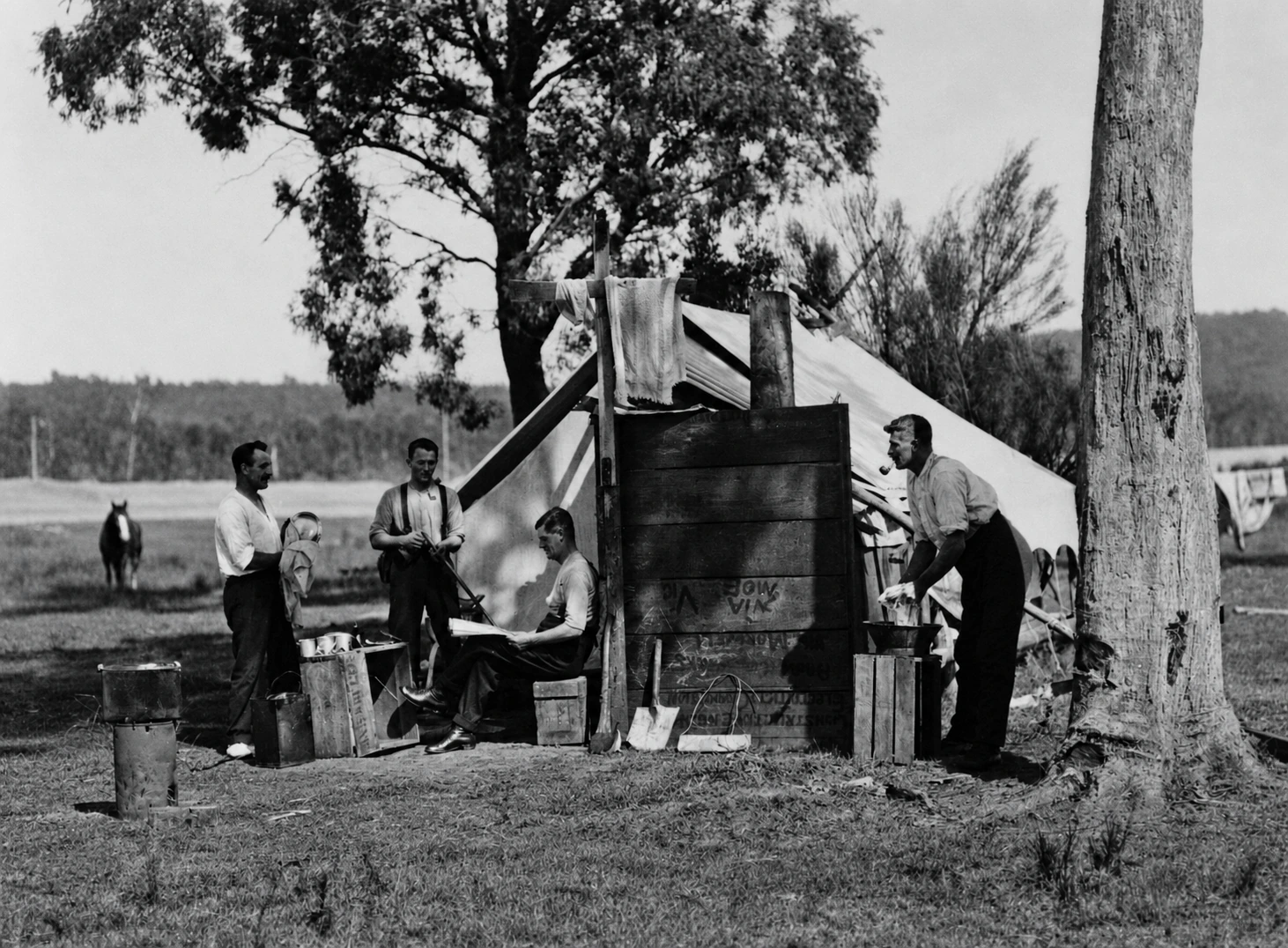
After work, another representative committee controlled the recreation building. Its rooms gave men places to write letters, play indoor games or use a properly equipped billiard room. A surviving photograph from the 1920s brings this temporary life closer: four men stand outside a tent. The catalogue identifies the man on the right as J. Meddlemess; the other three remain unnamed.
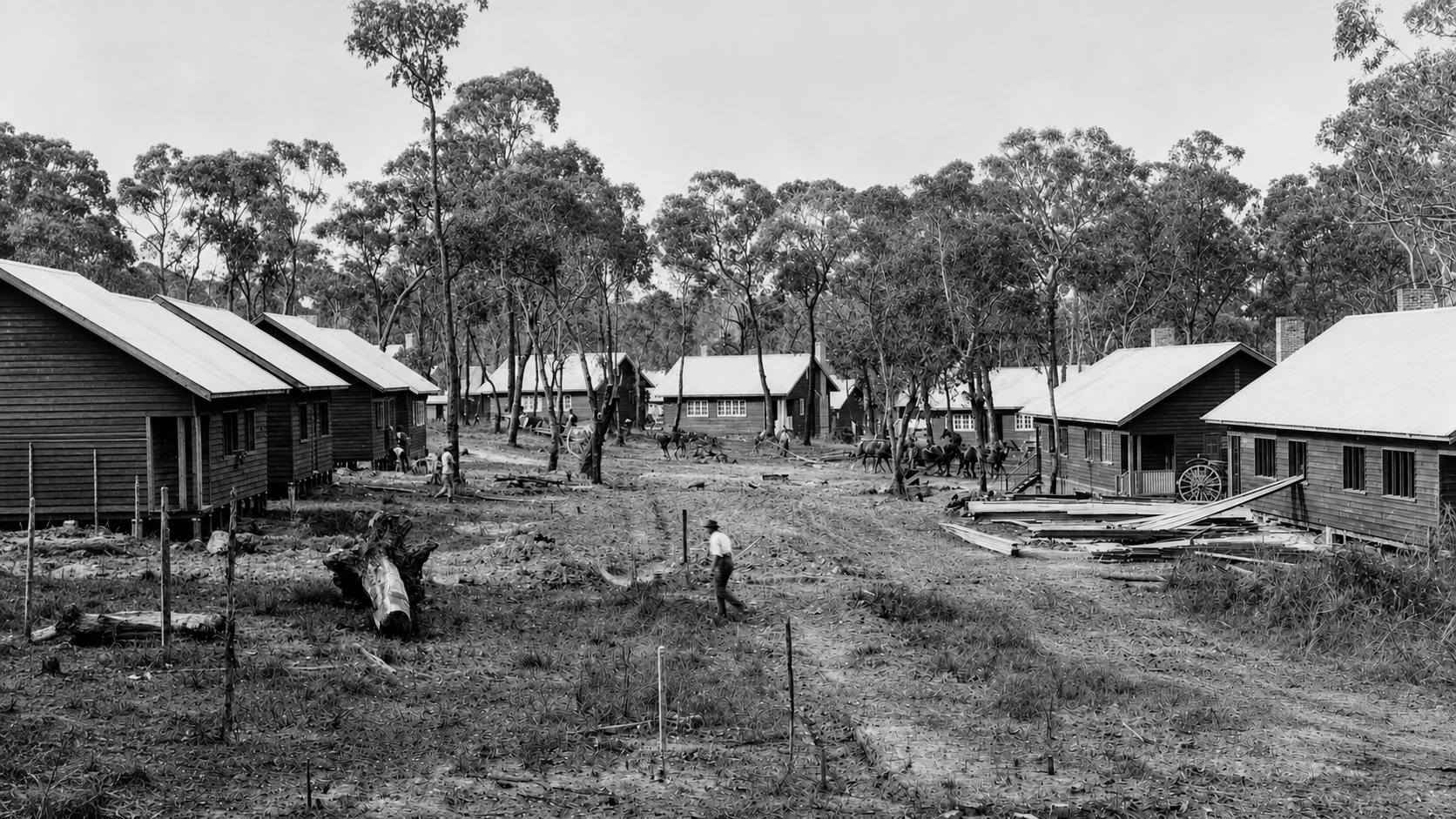
The camps changed as the work accelerated. In 1924, a small number of extra tents had to be added when more men were engaged so that parts of the project could run on two shifts. The tents stood on frames and floors. At the same time, the temporary settlement was becoming a town: 143 houses had been completed by June, most of them brick homes of four, five or six rooms, and another 68 were under construction.
The emerging town had a Church of England hall designed for worship or entertainment, two tennis courts and a pavilion, and a four-acre nursery growing trees for the streets as well as hedges and shrubs for reserves and private gardens. Electrically driven pumps carried purified water to high-level storage reservoirs. The brickworks produced 6.3 million bricks during the year, as well as 5,300 roofing tiles and smaller runs of gutter bricks and drainage pipes for use around the township and works.
Yallourn's electricity system was taking shape through these ordinary days of labour and settlement. Materials passed through temporary stores, while motor lorries moved equipment along much of the transmission route. Surveyors and construction crews worked outward from the Valley as the station rose behind them. By June 1924, the Commission counted 1,686 workmen at Yallourn and 251 on transmission lines; the numbers give the scale, while the tents, mess committees, provision stores and writing rooms bring the people back into view.
Their work was already reaching beyond Yallourn. The main transmission line ran to a receiving station at Yarraville, on Melbourne's western side. It was built as a 132,000-volt line and stretched for about 177 kilometres. During the final year of construction, the last 31 towers were erected and the remaining cable was strung; the Commission counted 660 miles of cable along the 110-mile route. An operating telephone line followed the same path. At Yarraville, the power could enter the metropolitan distribution system.
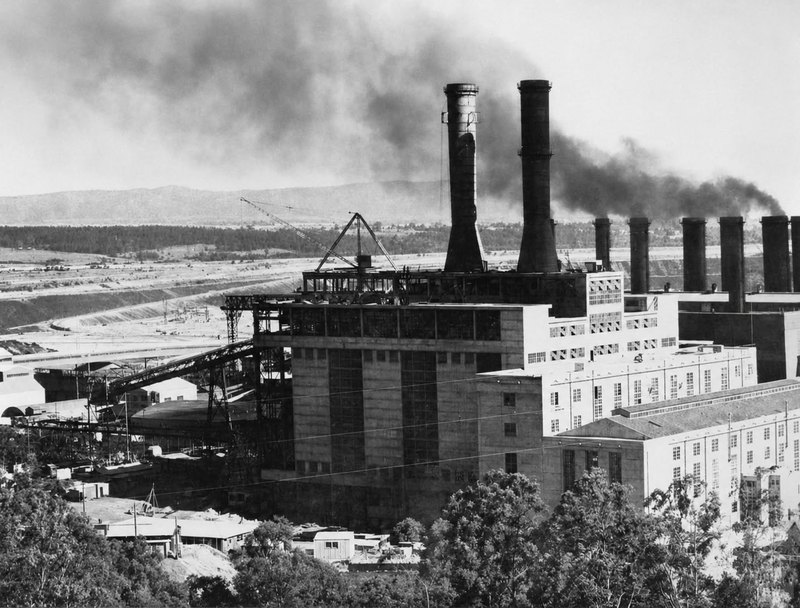
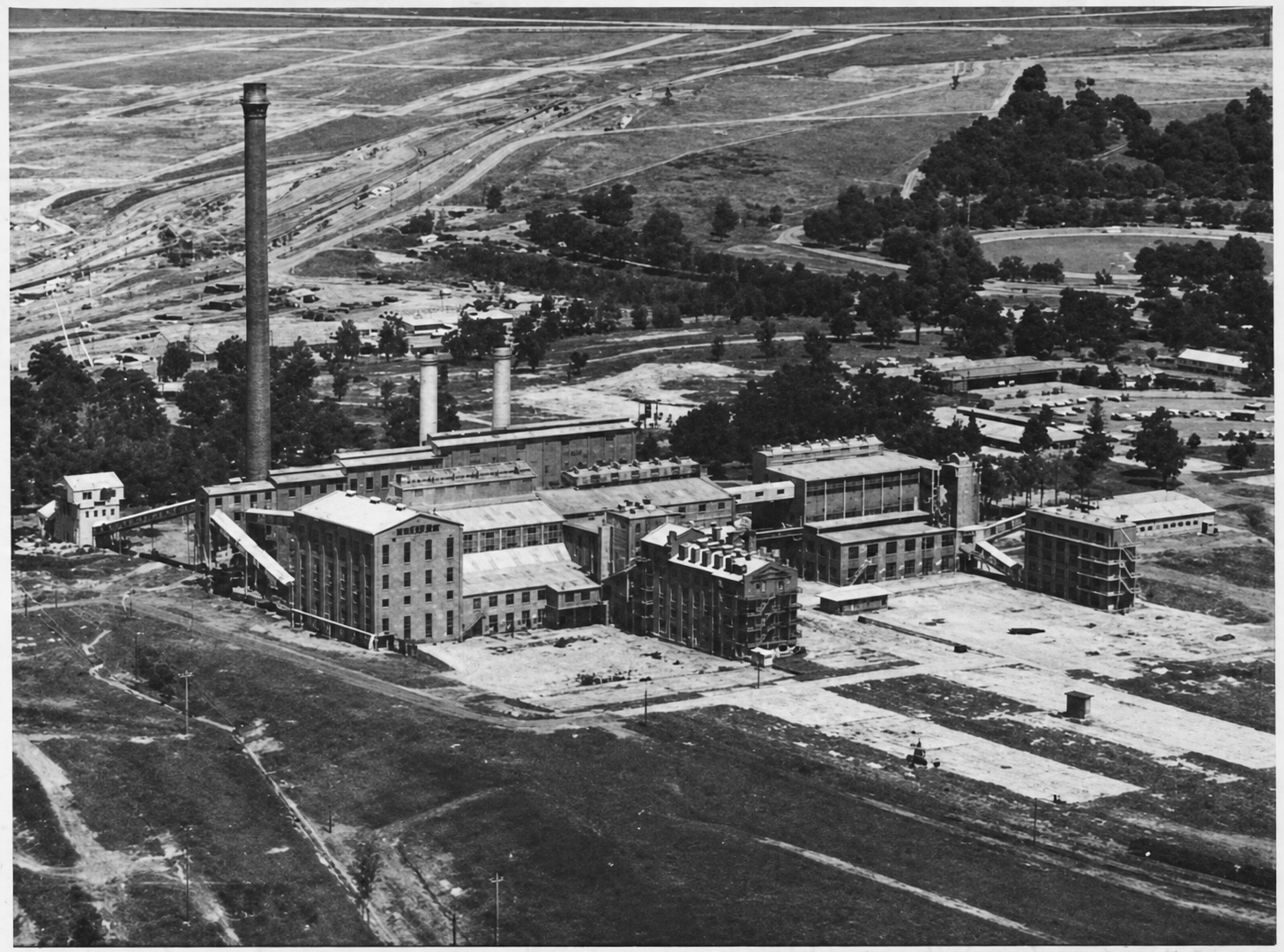
At midday on Sunday 15 June 1924, electricity from the new Yallourn station first reached Melbourne. The first arrival was a quiet operational moment. Two boilers had been in service since the middle of May, and the station's first 12,500-kilowatt turbo-generator was ready alongside its main switchgear, first transformer bank and control equipment. A second main generator was almost ready and work on a third was progressing, while the wider station remained under construction.
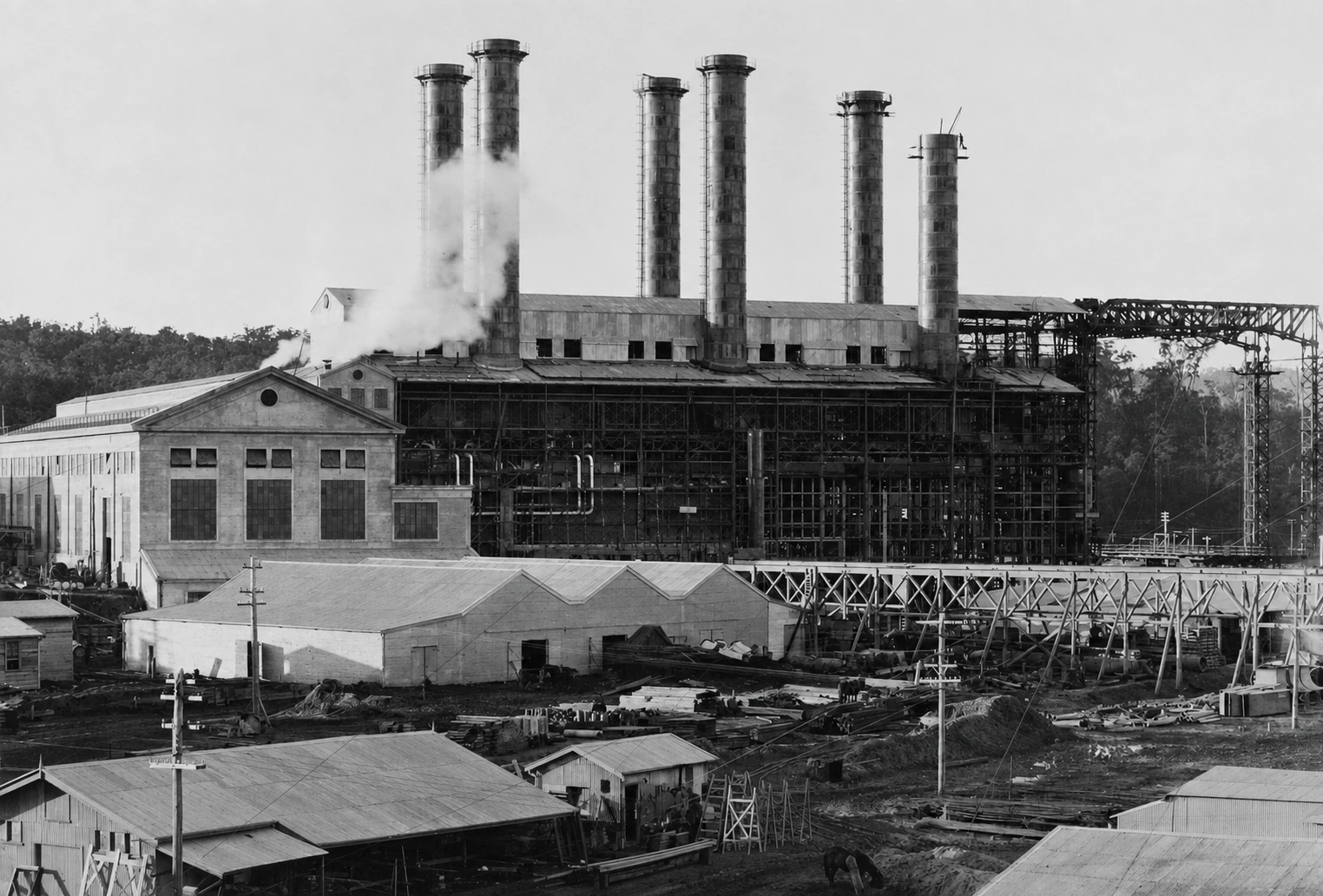
A photograph taken the next day shows the unfinished reality. The boiler house and turbine hall stand amid sheds, poles and raw works. The telpher plant that would carry coal towards the bunkers rises at one side. Power was already flowing from a place that was still being built.
The Commission's annual report said the first generator was helping to meet Melbourne's growing demand and strengthening the reliability of supply. Further generators and boilers would enter service as they were completed.
Morwell had already taken power from the temporary Yallourn plant built to support construction. The main station then supplied Melbourne and connected towns across Gippsland in quick succession. Yallourn's first great achievement unfolded as a sequence: a temporary supply nearby, the main station and metropolitan line in 1924, then branches and extensions carrying power into more districts.
The current was beginning to cross Victoria, and the next stage carried it towards the border. The North-East posed a different challenge.
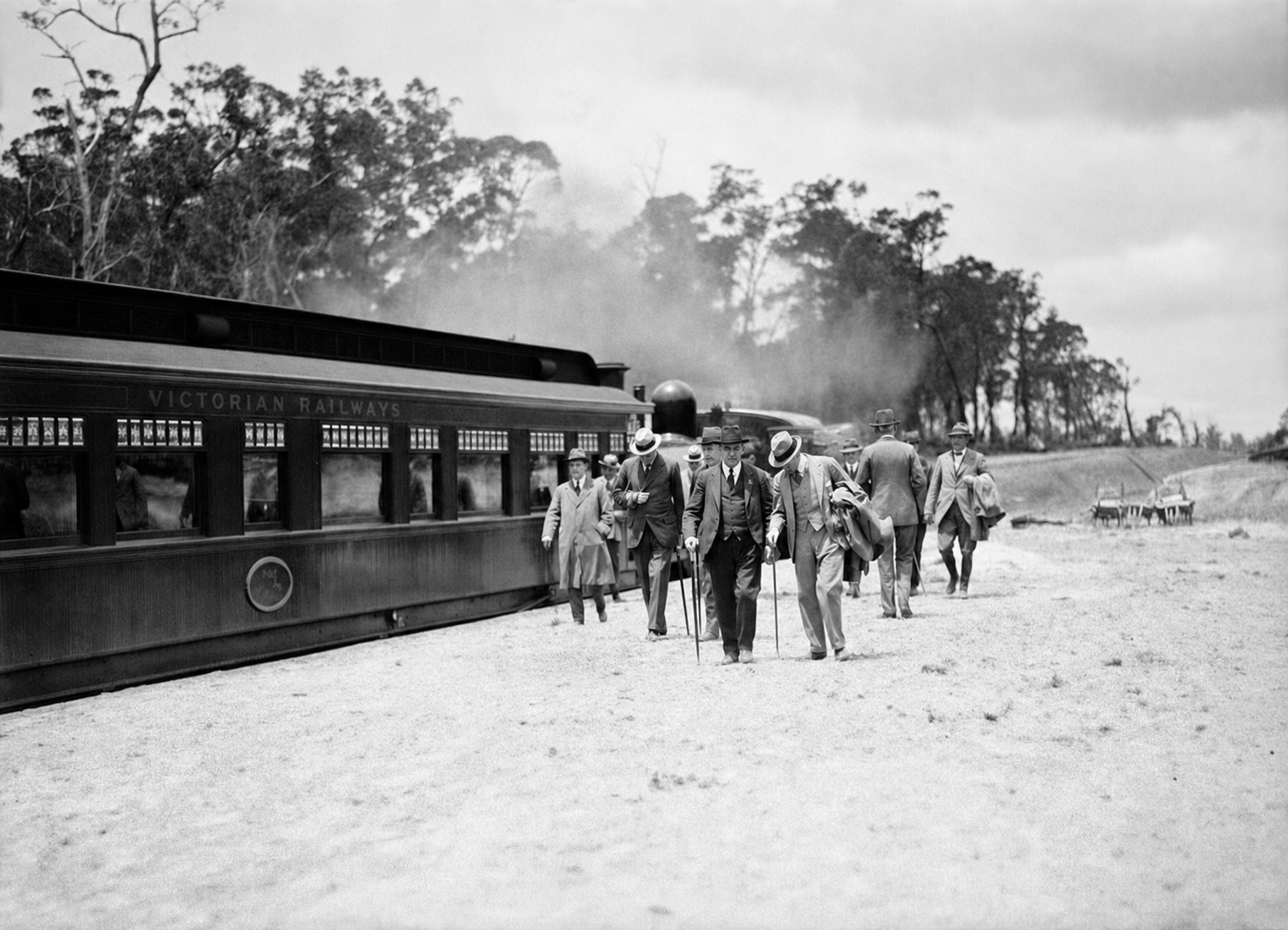
The Commission was building the Sugarloaf-Rubicon hydro-electric scheme and a 66,000-volt transmission line through some of Victoria's most difficult and inaccessible country. Construction began in August 1924. The terrain required every useful form of transport, from bullock teams to caterpillar tractors.
At the Sugarloaf reservoir, crews had to carry the conductors across the water. They erected a flying fox to move insulators and lifting gear to the hill structures. Horses hauled a light steel cable to the water's edge. It was attached to a barge, which a caterpillar tractor then pulled across from the opposite bank. Powerful brakes kept the cable under tension as it paid out from the drum.
The line was completed in January 1926. The hydro-electric stations were still two years from completion, so Yallourn supplied the North-East through the new network.
Albury already knew electricity. The town had generated its own supply at the waterworks since 1916, and a new boiler and 300-kilowatt alternator had doubled the plant's output to 600 kilowatts in 1922. The machinery depended on coal being carted to Mungabareena: between the beginning of supply and the end of 1924, the local system used 16,396 tons of it. As consumption increased, the council considered spending as much as £60,000 on three new 500-kilowatt generators near the railway, where the cost of hauling coal would be lower.
The arrival of the Victorian grid offered another path. Albury accepted a bulk supply from the State Electricity Commission. A 66,000-volt line ran north through Wangaratta, with a 22,000-volt extension towards the border. From the Commission's main substation at Wodonga, two 3,300-volt circuits crossed the Murray to a new brick substation at the corner of Hovell and Kiewa streets. Five circuits then carried the supply to nine existing substations around Albury, including the waterworks, the woollen mills and the hospital.
On 20 May 1926, Monash operated the changeover. The waterworks current stopped and the Yallourn supply took its place. The town's lamps concealed the distance the electricity had travelled; the switch made it visible.
The Commission's own retrospective account described the North-Eastern terminus as nearly 300 miles from Yallourn. For more than two years, until the mountain-stream section of the hydro-electric scheme was completed in March 1928, the line carried Yallourn energy all the way to the border.
The ceremony outside Albury Town Hall gave that distance a human shape. The men in the photograph were standing at one end of a system whose coal face, boilers and generators lay across the state.
Albury was one connection in a much wider transformation. Victoria's electrification happened through successive connections. The network grew by joining generating stations, terminal stations, municipal systems, country towns, industrial users and local distribution lines.
By 1929, the Commission reported that its scheme served almost the entire metropolitan area and 141 rural centres. Ninety-five of those centres had previously had no electricity supply. Hundreds of farms in several districts were also connected. The Commission had erected about 1,500 miles of high-tension transmission line, laid nearly 200 miles of underground cable and built almost 400 substations.
Agreements were then bringing Ballarat, Bendigo and Geelong into the interconnected system. By 1930, biographical and national archival accounts describe the initial task as complete and the SEC grid as extending across the state.
Statewide coverage meant that the main network had reached across Victoria. Household access continued to expand unevenly through local distribution and later rural electrification.
The achievement was organisational as much as technical. Separate supplies had begun to become a shared system. Power generated in one part of Victoria could support demand in another, and the shared network allowed demand, failure or shortage in one district to be supported from beyond it. That was the larger meaning of the Albury switch.
The power station lives in memory through its chimneys, turbines and immense buildings. The transmission system reveals another Yallourn, one that stretched outward through steel towers crossing paddocks, substations at the edges of towns and cables beneath metropolitan streets. It was present in Gippsland communities connected to the main station, in Melbourne's factories and tramways, and at the border where a municipal supply changed from locally carted coal to current carried across Victoria.
Monash gave the undertaking leadership, force and public confidence. Its reach was built collectively: by the commissioners and engineers who designed the system, the crews who crossed difficult country, the people who worked the open cut and station, and the communities that adapted their own networks to receive it.
The Albury photograph holds those meanings quietly. Monash stands among the civic party after the reception. The frame shows the civic end of the system; the machinery and the crews who raised the towers and kept the boilers running lie beyond it, yet their work is present in the occasion.
The current carried two things outward from Yallourn. One was electricity. The other was a new civic identity: the knowledge that labour performed in the Valley had entered the routines of a state.
Melbourne's first arrival was quiet. At Albury, people gathered to mark the connection. Between those two moments, Yallourn had begun to switch on Victoria.