Norman Campbell asked Sir John Monash to name the proudest moment of his career.
Campbell later wrote that Monash gave him two.
The first belonged to the Western Front. Before the breaking of the Hindenburg Line, Monash had called his generals together for a council of war. The commander who began life as a colonial schoolboy sat at the head of the table. British officers of rank and lineage sat around it and listened to his plan.
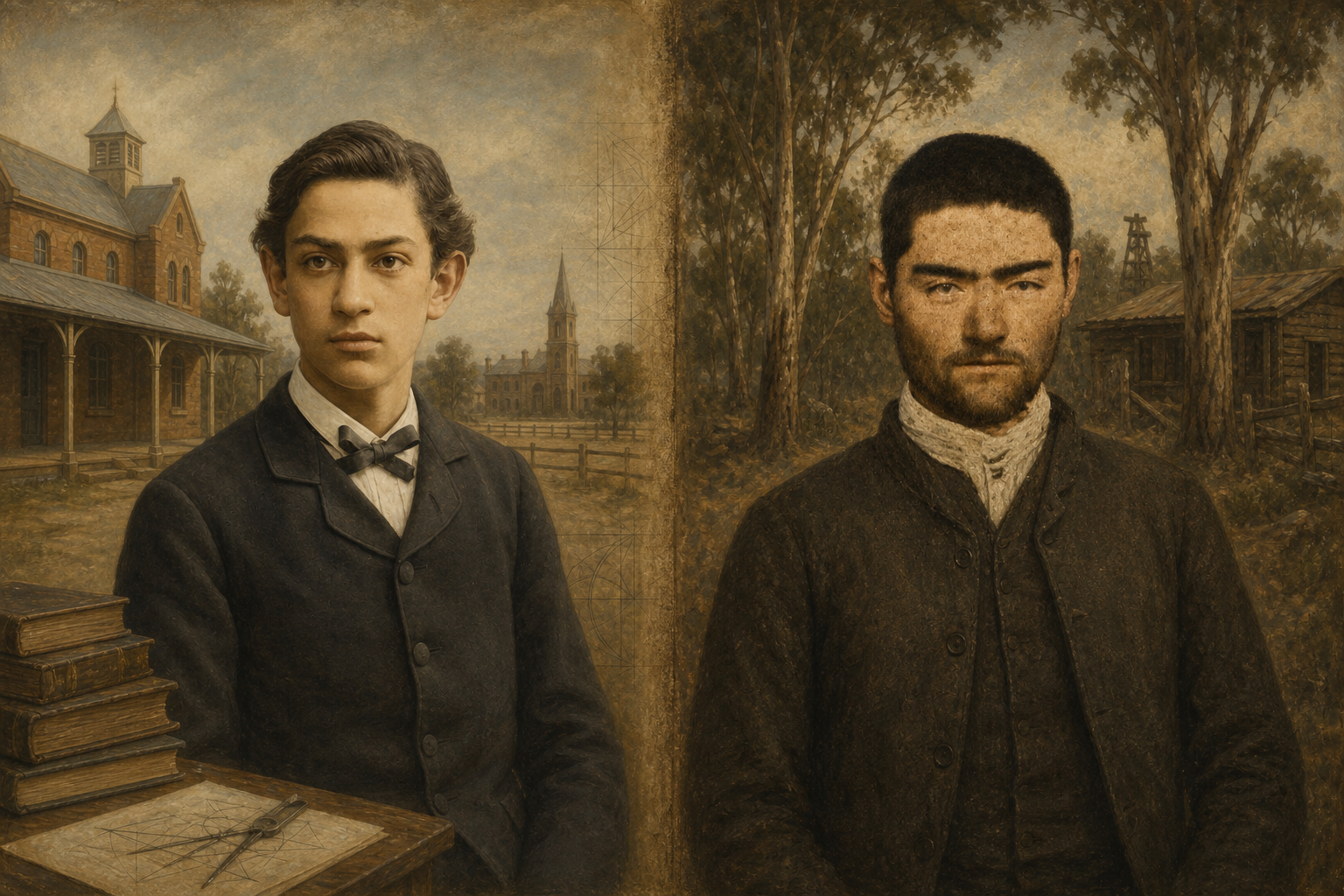
The second moment carried Monash back to Jerilderie and a hotel verandah. In Campbell’s account, it was early morning when the boy saw Ned Kelly smoking there. Kelly beckoned him over, asked his name and gave him a short lecture about human conduct. Monash remembered the advice as remarkably sound.
His description of the encounter was wonderfully Australian: ‘when I had a yarn with Ned Kelly.’
A council of generals and a conversation with a bushranger occupied the same answer. Between them lay the life of John Monash.
The meeting has travelled through several forms.
Campbell’s version places the two on the verandah during the Kelly gang’s occupation of Jerilderie in February 1879. Other tellings put Kelly on horseback. In one, young John holds the reins. In another, Kelly has come to the Monash home to sell John’s father a horse and gives the boy a shilling for his help.
The chronology gives the story a loose thread. Monash attended Jerilderie Public School from 1875 to 1877. His family returned to Melbourne late in 1877 and he enrolled at Scotch College. Kelly and his gang rode into Jerilderie in February 1879.
Charles Bean kept a copy of Campbell’s story. Beside it he wrote that “Miss Monash” knew nothing of the encounter. Bean had distrusted Monash and in 1918 joined Keith Murdoch in attempting to replace him as commander of the Australian Corps, a campaign Bean later regretted. His note preserves neither his question nor Miss Monash’s exact response. It records what Bean understood from the exchange, but cannot by itself establish whether the encounter occurred.
An earlier encounter fits some later versions. The surviving accounts support several possibilities and settle none of them.
The story has endured because it brings two remarkable Australian lives into one small town and one brief moment. Its deeper interest begins with the qualities the men carried.
Kelly and Monash possessed an appetite for action.
Kelly could plan, persuade and hold loyalty within a small group living under constant pursuit. He understood the power of spectacle: a bank held up, hostages gathered, police uniforms taken, armour shaped from plough mouldboards. He also understood the power of words.
At Jerilderie, he tried to have his long statement published. Dictated to Joe Byrne, the document now known as the Jerilderie Letter gave Kelly’s account of the events he believed had driven him into outlawry. It named grievances against police and authority, justified his actions and carried violent threats against those who opposed him. The voice is angry, self-dramatising, politically alert and determined to command the public story.
Monash also possessed a powerful need to organise events and explain them. His working life filled with agendas, lists, calculations, letters, lectures and plans. He crossed off completed tasks and catalogued his papers. Engineering trained him to see structures, loads, materials and sequences. Military command gave that habit a vast field of action.
Both men had intelligence, self-belief and the capacity to make others follow. Each met exclusion. Kelly emerged from a poor Irish-Catholic family living amid land conflict and deep hostility towards police. Monash, a German-Jewish Australian, faced antisemitism and resistance within military and public life. Their circumstances carried different histories and different choices. Each developed a fierce conviction in his own account of himself.
Drive has no purpose until a person gives it one.
Both men used armed confrontation and lethal violence.
Kelly’s violence was personal and close. At Stringybark Creek in October 1878, the Kelly gang killed Sergeant Michael Kennedy and Constables Thomas Lonigan and Michael Scanlan. Constable Thomas McIntyre escaped. Kelly was later tried and convicted for Lonigan’s murder.
The deaths made the gang outlaws. Their campaign continued through the bank robberies at Euroa and Jerilderie. At Glenrowan, the gang held townspeople inside the inn and prepared for a police train to be derailed. The plan carried the prospect of killing the people aboard. A warning reached the train, the derailment failed and the final gun battle followed. Joe Byrne, Dan Kelly and Steve Hart died during the siege. Ned Kelly survived his wounds, faced trial and was hanged at Melbourne Gaol on 11 November 1880. He was 25.
Kelly’s grievances and devotion to family belong to this history. The three dead policemen, the hostages and the people placed in danger belong to it as well.
Monash applied lethal force through a different kind of power.
At Hamel on 4 July 1918, he commanded an Australian and American attack built around the coordination of infantry, artillery, tanks and aircraft. About 600 guns supported troops advancing across a front more than six kilometres wide. Monash planned for the objectives to be taken in 90 minutes. The operation took 93.
The precision became part of his legend. The battle also killed and wounded human beings. Australian units suffered just over 1,000 casualties. Among them was Sergeant Harold Cocks of the 42nd Battalion. Shrapnel struck him during the attack. He died later that day, aged 23. German soldiers were killed, wounded and captured as the Allied force took the ground.
Monash understood the battlefield as a system. He also wrote of war’s horror, cruelty and misery. His response was disciplined command: prepare thoroughly, coordinate every available arm, reduce avoidable losses and achieve the objective by overwhelming force. That response remained lethal.
Kelly carried the gun and confronted the people in front of him. Monash commanded thousands and organised violence through maps, timetables, orders and machines. Colonial law pursued Kelly as an outlaw. Military authority placed Monash at the head of an army corps. Authority, scale, method and purpose shaped their responsibilities. Each man made decisions that exposed other people to death.
Kelly’s short life opened into a long argument. The armour, the Jerilderie Letter, the grievances, the killings and the last stand became material for artists, historians, families and communities. His cultural afterlife carried several Ned Kellys: rebel against authority, figure of protest for struggling selectors, loyal son, thief and convicted murderer. Each image draws on a different part of the record, and their coexistence keeps the argument alive.
Monash lived for another half-century. His military success brought public stature.
After the fighting, Monash became Director-General of Repatriation and Demobilisation. In less than nine months, the organisation under his direction returned 160,000 Australian servicemen. Many came home with enhanced qualifications through the AIF Education Scheme he had helped organise. The commander who had coordinated men and machinery for battle now coordinated ships, timetables, training and the movement back into civilian life.
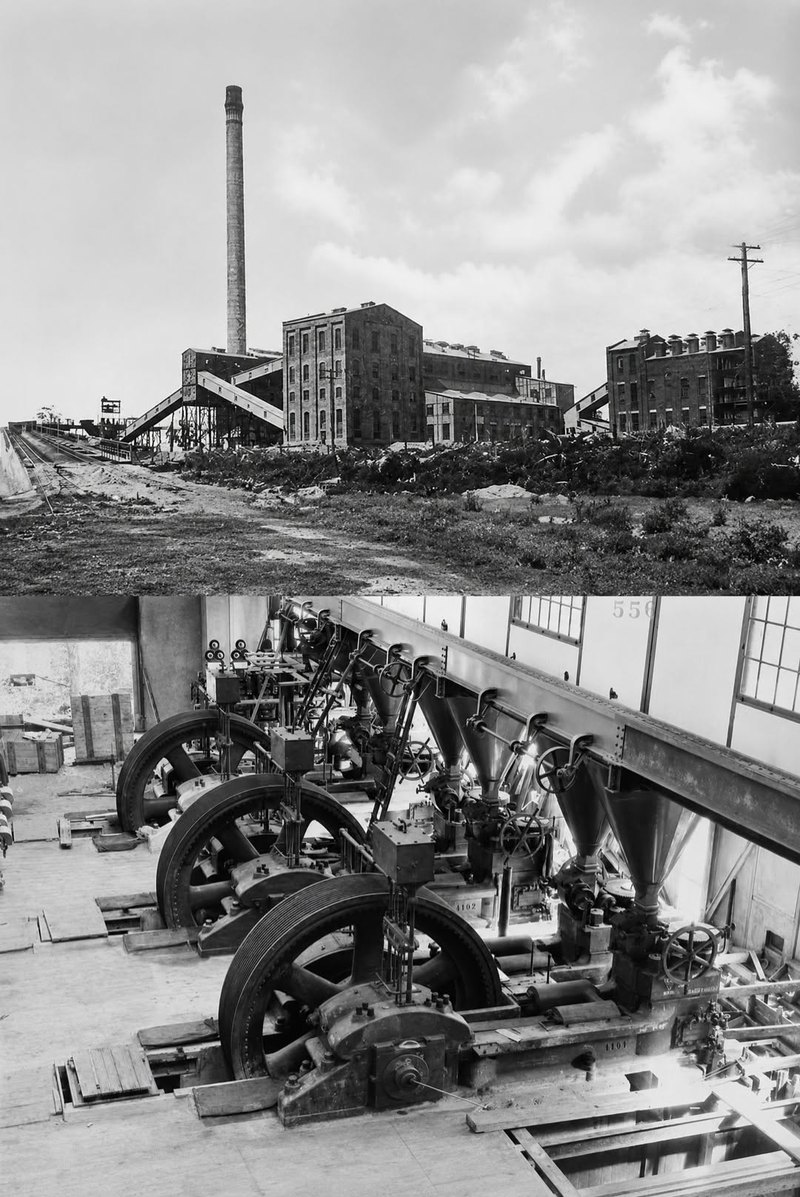
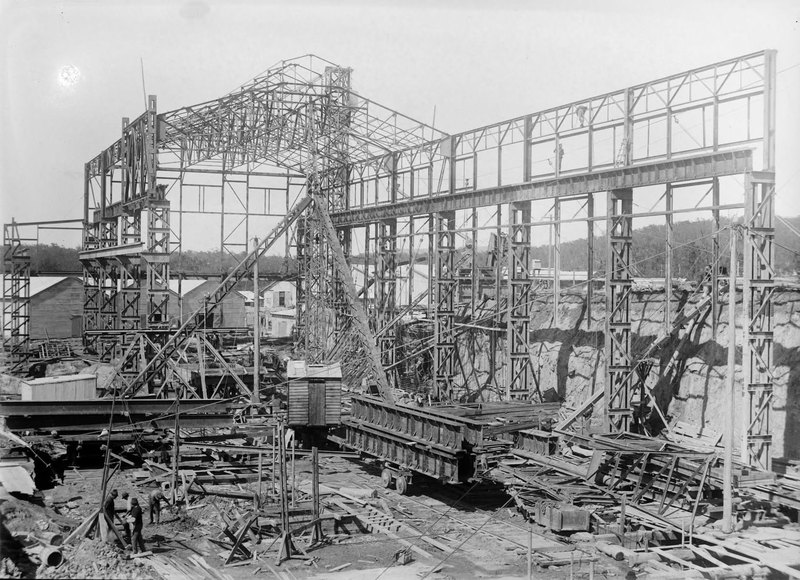
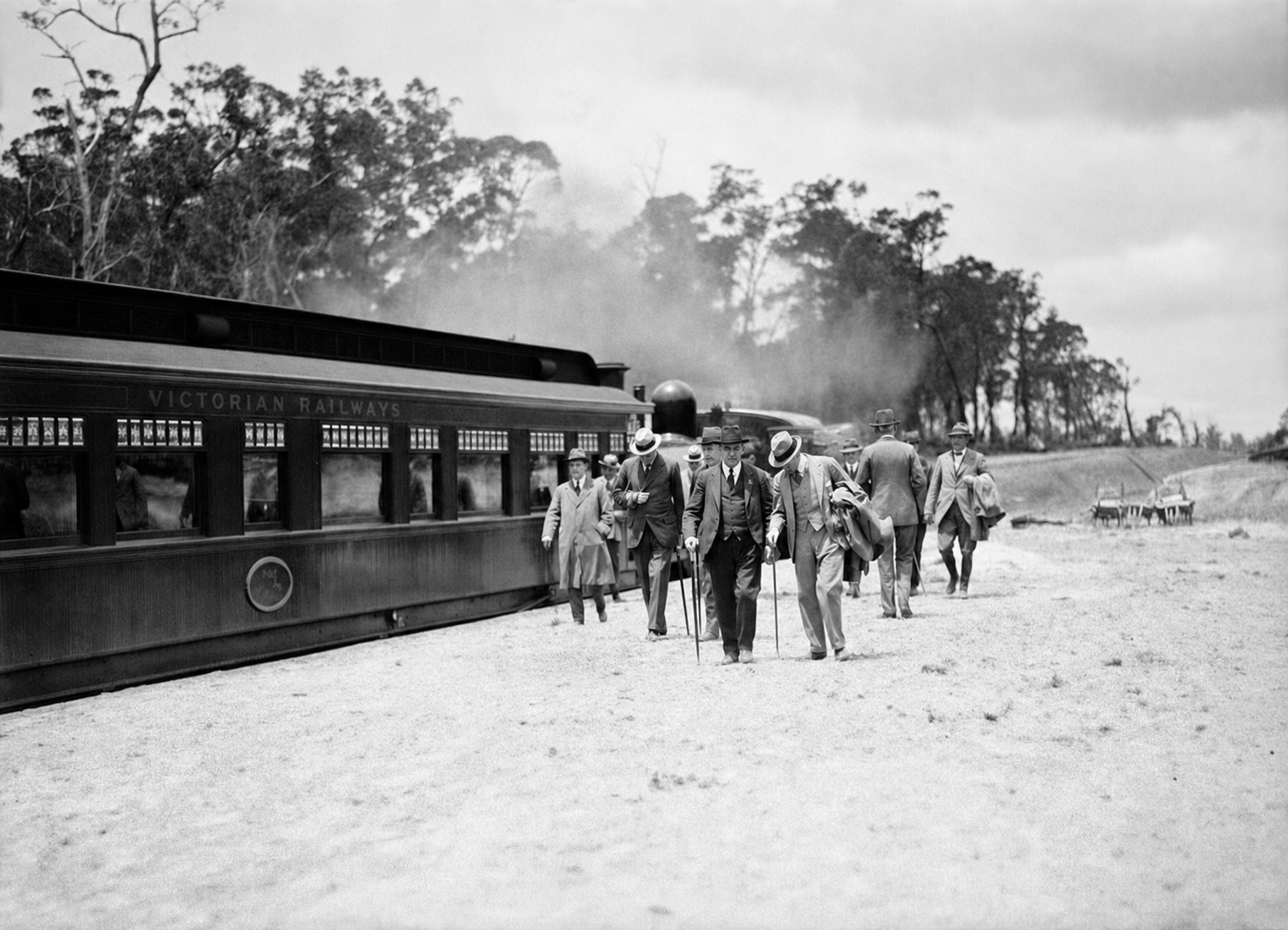
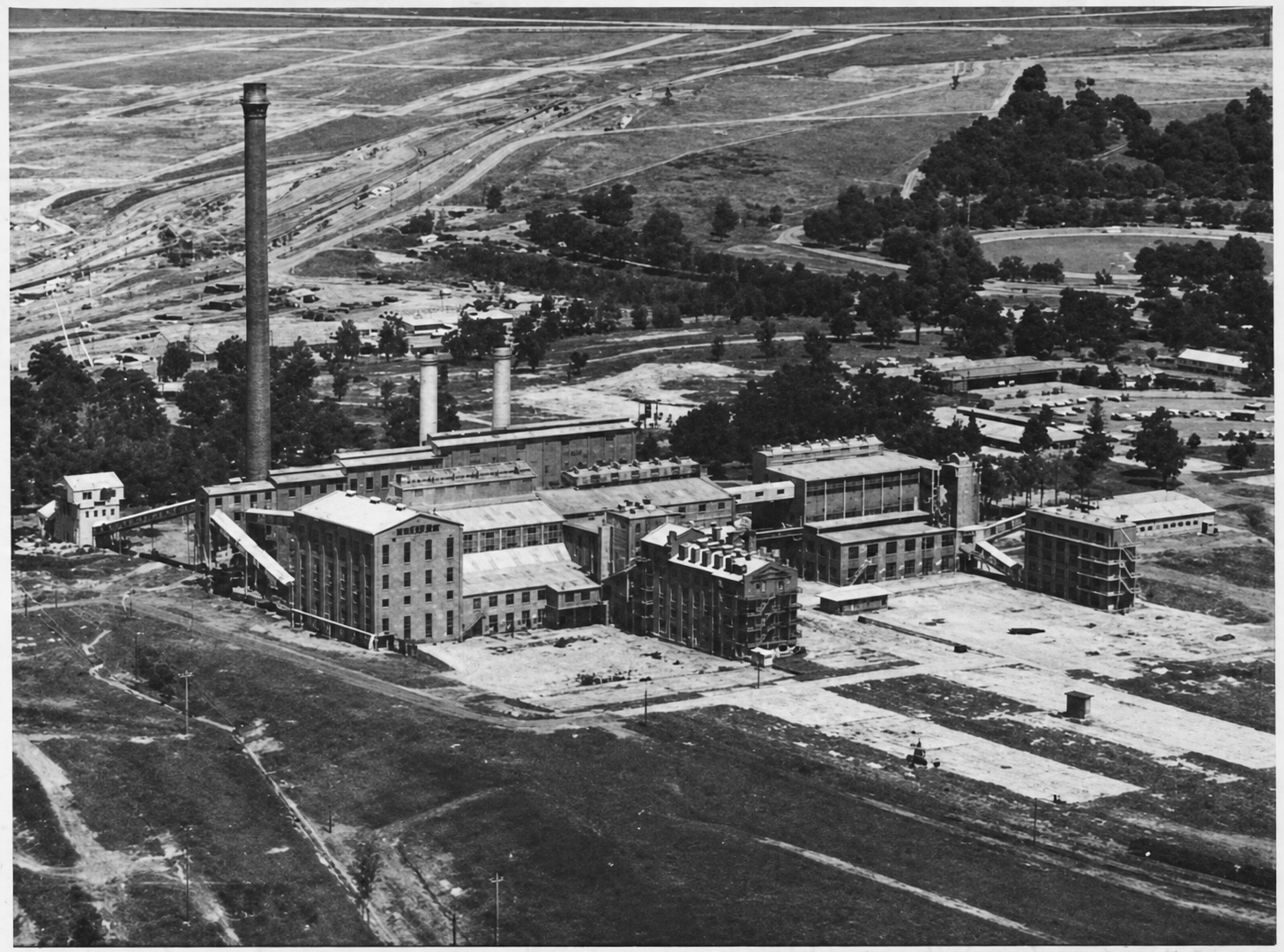
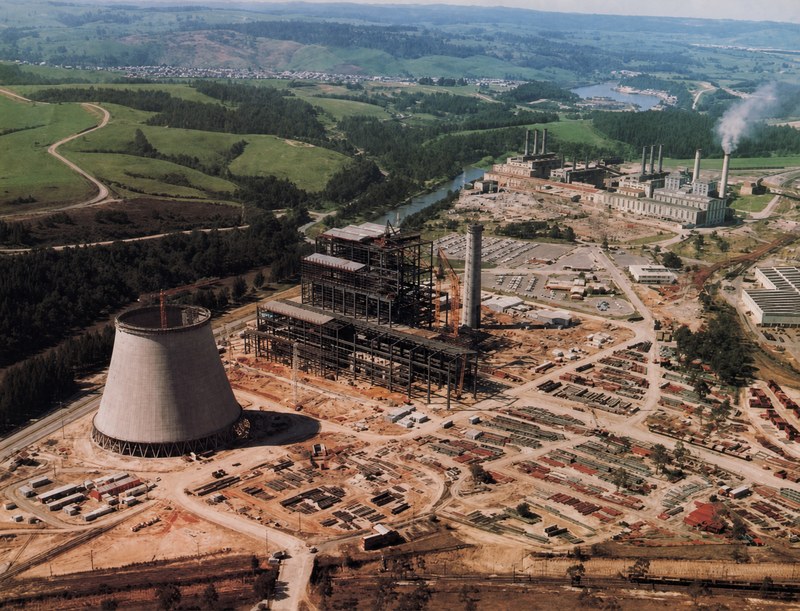
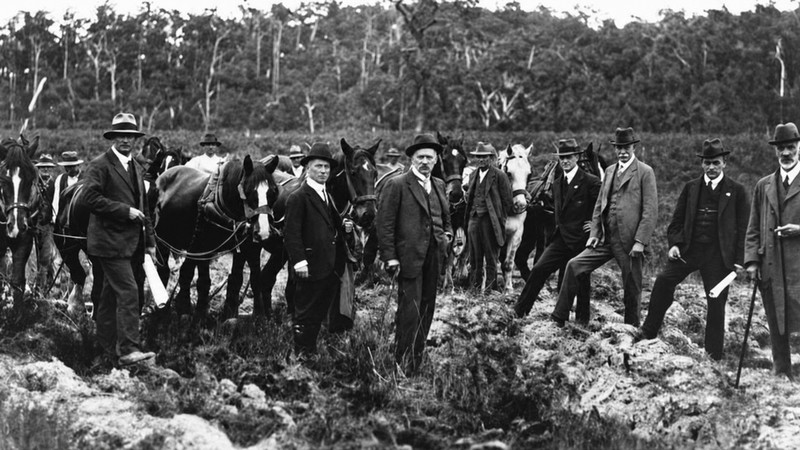
He then returned to engineering and public administration. In 1920 he accepted leadership of the State Electricity Commission of Victoria and soon became its chairman. The task reached into the Latrobe Valley, where immense deposits of wet brown coal presented an engineering challenge and a public opportunity.
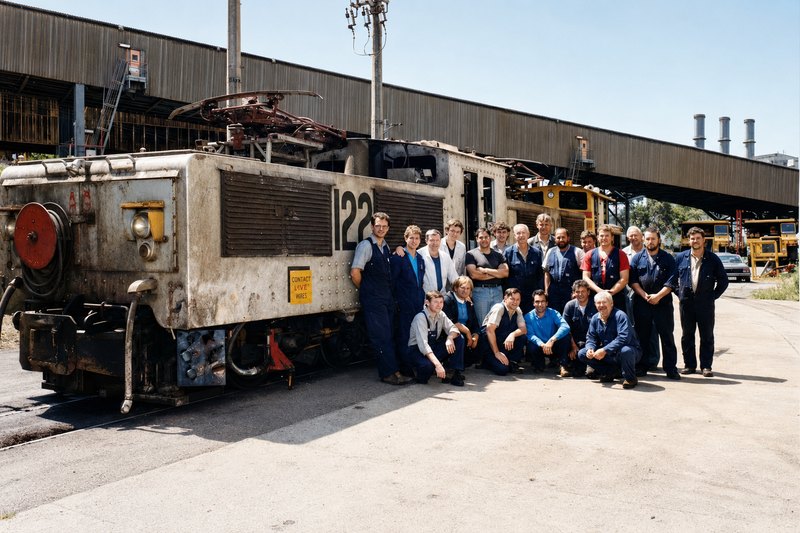
Monash’s drive joined the knowledge of commissioners, engineers, technicians and workers. Together they developed the mines, power generation, briquette production, transmission network and planned town at Yallourn. Power from Yallourn flowed in 1924. By 1930, the SEC grid covered Victoria.
The work carried Monash far from his Jerilderie childhood. Jerilderie kept the boy in its own story.
In November 2024, the town unveiled *The General & The Bushranger*. A community committee had raised funds for a permanent bronze Monash sculpture and storyboards in RSL Park. The unveiling included a re-enactment of the reported meeting.
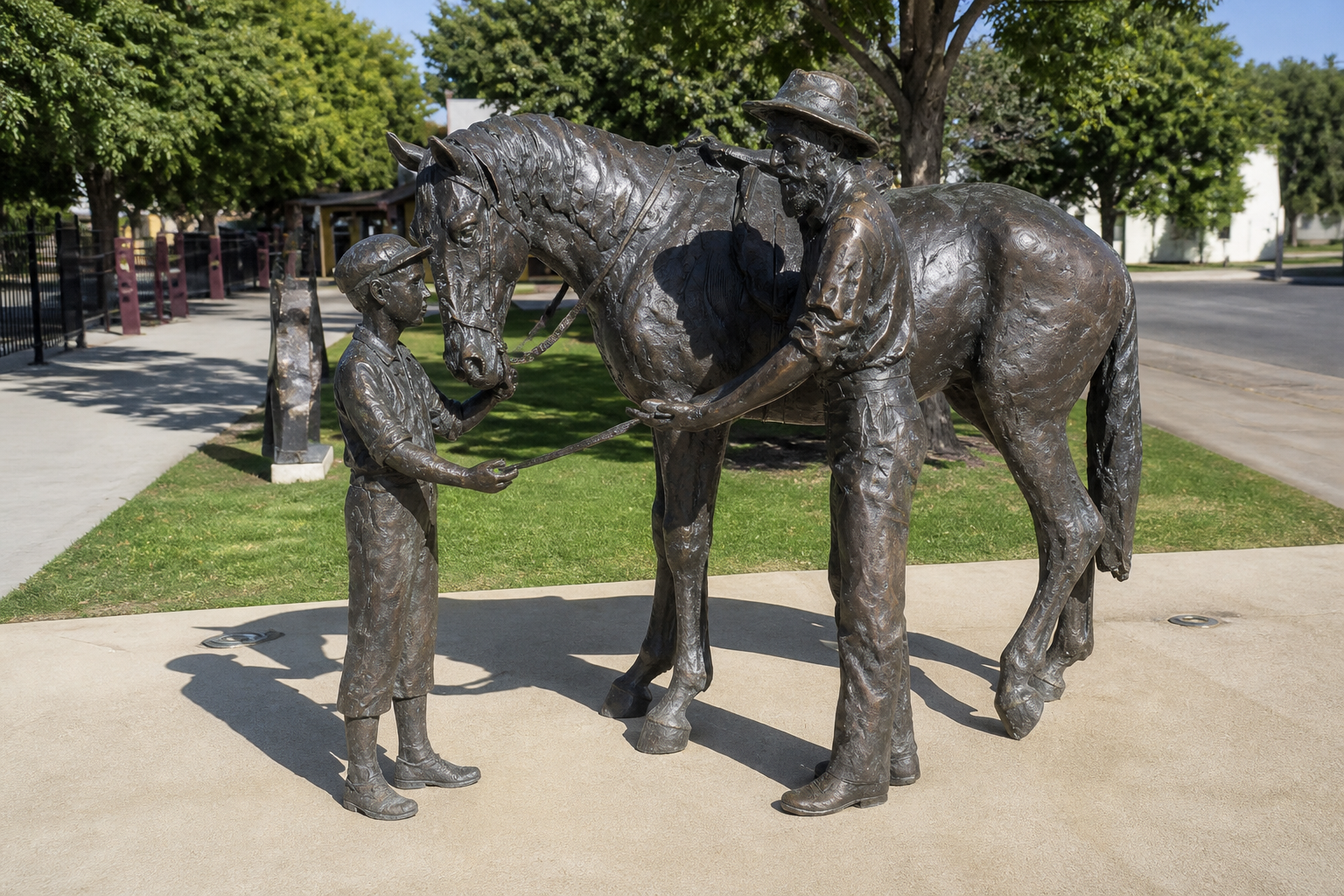
The commemoration gives the story a physical home. It confirms the place the encounter occupies in Jerilderie’s memory. The conversation itself remains among the possibilities carried by history.
Human drive can inspire loyalty, organise people and alter history. It can hold a gang together in the bush, coordinate an army on the battlefield, bring servicemen home and carry electricity across a state. It can create, command, protect and destroy.
That is what the boy and the bushranger still have to say to one another.