The train journey ended where Yallourn began.
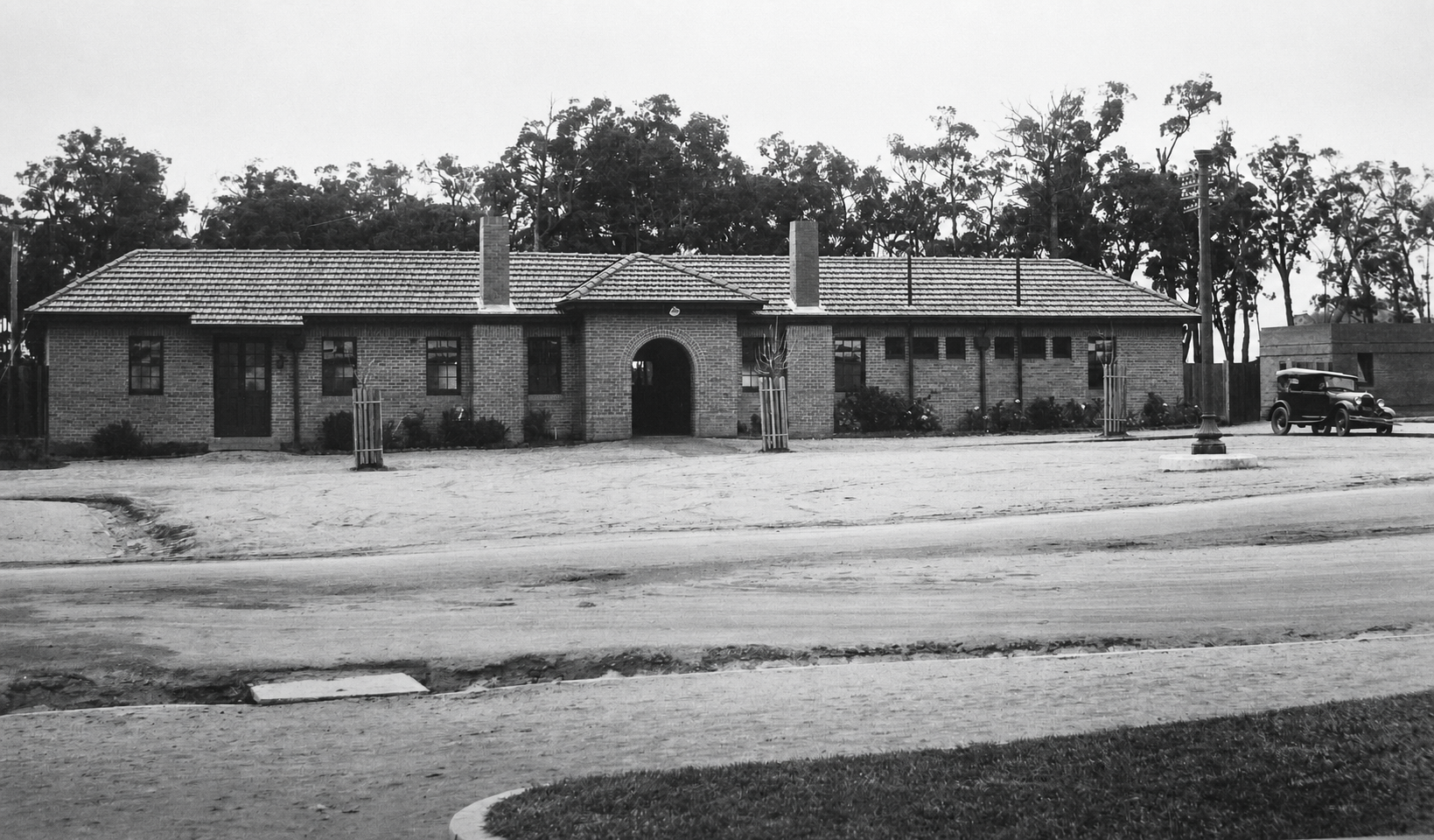
From the platform, Broadway led into the heart of the town. Shops, public buildings, gardens and curving residential streets lay ahead. Behind each arriving passenger, the railway ran back to the Gippsland main line and the rest of Victoria. Around them stretched the open cut, power station, briquette works, stores and sidings of the State Electricity Commission.
Yallourn railway station stood between those worlds because the railway and the town had been planned together.
In September 1920, the commissioners of the State Electricity Commission selected the route of the branch line and the site of the new town. They were deciding how an industrial undertaking would work and how the people within it would live. Machinery and materials had to reach the open cut, power station and briquette factory. Workers and their families needed a town close to the work. The railway would carry both purposes.
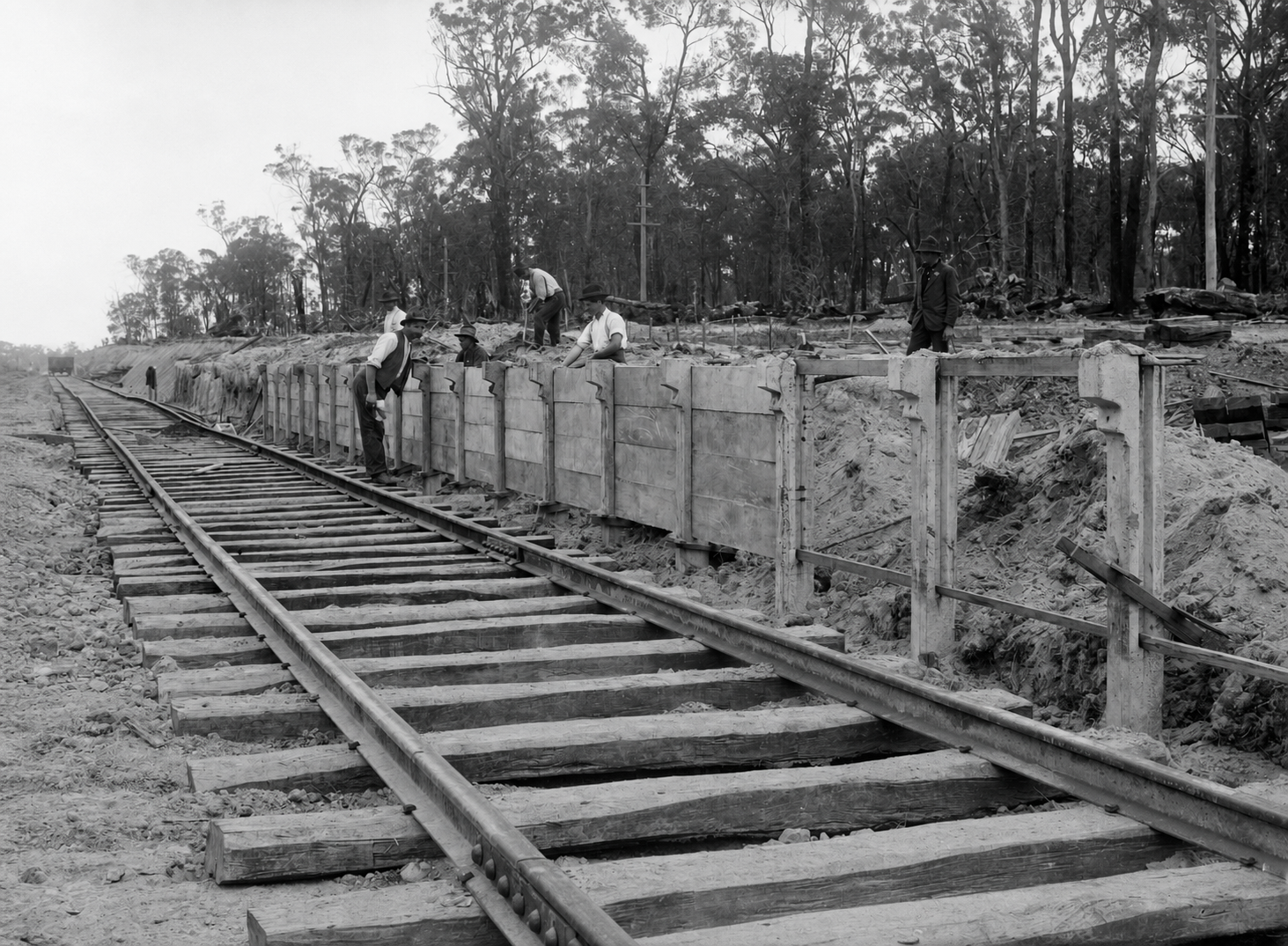
By early 1921, workers were cutting the line through the landscape and building the station platform. Rails, sleepers and earthworks appeared while the town and electricity works rose around them. The branch reached Yallourn during construction by 1 November 1921 and opened for general goods on 28 November.
Passengers followed on 11 January 1922.
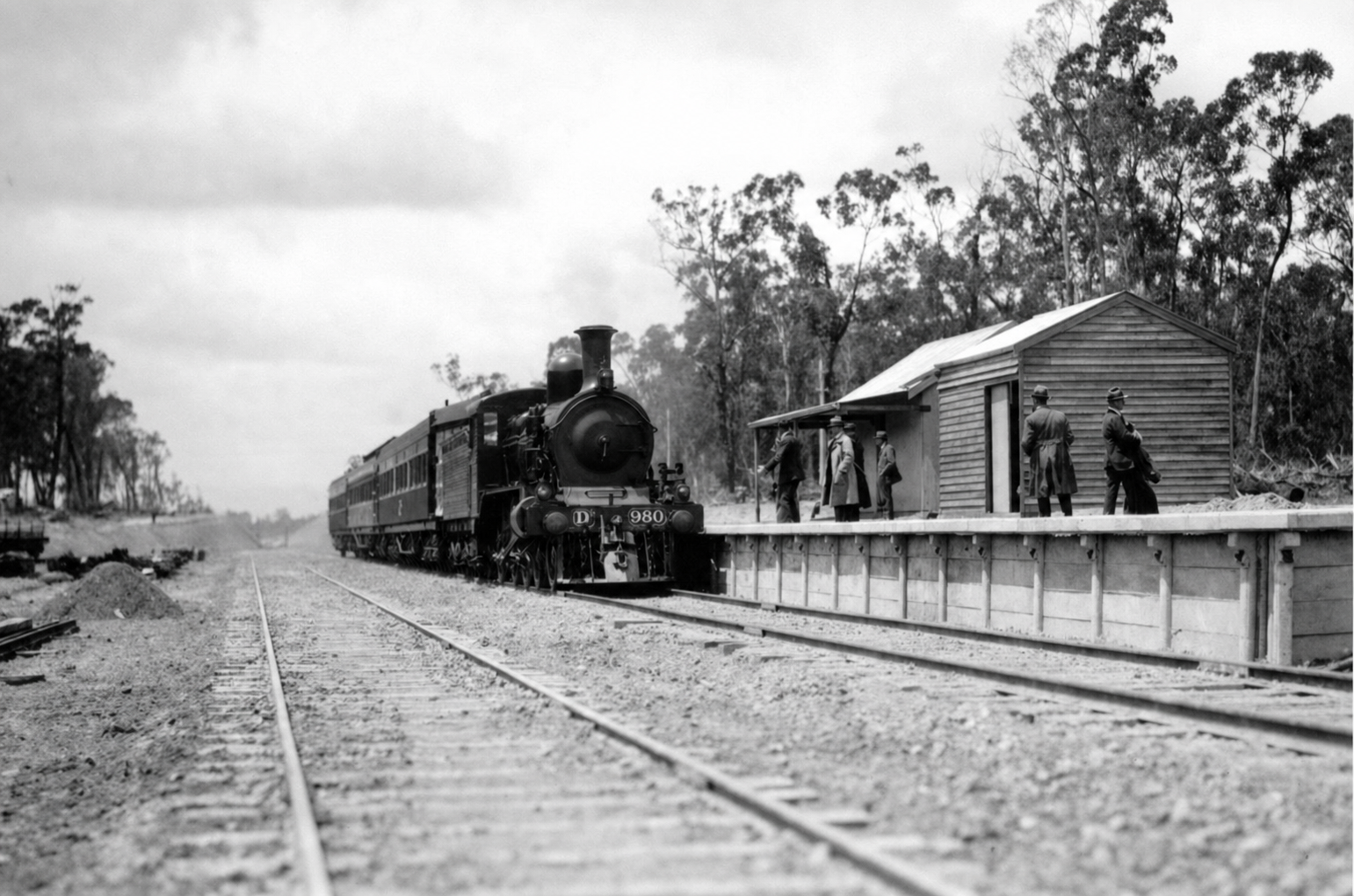
A surviving photograph probably catches that first passenger arrival. Steam locomotive D 980 stands beside a small timber station with its carriages stretching back along the line. People wait on the raised platform. The building is modest. The surrounding land remains sparsely developed. The connection Yallourn needed is already working.
The early railway ran on equally modest arrangements. Workers secured the yard points with hand-locking bars and padlocks. A stationmaster arrived by December 1922. Signals, extra roads and sidings followed as the mine, briquette works and Commission stores generated more traffic.
Broadway turned that working railway into the town's front entrance. A resident leaving Yallourn passed from the civic avenue to the platform and out towards the main line. An engineer or official arriving to inspect the undertaking stepped from the train into the planned town. Goods moved through the railway yards while passengers came and went nearby.
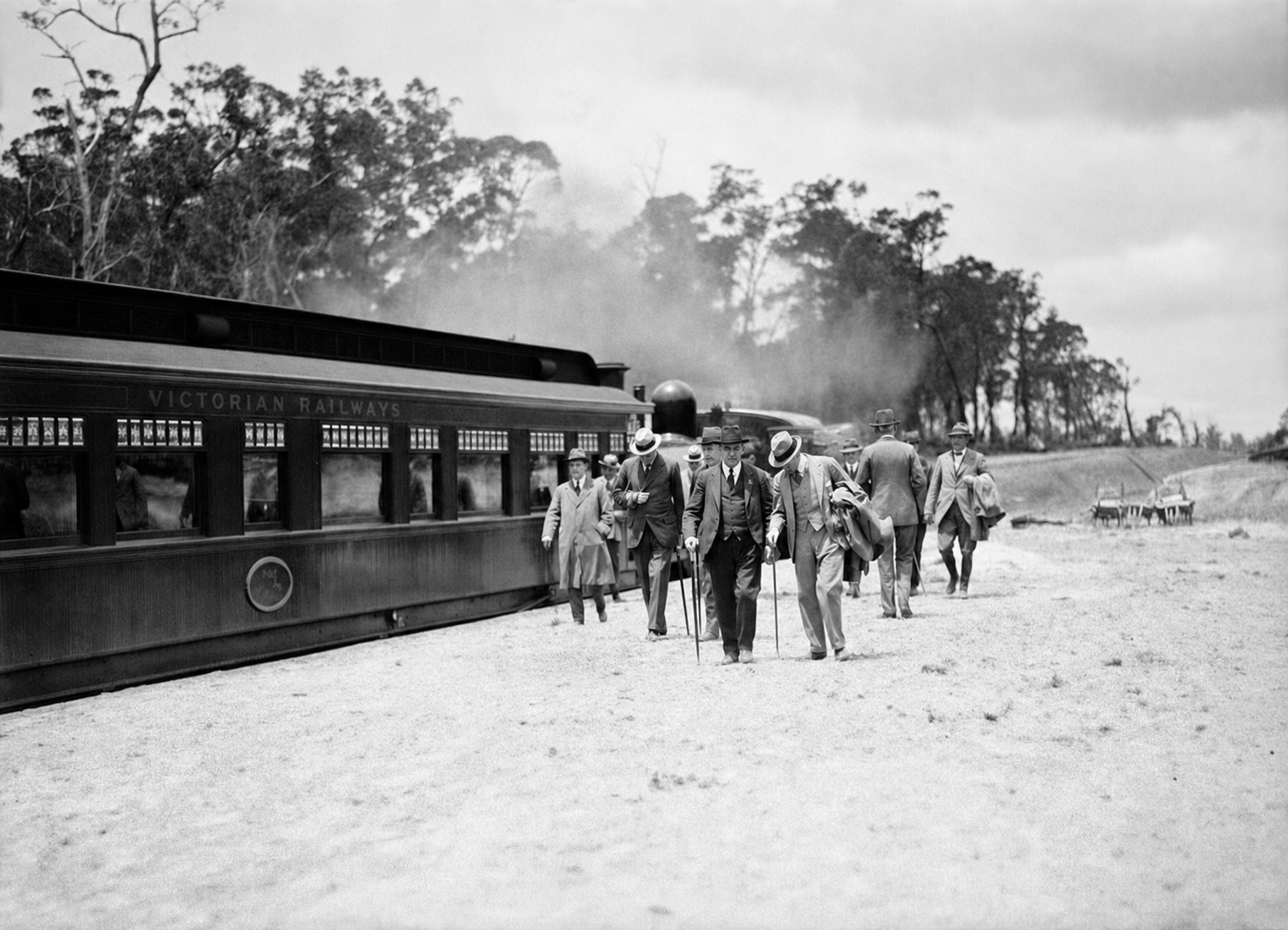
One photograph from the 1920s catches a group of men making that transition. A Victorian Railways carriage fills one side of the frame. The men have left the train and are walking across the bare station ground. The central figure, believed to be Sir John Monash, carries a walking stick as he moves with the group towards Yallourn.
Monash had become chairman of the State Electricity Commission in 1921. He led a project whose parts depended upon one another: brown coal from the open cut, electricity from the power station, briquettes from the factory, houses and services for the workforce, and railways to keep people and materials moving. In the photograph, that vast system contracts to the scale of a man walking away from a train.
The station's history continued through daily movements. Residents travelled to and from the Gippsland line. Railway and Commission employees worked the yard and sidings. Organised parties arrived to see the undertaking that was changing Victoria's electricity supply.
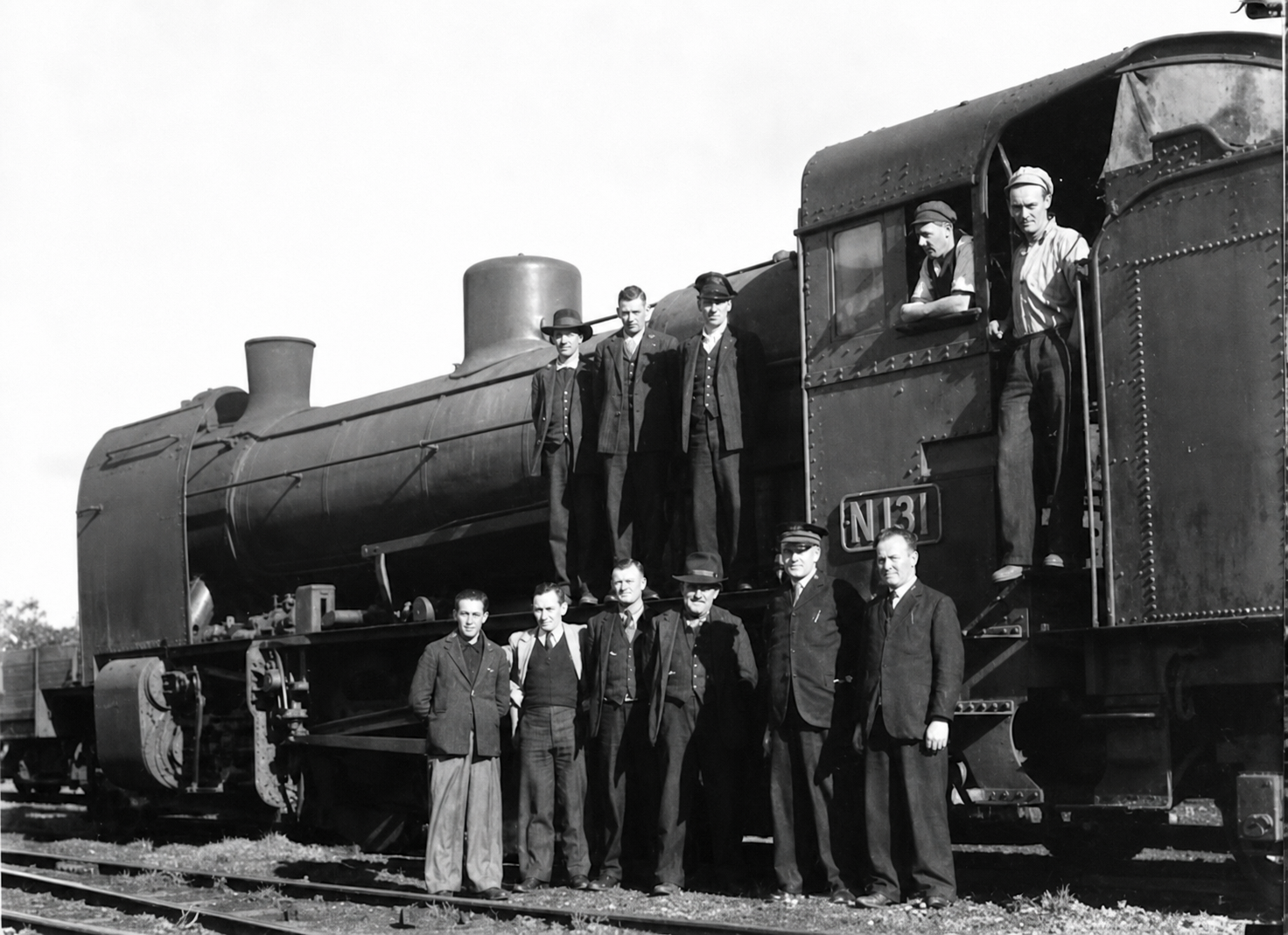
On 12 July 1948, Yallourn station staff and local Victorian Railways employees paused long enough for a group portrait with locomotive N 131. Some men stood shoulder to shoulder at track level. Others climbed onto the running board and into the cab. They were the people who kept the railway moving.
Regular passenger services between Moe and Yallourn had ended on 3 August 1931. The platform still received special trains when an occasion demanded them.
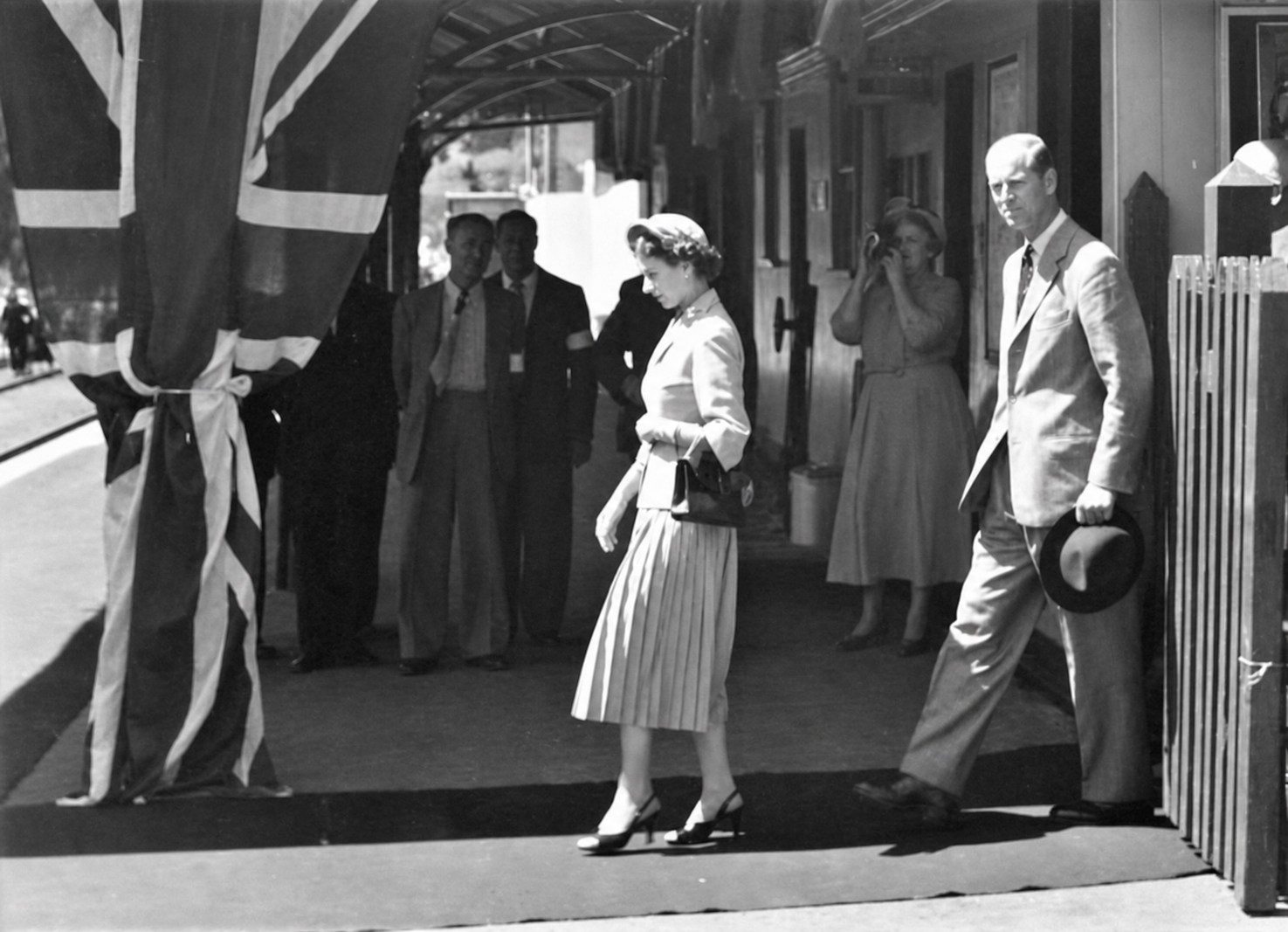
One arrived on 3 March 1954. Queen Elizabeth II and the Duke of Edinburgh travelled by train from Traralgon to Yallourn. An Address of Loyalty awaited them at the station. From there, the official party went to inspect the open cut before returning to the platform for the journey to Warragul.
The sequence followed the logic built into Yallourn from the beginning. The railway brought visitors to the town, and the town led them into the electricity undertaking. The Museum's related story, The Day the Queen Came to Yallourn, follows that visit through the streets and ceremony. The station was where it began.
By then, the railway itself was moving. A new line from Moe opened for one-way traffic in September 1953 and for two-way traffic that December. Electrification followed in 1955. The original branch from Hernes Oak closed on 31 March 1957.
The new alignment carried railway traffic around the expanding open cut. Tracks and roads shifted as the industrial landscape changed. In time, mining would also claim the town the station had been built to serve.
From 1922 into the 1950s, the platform at the end of Broadway gathered the many lives of Yallourn into one place. A chairman stepped from a carriage. Railway employees climbed onto a locomotive. Residents began journeys beyond the town. A young Queen arrived to see the open cut.
Each train crossed the same threshold. At Yallourn railway station, the town met the railway, and Yallourn met Victoria.