
In February 2018, volunteers at PowerWorks in Morwell arrived to find that Sir John Monash had disappeared.
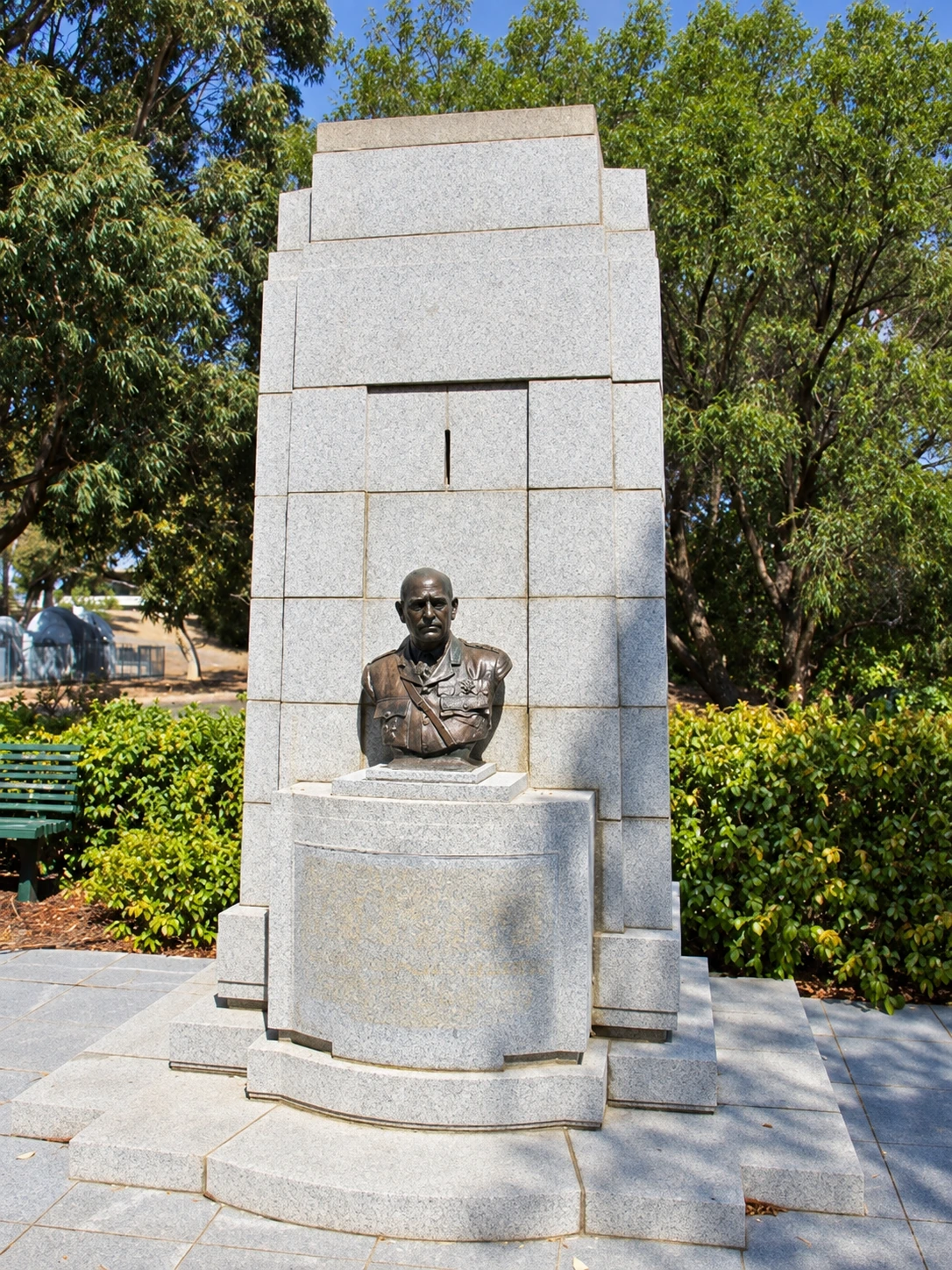
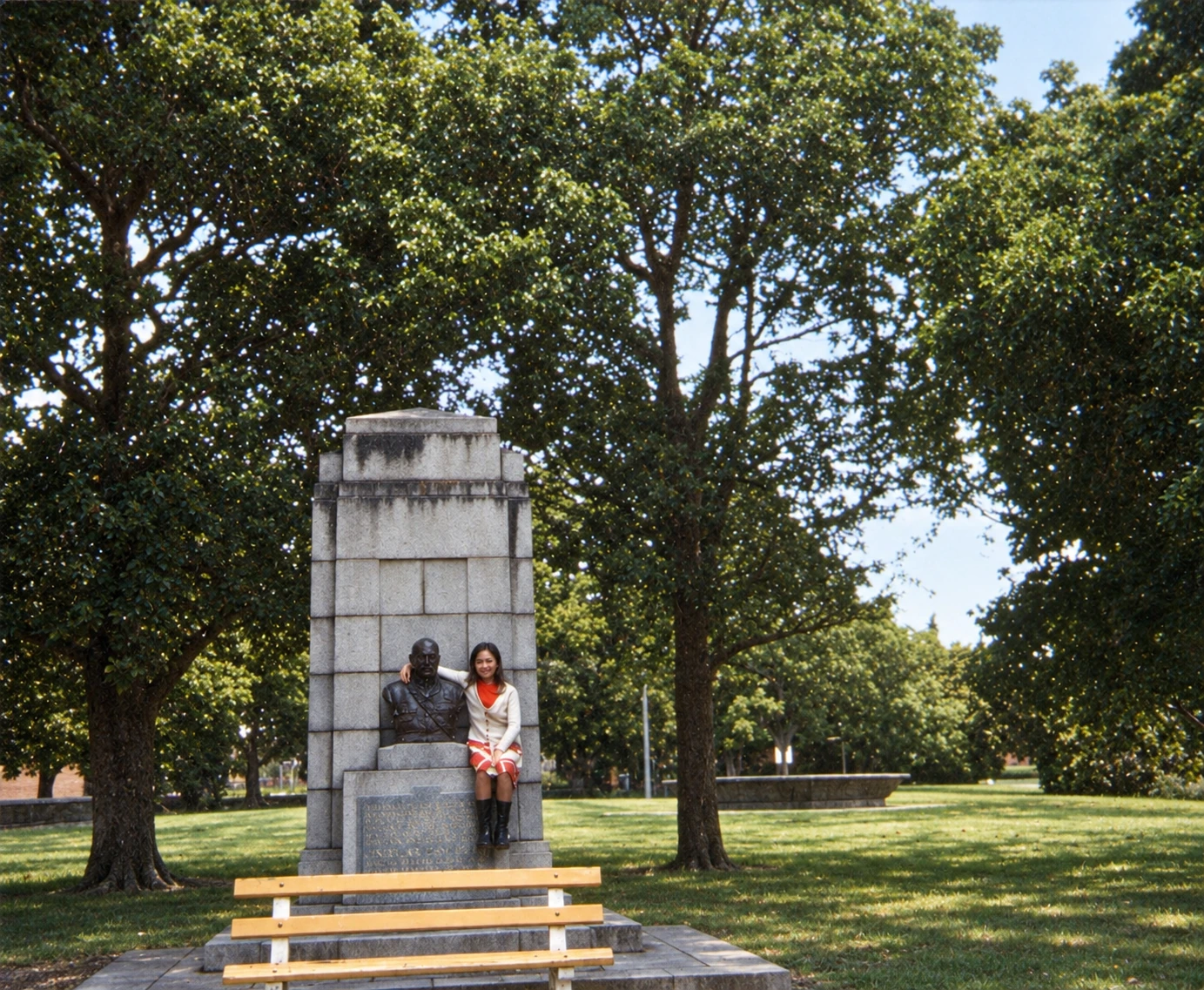
The bronze bust had been cut from its stone monument outside the centre. The plinth was damaged, and the volunteers believed whoever took it had used a hacksaw or grinder. PowerWorks secretary Val Prokopiv described the loss in terms that reached beyond the object itself: “This whole facility and everything we have belongs to the community; we’re only the custodians.”
Within a day, the bust was back. It was found lying face down in a planter box beside the building, close to the place from which it had been taken. Plans were made to repair the damage and reinstate it.
The brief disappearance was another episode in an unusually long public life. By then, Monash’s bronze face had already survived the removal of a medal from its chest, a relocation and the dismantling of the town for which it had been made.
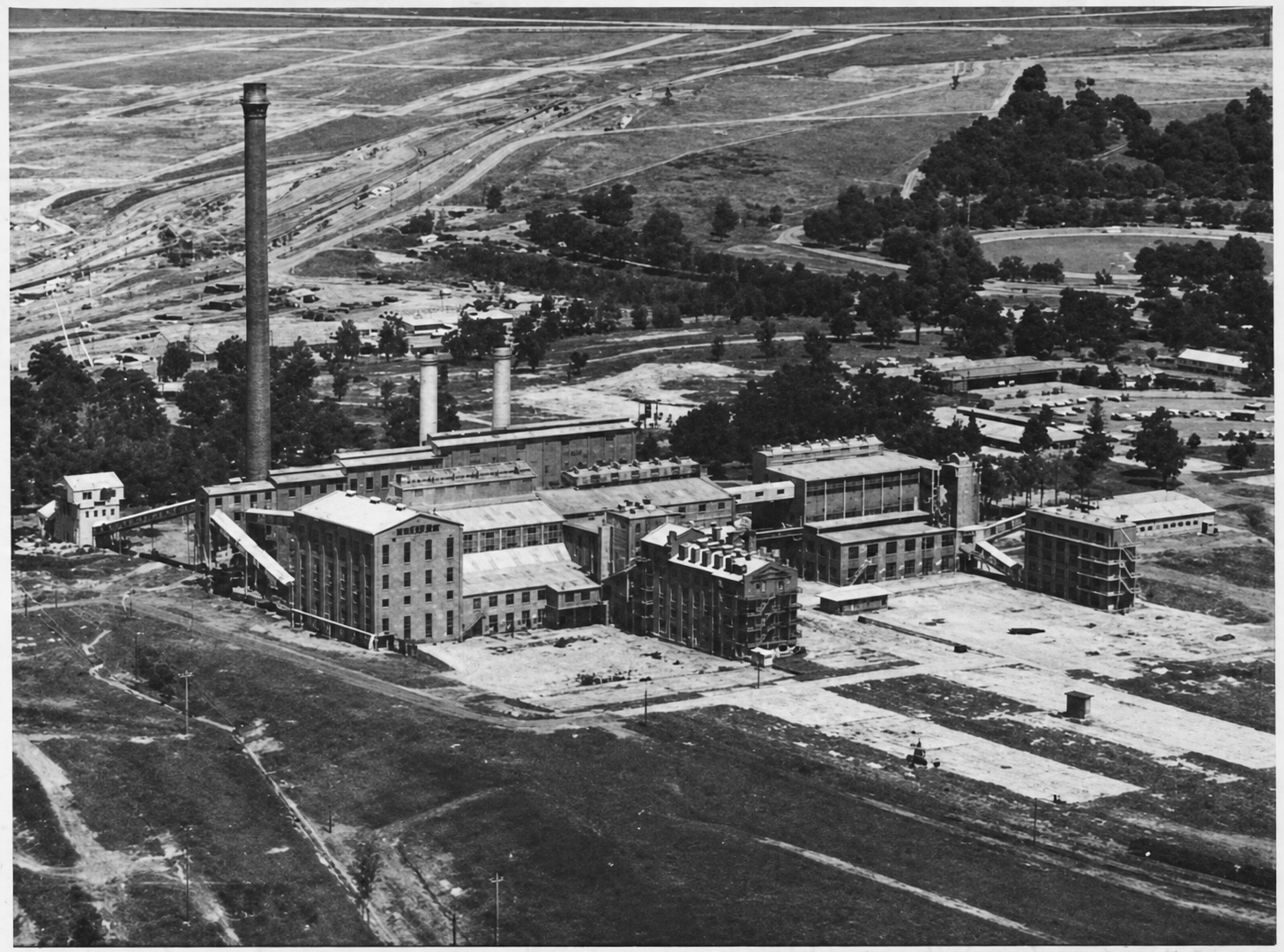
The story began with Monash’s death on 8 October 1931. He had served as chairman of Victoria’s State Electricity Commission from 1921 until that year, overseeing the early development of the brown-coal industry and the electricity system centred on Yallourn. His death prompted Commission staff and employees to establish a memorial in the town square.
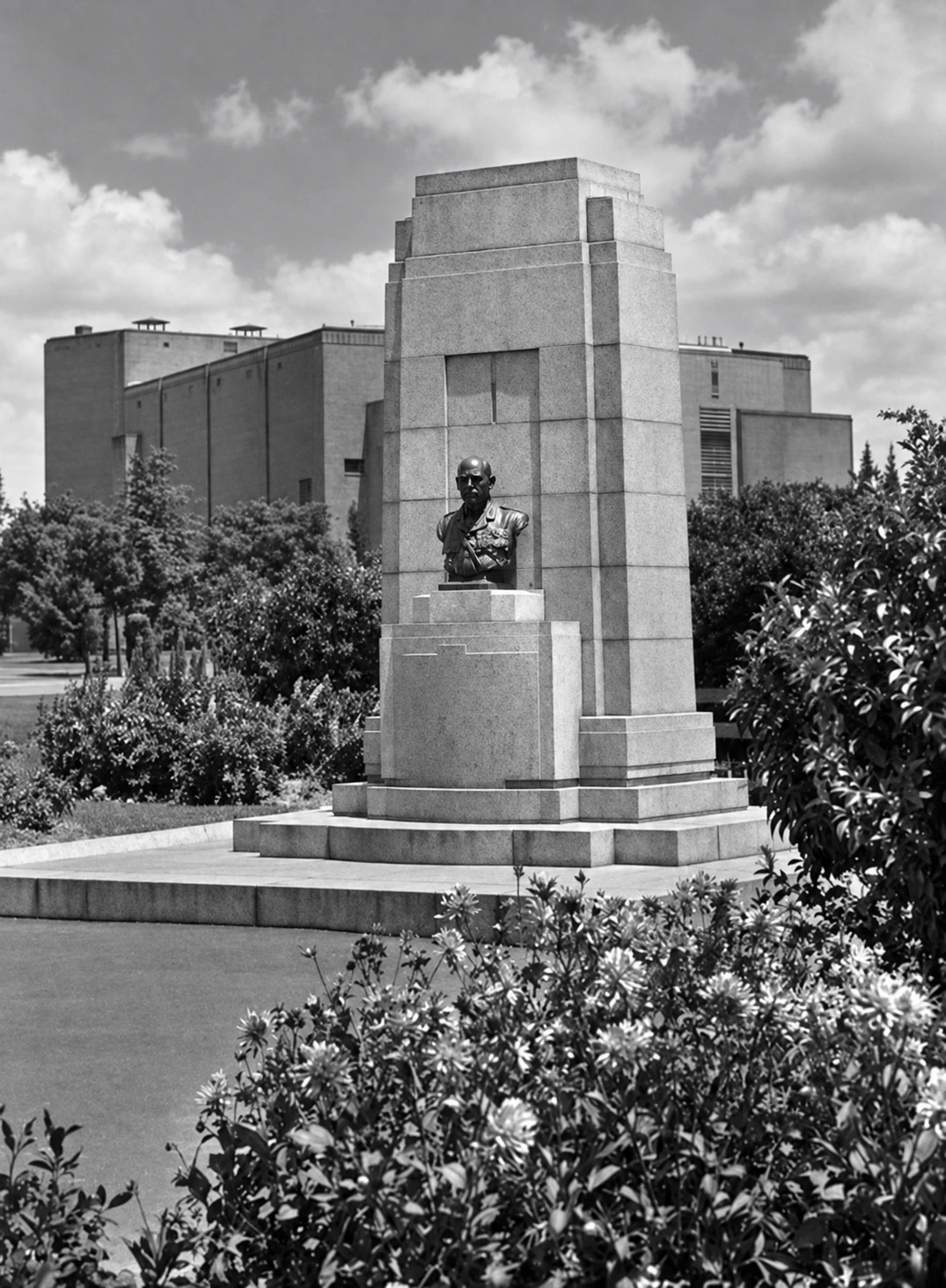
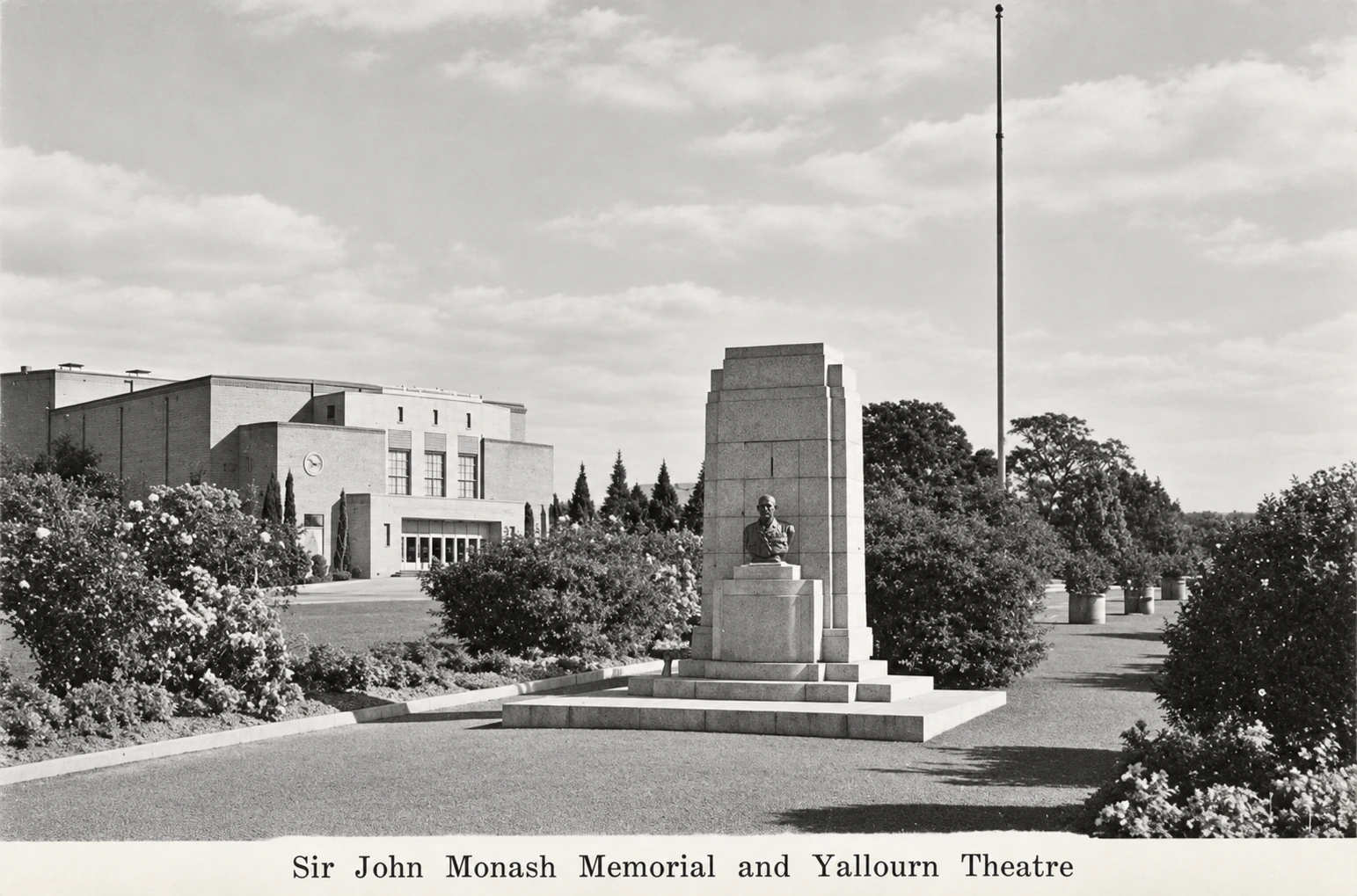
The Commission’s 1932 annual report recorded a response that was “liberal and universal”. More than £500 was subscribed. A granite monument was built in Yallourn’s Town Square around a bronze bust by the sculptor Paul Raphael Montford.
Sir John Monash Memorial in the SEC’s 1932 Annual Report
Its inscription named the people behind it. Employees “of all grades and branches”, together with the commissioners, had erected it as a permanent record of their affection and admiration for Monash. The words gave the monument a particular character. This was an institutional memorial, created through a workforce that wanted to place its regard for Monash at the civic centre of the town shaped by the Commission’s work.
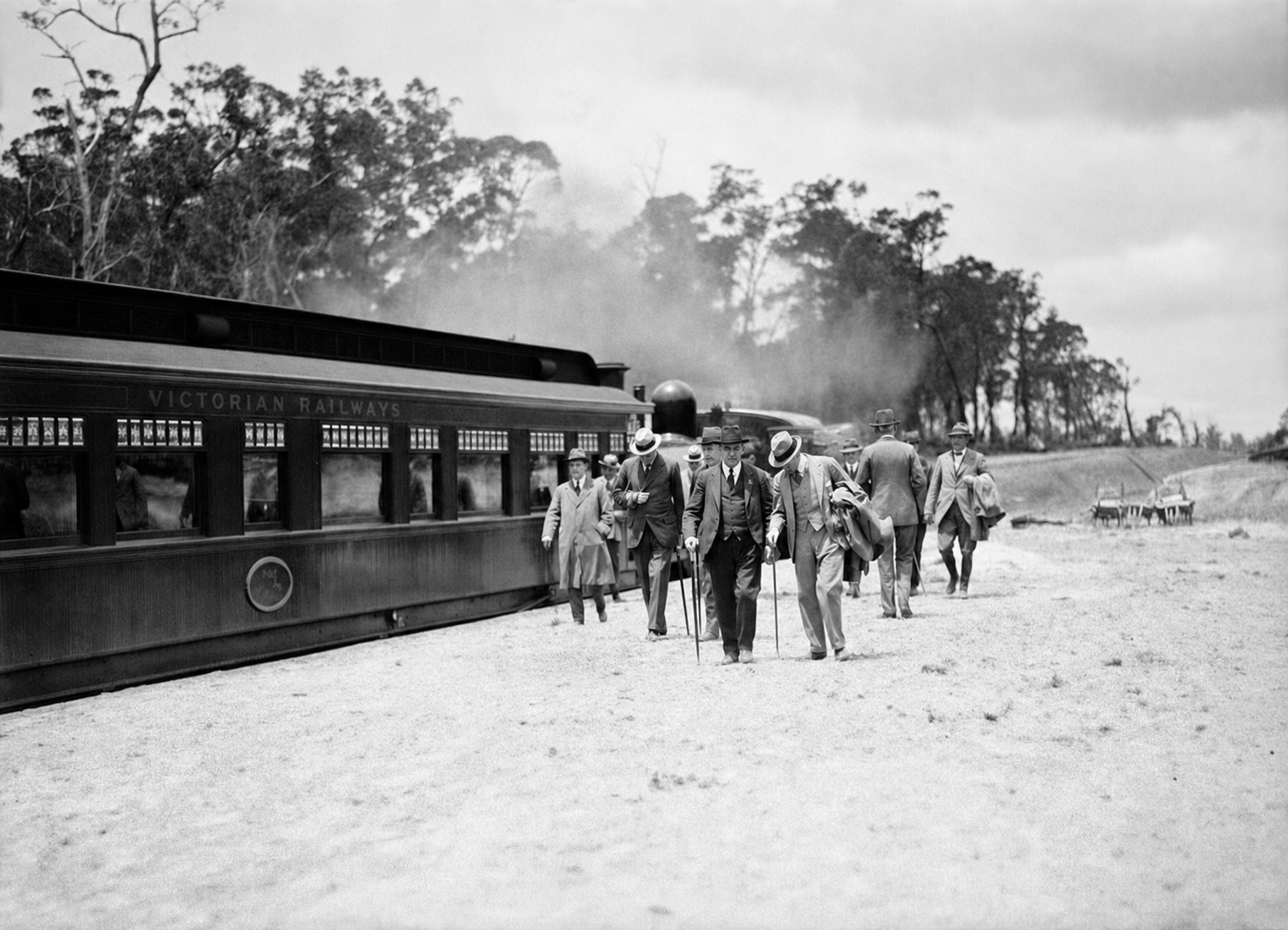
The monument was unveiled on Sunday 27 November 1932. The Commission arranged a special train from Melbourne, and visitors were offered an inspection of the open cut before the afternoon ceremony. The journey brought the capital to Yallourn through the same industrial landscape with which Monash’s public life had become closely associated.
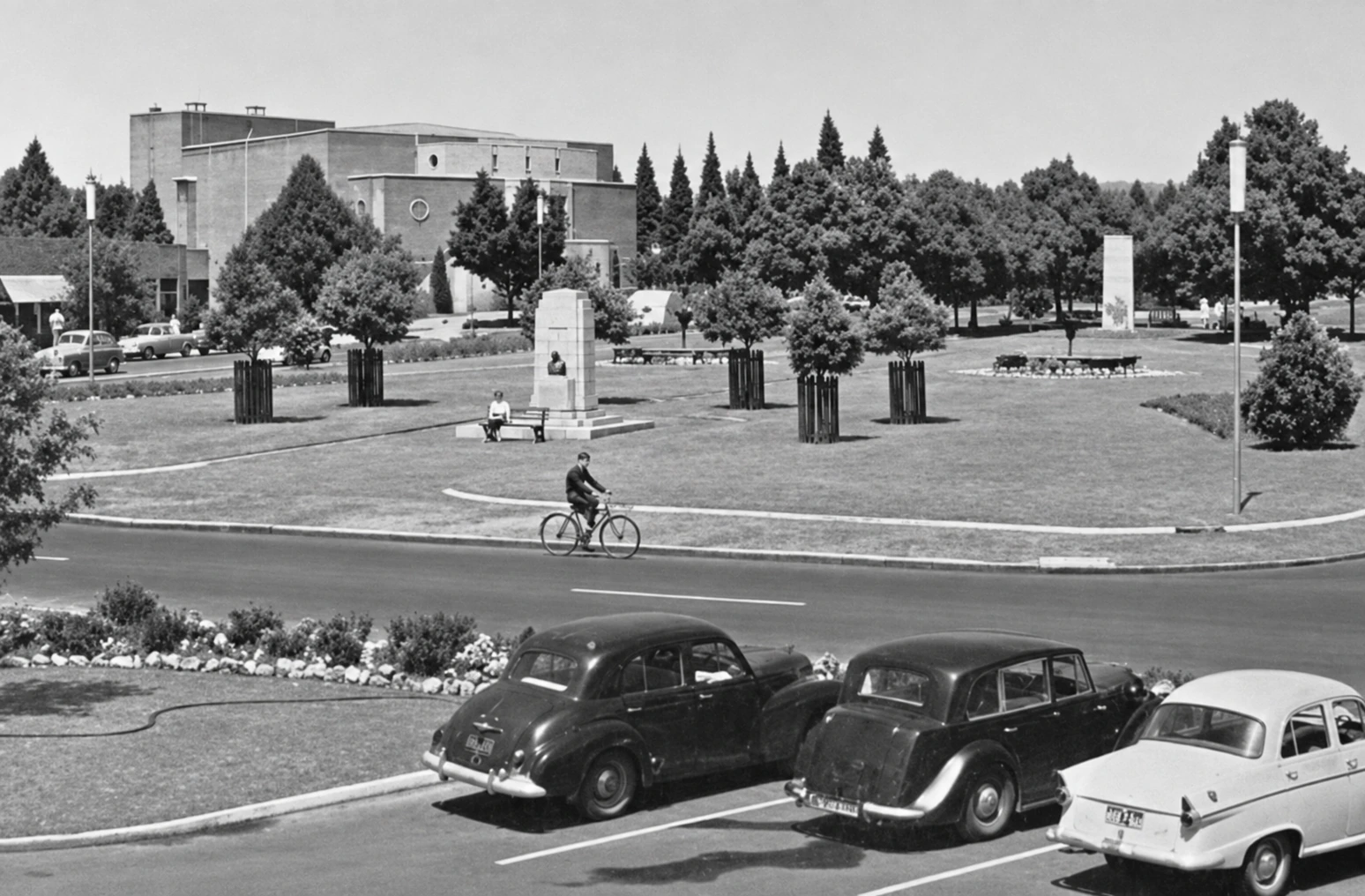
In Monash Square, the bust belonged to a carefully planned civic setting. Photographs show it standing in the open space near the theatre and the shopping centre. The bronze portrait was formal and unmistakable: head and shoulders, military tunic, decorations on the chest, the face turned slightly to one side. Montford presented Monash as the soldier and public figure Yallourn knew, set among the buildings of an electricity town.
The square gave the memorial its everyday scale. Official ceremonies could gather around it, while ordinary town life continued nearby. People crossed the square for shops, entertainment and community business. The surviving photographs preserve that relationship between monument and place even when they cannot tell us what every passer-by thought or felt.
The bust also carried evidence of human handling. Local historian Prue McGoldrick recorded that vandals removed one of its medals in 1956. The sculptor Andor Meszaros modelled a replacement from the original bust held by Monash’s daughter, Mrs G. Bennett. The new piece was cast and fitted with tools borrowed from Yallourn’s workshops. An act of damage was answered through another chain of people, objects and local skill.
Then the town around the monument began to go.
The dismantling of Yallourn started in 1975 as the open cut expanded. Houses were sold and shifted to other towns. By the mid-1980s, the planned streets, gardens and civic buildings had been removed. Materials and landmarks travelled outward in different ways, carried into new settings by families, community organisations and public custodians.
The Monash bust travelled too. Latrobe heritage records place it in Morwell during the 1980s. In 1994 it was installed outside PowerWorks, once again within a place devoted to the history of electricity and the Latrobe Valley. Its surroundings had changed from a living town square to a heritage and education centre, while its connection to the Commission, Yallourn and the region’s industrial history remained legible.
That journey gives the bust a significance beyond its portrait of one man. It became a physical link between the former town and the communities that received Yallourn’s people, buildings and memories. The monument’s granite and bronze held their own history, and each move added another layer: commemoration in 1932, repair in 1956, relocation as Yallourn disappeared, and recovery in 2018.
The word “custodians” suits this story. The Commission workforce first accepted that role when it raised the memorial. The people who repaired the missing medal accepted it again. So did those who moved the bust and the volunteers who searched for it after the theft.
The bust outlived Yallourn because that custody continued. It preserves Monash’s face, while its longer story preserves something of the town that placed him in its centre: an act of collective remembrance carried forward by successive hands.