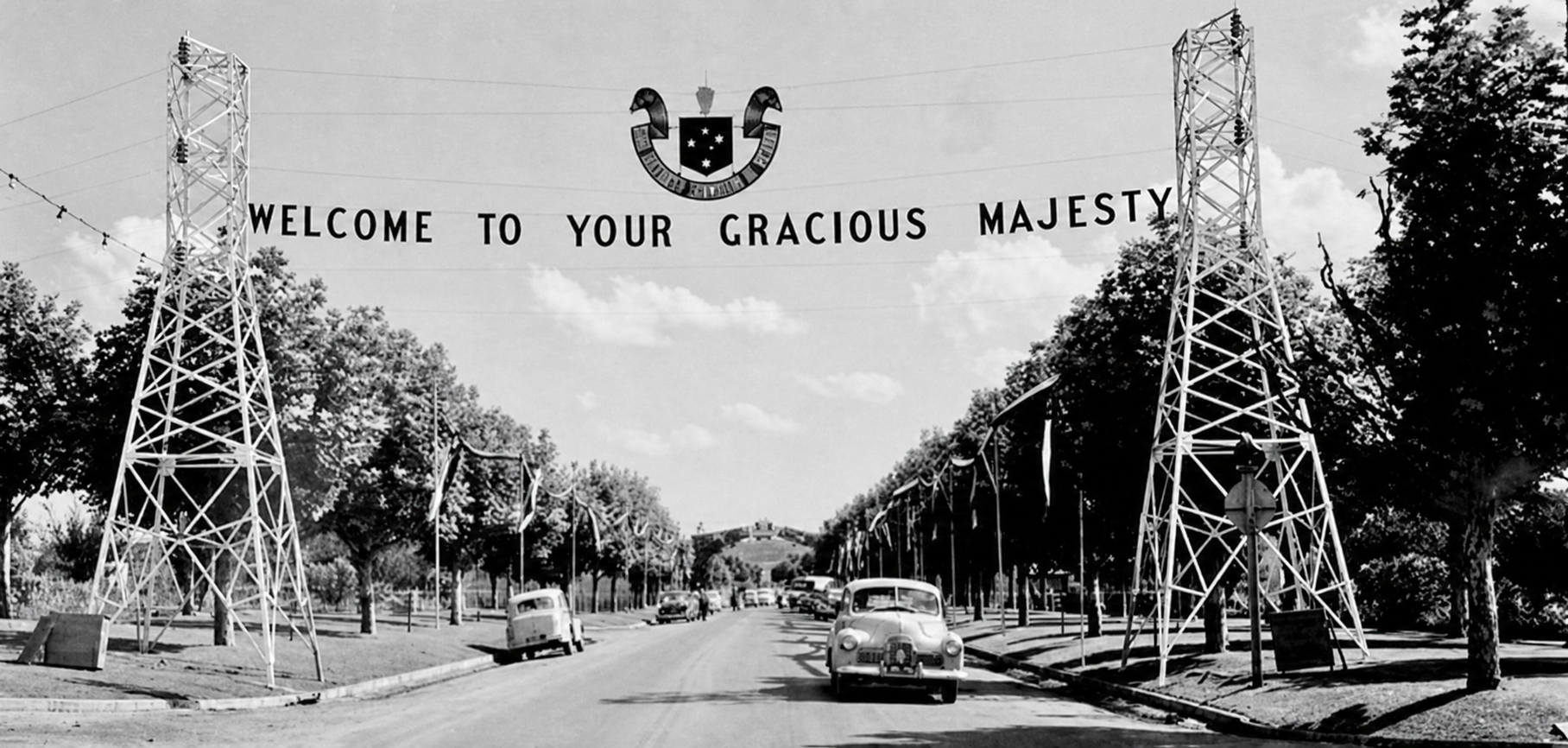
By the time the royal train reached Yallourn on Wednesday, 3 March 1954, the town had turned itself towards the railway station. Model electricity pylons stood on either side of Broadway with a welcome banner suspended between them. The Yallourn Brass Band was in place. Souvenir sellers moved among the decorations. Children, Guides and Brownies had been given positions near the dais, ready with flags.
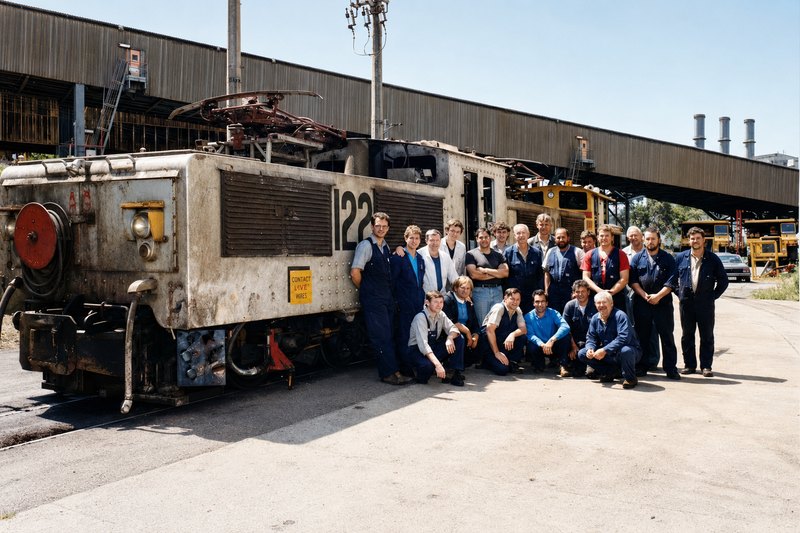
Former resident Harold Park remembered two large fountains made at the Yallourn Base Workshops for the occasion and installed in the town square. They carried the hand of the place into the ceremony: Yallourn workers had used their own skill to prepare Yallourn's welcome.
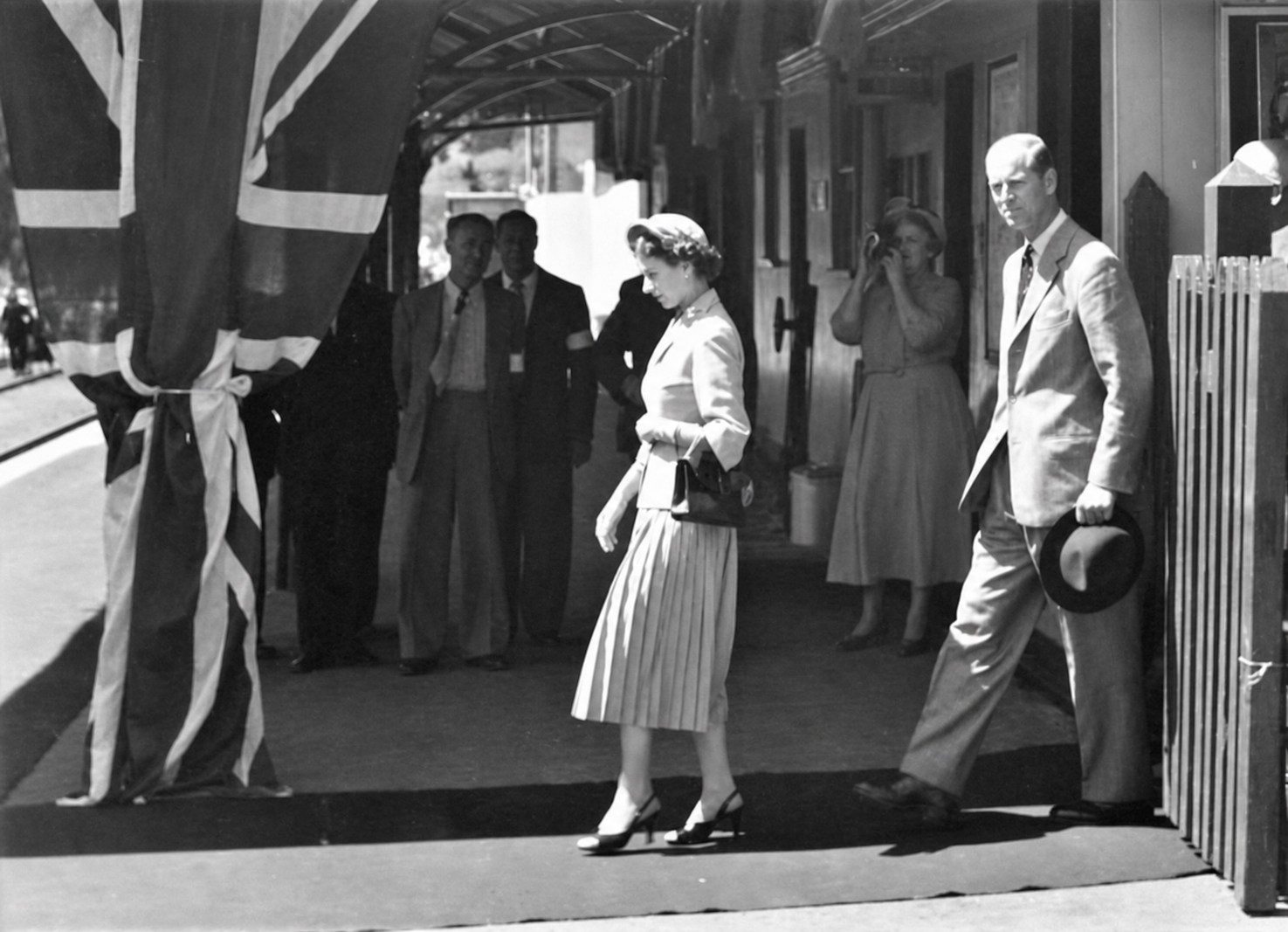
Then Queen Elizabeth II and Prince Philip, Duke of Edinburgh, arrived.
Elizabeth had been crowned the previous June. Her Australian tour was the first by a reigning monarch. Across nearly two months, the royal itinerary moved through capital cities and country towns, parliaments, hospitals, sporting grounds, farms and industrial sites. On this day the official route ran from Sale to Traralgon, Yallourn and Warragul before returning to Melbourne.
At Yallourn, the program had two clear parts: an Address of Loyalty at the railway station and an inspection of the brown-coal open-cut workings.
The Queen had come to be welcomed. She had also come to see the work.
A TOWN READY FOR ONE AFTERNOON
The preparations had spread well beyond Yallourn. Gippsland municipalities declared a public holiday. Special trains and buses brought people towards the royal route. Houses and businesses were encouraged to decorate. Local committees worked through questions of transport, bunting, crowd positions and the placement of hundreds of children.
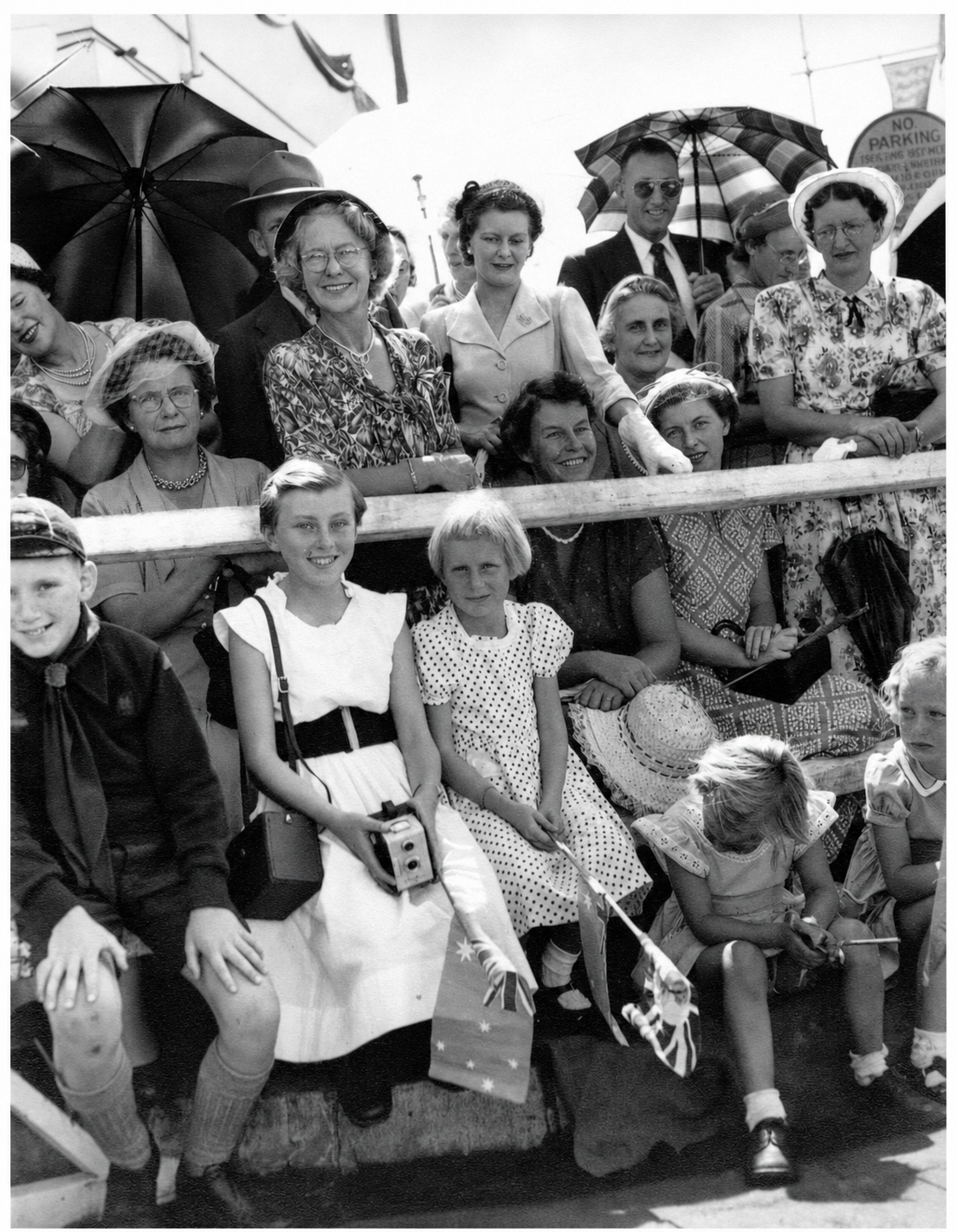
The Morwell Advertiser estimated that 70,000 people gathered across Traralgon, Morwell and Yallourn. Its Yallourn headline put the local crowd at 20,000. These were newspaper estimates rather than a formal count, but the surviving photographs give the scale a human shape: women and children packed along the route, people waiting behind barriers, a royal car passing beneath a welcome banner, and the broad civic spaces of Yallourn filled for the occasion.
For those who camped overnight, the visit began long before the Queen appeared. For the children holding flags, it was measured in hours of waiting and one brief moment of movement. For Park, standing in a guard of honour near the station and hotel route, it became a memory he was still recording decades later.
The official party then travelled on to the open cut.
WHY YALLOURN WAS ON THE MAP
Yallourn presented two faces of the same undertaking.
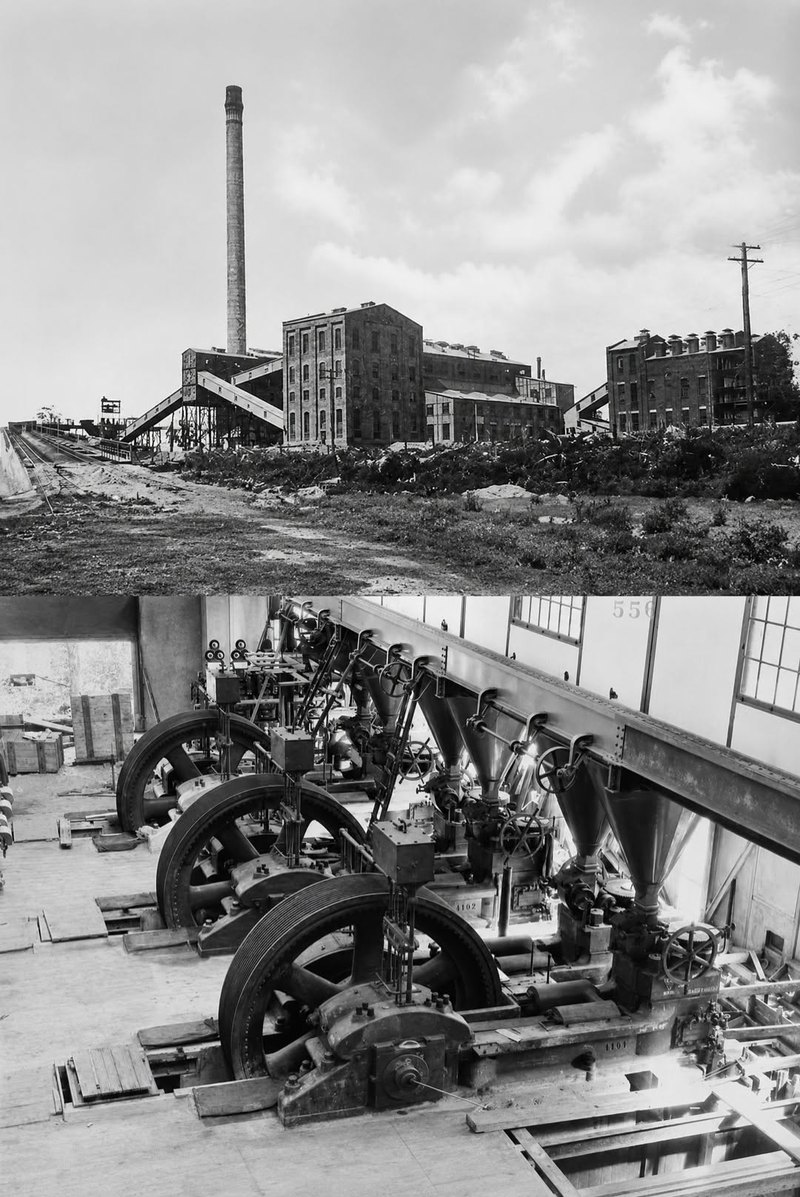
One was the garden town: curving streets, public gardens, schools, sporting grounds, a theatre and a town square planned beside the industry. The other was the great system of mine, power station, briquette works, workshops and transmission lines that carried Latrobe Valley brown coal into Victorian life.
The contrast was visible, but the two were never separate. The State Electricity Commission had built the town to house the people required by the power scheme. The gardens and civic buildings belonged to the same public project as the dredgers and boilers. Yallourn was both home and infrastructure.
Sir John Monash had accepted the general managership of the SEC in 1920 and soon became its chairman. Under the Commission, power from Yallourn was turned on in 1924. By 1930, the state grid had been established. Monash died in 1931, long before the royal train arrived. His connection lay in the institution and system the visitors came to inspect.
Monash's legacy was already around the scene: a state undertaking, a planned town, an engineering workforce and the belief that Gippsland's brown coal could be organised into electricity for Victoria.
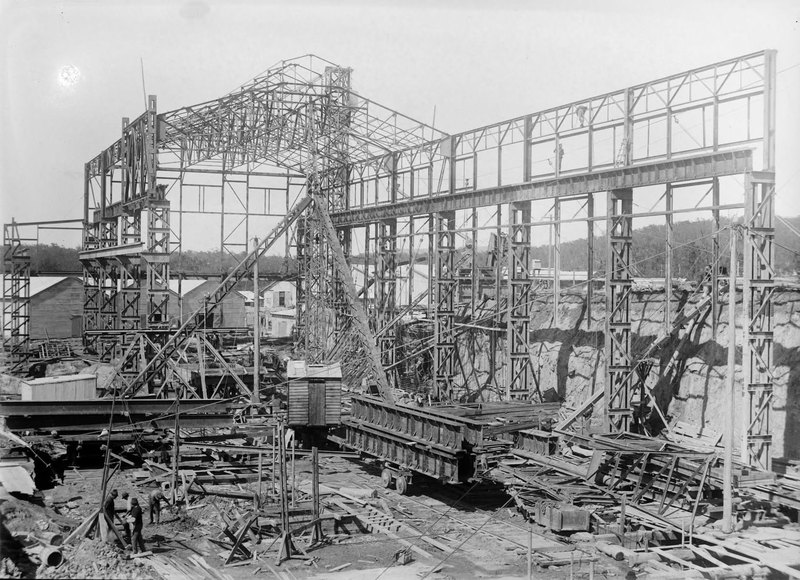
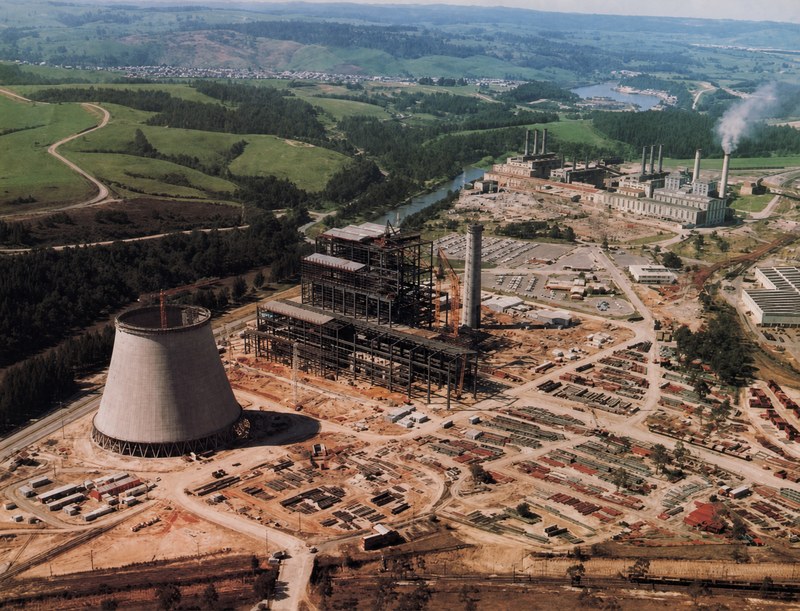
By 1954, Yallourn Power Station had been built and expanded over more than three decades, with further development still under way. Electricity had entered the ordinary structure of the state—homes, factories, transport, shops and public services. The machinery at Yallourn was regional in location and statewide in consequence.
The royal itinerary recognised that consequence.
BEYOND THE BUNTING
The open cut offered a different kind of spectacle from the decorated streets.
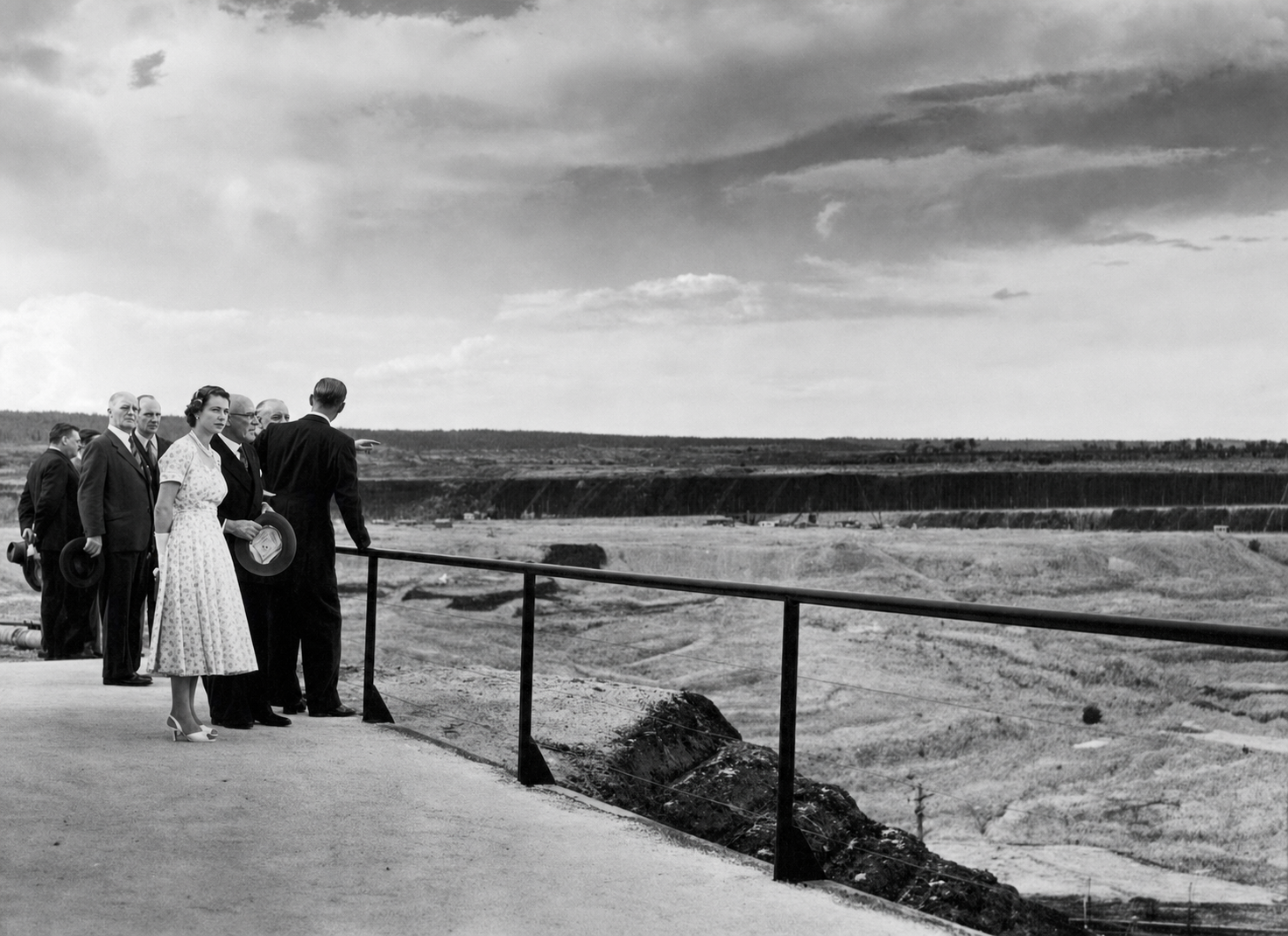
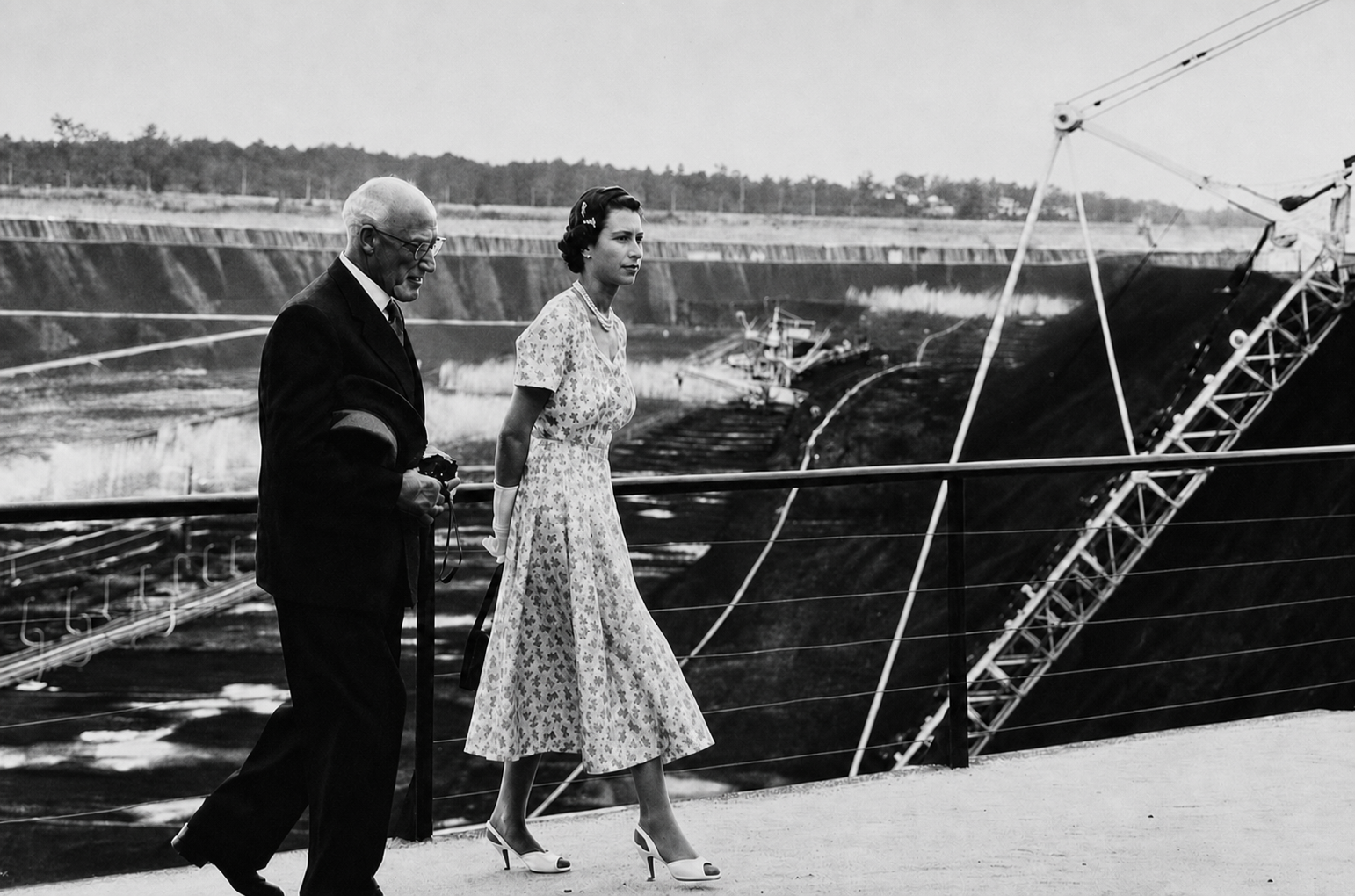
Here the ground itself had been opened. Brown coal was exposed and extracted on an industrial scale. Dredgers, railway lines and working faces formed the supply system behind the power station. This was the beginning of the process that ended with light, heat and motion far beyond the Latrobe Valley.
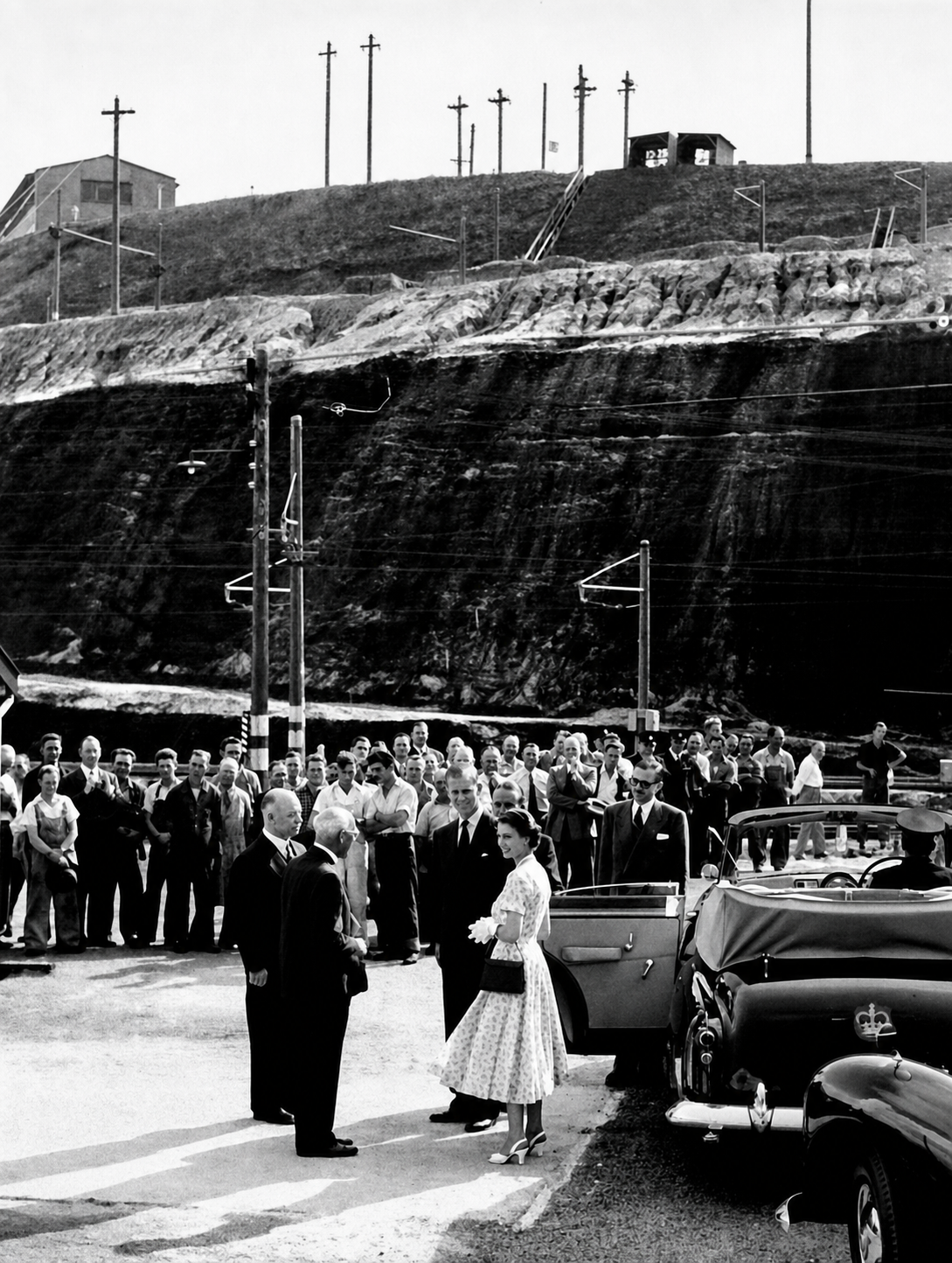
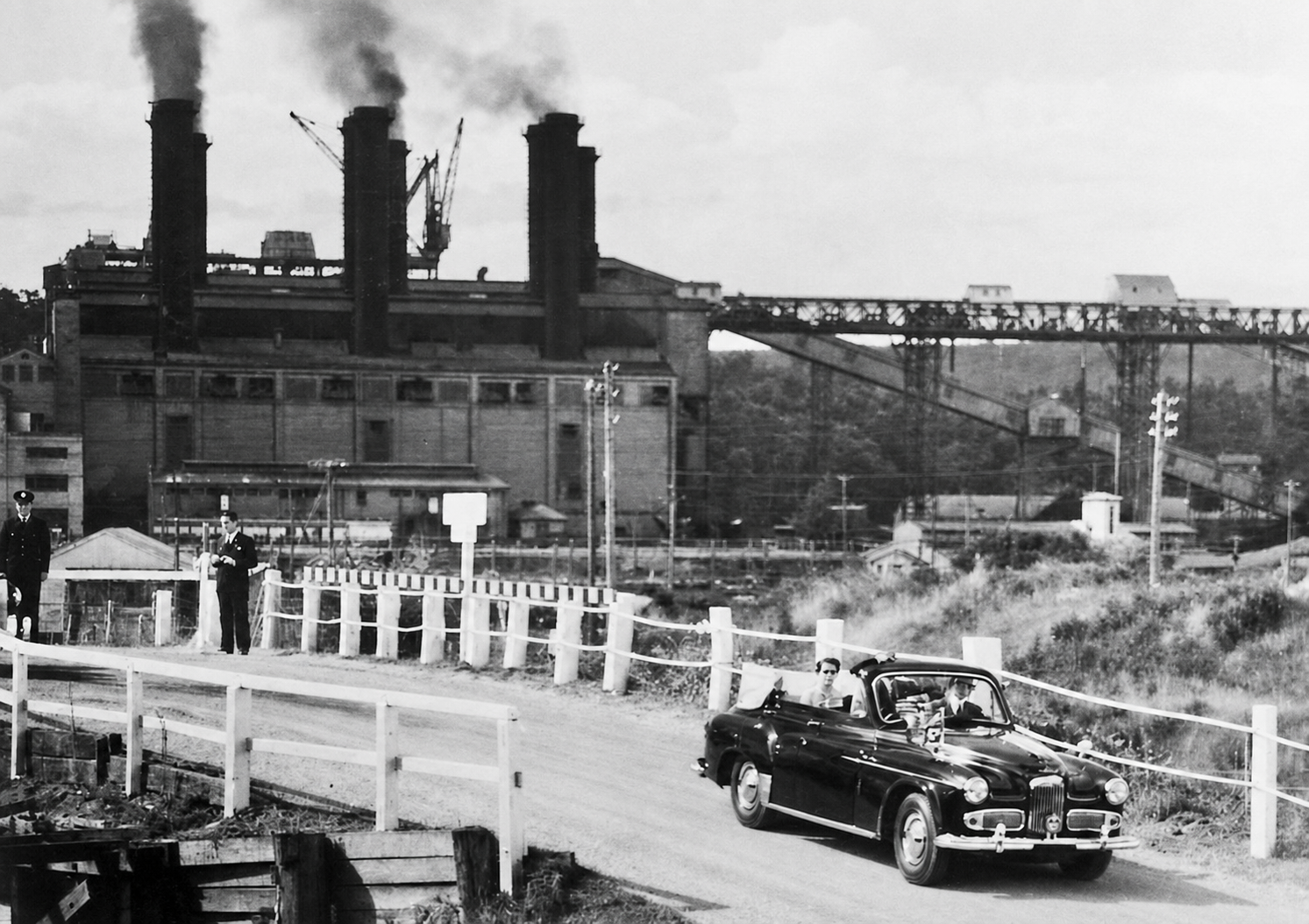
Museums Victoria's State Electricity Commission photographs show the Queen and the Duke of Edinburgh inspecting the mine. The SEC also made a 16-minute film of the occasion with a title that captured how quickly the town's great event passed: Yallourn's Royal Hour.
Read video transcript
Transcript supplied by the Sir John Monash Museum and lightly edited for obvious names, place names, punctuation and readability. The narration's meaning has been preserved.
Wednesday, 24 February 1954. Everything is in readiness. Political leaders, the justices, the service chiefs and leading citizens wait for the royal plane at the overseas terminal at Melbourne Airport. Meanwhile, the Queen's Colour is paraded to music from the Flinders Naval Depot Band. Here it is: the royal plane, flown by Captain Peter Gibbs, one of our leading pilots, arriving from Tasmania after a swift flight across Bass Strait.
The Queen sets foot upon Victorian soil for the first time. Her Majesty is greeted by His Excellency the Governor, Sir Dallas Brooks, and then by the Premier, the Honourable John Cain.
The guard of honour is provided by men of the Royal Australian Navy.
State political leaders, service chiefs, the justices and leading citizens are presented to the royal visitors, who then meet the senior officials responsible for the conduct of the Victorian tour.
The royal progress commences and the car passes slowly through the northern suburbs on the 11-mile journey to Parliament House. At last, the waiting crowds can voice their pent-up enthusiasm.
The royal car reaches Parliament House on this triumphal progress. The majestic Roman Doric style of architecture is a fitting background to this historic occasion.
The mounted police escort stands firm as the royal salute is fired in the Domain. With the President of the Legislative Council, the Honourable Sir Clifden Eager, the Queen returns to the royal car to continue the progress. The cars enter the incomparably beautiful Collins Street, with its tall elms and plane trees.
Through streets lined by a continuous guard of men from the services, the progress continues along Swanston Street to the cheering of hundreds of thousands of citizens.
The Duke, no stranger to Melbourne, is obviously enjoying his return.
Leaving the city, the progress passes over the Yarra River across Princes Bridge, along that beautiful and stately thoroughfare, St Kilda Road, to Government House in its superb garden setting.
The royal visitors reach what will become their home during their stay with us in Victoria. They are greeted by Lady Brooks, who performs a most graceful curtsy before Her Majesty and His Royal Highness.
Guides and Brownies with disabilities wave as the Queen inspects the guard. Our beloved Queen has come triumphantly to her home with us, her loyal subjects. Tonight the city is gay with light and colour. The royal crown has provided the illumination engineers and designers with a wonderful motif for their ideas. Never in the history of Melbourne has the city presented such an exciting spectacle.
While the illuminations glitter, let us turn to the organisation which supplies the electricity that has enabled the city to take on such a gay appearance: the State Electricity Commission of Victoria.
The illuminations on SEC buildings are beautifully designed, and once again the royal crown has provided a fitting motif. Victorians can be proud to show Queen Elizabeth and the Duke of Edinburgh the main source of Victoria's electricity, the Yallourn brown-coal power and fuel undertaking in the Latrobe Valley, which is unique in the British Commonwealth. The great SEC power station burns millions of tons of brown-coal fuel from the nearby Yallourn open cut. For 30 years, the SEC has been winning brown coal from this open cut, until the huge hole which has been excavated could now swallow the entire square mile of the City of Melbourne and leave no building showing above ground level.
The brown coal is trucked from the open cut to the power station and the briquetting factory. This huge dredger wins 500 tons of coal an hour from one of the steeply inclined coal faces. The coal lies beneath an overburden of clay and sand about 40 feet thick. The coal deposits beneath the overburden are 200 feet in thickness, and 100 million tons of coal have already been taken from the open cuts. At the briquetting works, moist brown coal is crushed and dried and then pressed into small blocks of high-grade fuel, ideal for industrial use.
On the momentous occasion of the royal visit to Yallourn, all is ready to give the Queen and her consort a royal welcome. This is Yallourn's greatest day. The town has been decorated and finishing touches are put to the official dais outside Yallourn Railway Station.
A very special bouquet has been prepared for presentation to the Queen, and excitement is gradually mounting as the townspeople begin to assemble. The Yallourn Town Band arrives through an arch of gum leaves framed with illustrations of Australian birds and animals. Cubs from Yallourn and surrounding districts and Girl Guides with a colourful display of flags move to their assembly points.
A fine body of country youth has joined the Boy Scout and Girl Guide movement in this district, and they undoubtedly add colour to the scene.
Children from the schools arrive and gradually the route of the royal progress becomes lined with thousands of children and adults.
Men of the militia and the SEC Construction Regiment, soldier-technicians of the Royal Australian Engineers, take their positions along the route.
Men of the Royal Australian Air Force arrive to take up their positions. Scouts with their brilliantly coloured flags form a guard of honour as the royal train reaches Yallourn.
On the railway platform, the Queen and the Duke are greeted by the Minister for Electrical Undertakings, the Honourable John Galbally, who presents SEC commissioners and executives.
A smart police motorcycle escort stands at the ready and cars for the royal progress are in position.
At last, the great moment has come for the people of Yallourn.
As the Queen appears and moves to the dais, she is greeted by the waiting crowds.
After an address of welcome on behalf of the people of Yallourn, the Queen speaks:
“Mr Chairman and councillors of the Yallourn Advisory Council and residents of Yallourn, I thank you very sincerely for the wonderful welcome which you have given to me and to my husband. My uncle, the Duke of Gloucester, has told me of the visit which he made to your town, and his report of what he had seen here convinced us that we must visit Yallourn and its brown-coal workings while we were in Victoria. I am very glad to know that so many men and women from the British Isles have made their homes in your district and that they are working side by side with you to develop the natural resources with which it has been so bountifully endowed. May every blessing attend your labours.”
Councillor Thomas Forristal, chairman of the Town Advisory Council, presents his fellow councillors to the royal visitors.
All is in readiness for a triumphal royal progress. As the Queen and the Duke enter the royal car, the progress commences down Broadway, a beautiful thoroughfare lined with lawns and trees.
[Cheering]
The royal progress enters Monash Square, named after General Sir John Monash, who was chairman of the State Electricity Commission from 1921 to 1931. General Monash, brilliant soldier and engineer, laid the foundations of this great Yallourn power and fuel undertaking, which now provides the royal visitors with one of the highlights of their tour of Australia.
Leaving Monash Square, the royal progress passes through the RSL strongpoint.
As these toddlers demonstrate their loyalty so excitedly, the progress leaves the town and sweeps into the road leading to the SEC works.
In the distance is the great power station. Here also is some of the new construction which will make Yallourn the biggest steam power station in Australia.
The royal progress arrives at the edge of the vast brown-coal open cuts. The Queen is greeted by Mr Ralph Hunt, chairman of the SEC.
The Duke is greeted by “Big John” Field, the Commission's general superintendent at Yallourn.
The royal visitors arrive at the observation point, where a special pavilion has been erected for this great occasion. Mr Hunt accompanies the Queen to the edge of the observation platform, and Her Majesty asks many questions about this unique undertaking. The Queen learns that this vast open cut uncovers only a small part of the brown-coal resources of this region, which contains the largest deposits in the world. Mr Hunt explains that this coal, soft, moist and earthy in texture, is Australia's cheapest source of power because coal-winning machines can so easily excavate great quantities daily for the power station and the briquette works.
The Queen and the Duke enter the pavilion and sign the visitors' book. Many famous visitors to Yallourn have signed their names in this book, but the most illustrious names of all are these: Elizabeth II and Philip, Duke of Edinburgh.
The Queen leaves the observation platform with Mr Hunt. The Yallourn brown-coal open cut has provided the royal visitors with a memorable experience.
Mr Hunt introduces long-service men of the project, six men who have served with the SEC for an average of 32 years each.
As the Queen returns to the royal car, a group of workers has a wonderful opportunity to see Her Majesty at close quarters. This royal visit to Yallourn has enabled the Queen to see one of Australia's outstanding achievements and is bound to attract widespread interest in the further development of Victoria's brown-coal industry that is now being carried out. As they prepare to leave, the Queen and the Duke express their thanks to the State Electricity Commission.
These toddlers are certainly enthusiastic about their Queen.
As the royal progress returns to Yallourn Railway Station once again, the thousands lining the route express their patriotism and their loyalty to the Queen.
So ends the royal visit to Yallourn, an experience which will live long in the memories of all who have been here today.
The film brought working industry into royal pageantry. It placed miners, engineers, tradespeople, operators and the community built around them inside the public story Australia was telling about itself in 1954. The Queen and the Duke did not encounter Yallourn as a distant name on a transmission map. They travelled through the town and stood at the mine.
WHAT THE DAY PRESERVED
The later fate of Yallourn can make every surviving image feel like a farewell. In 1954, it was not. The decision to remove the town had not yet been announced. The streets were lived in and the power undertaking was still expanding.
That is why these photographs carry more than royal nostalgia. They show Yallourn as a complete and confident place at the centre of its own day. The town did not borrow significance from the visitor. The visitor came because Yallourn already mattered.
When the royal party returned to the train and continued towards Warragul, the model pylons, fountains, flags and temporary decorations remained behind. Beyond them were the open cut, the power station, the workshops and the people whose labour kept the system moving.
The royal visit lasted an afternoon. Its strongest image is not the crown or the car. It is the movement from the dais to the mine—from ceremony to the work that had put Yallourn on the national itinerary.
On 3 March 1954, the open cut was the reason for the occasion.