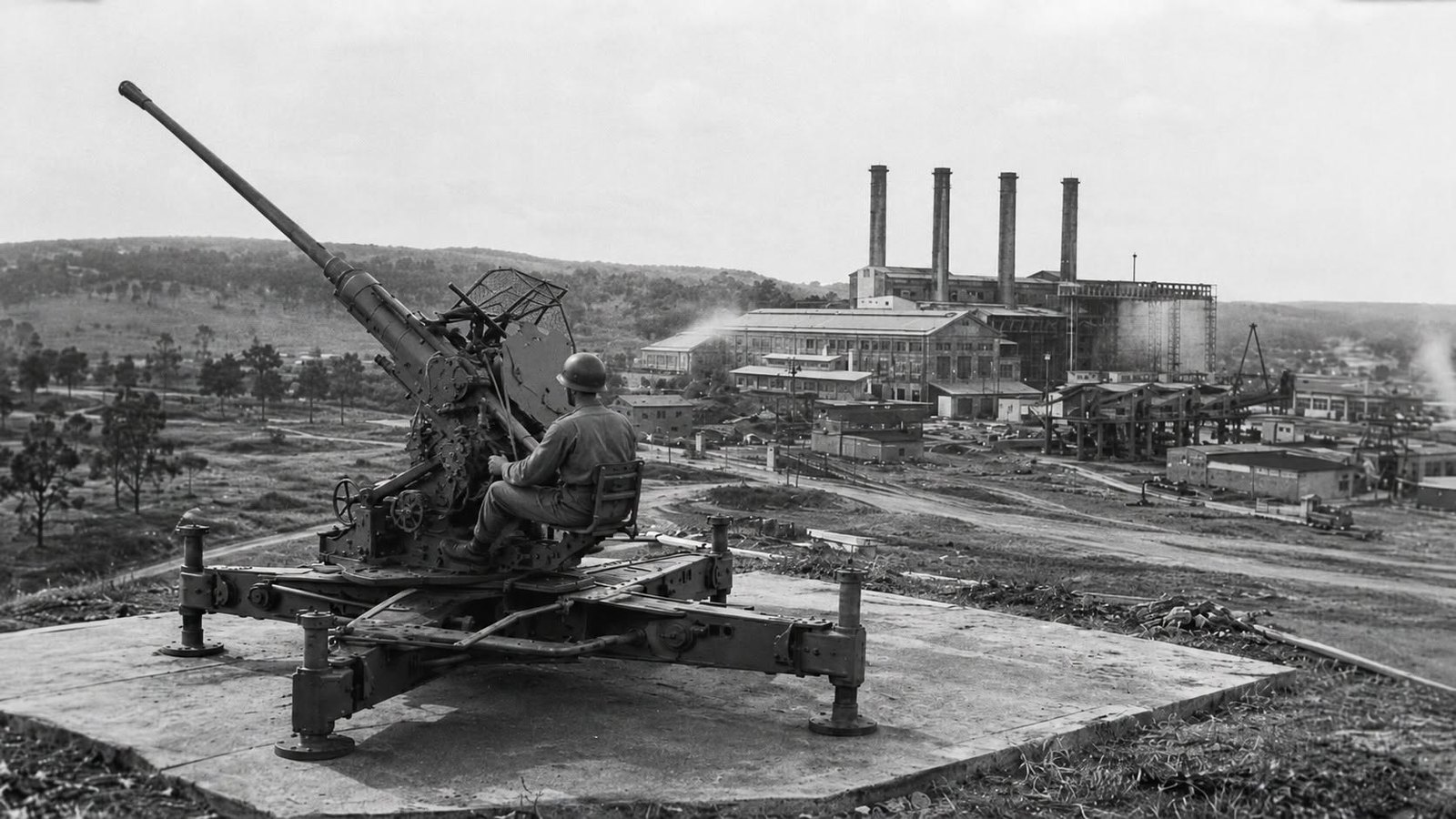
This was a company town built for electricity. During the Second World War, it became something more serious. Yallourn became defended ground.
The reason was simple. Victoria depended on Yallourn.
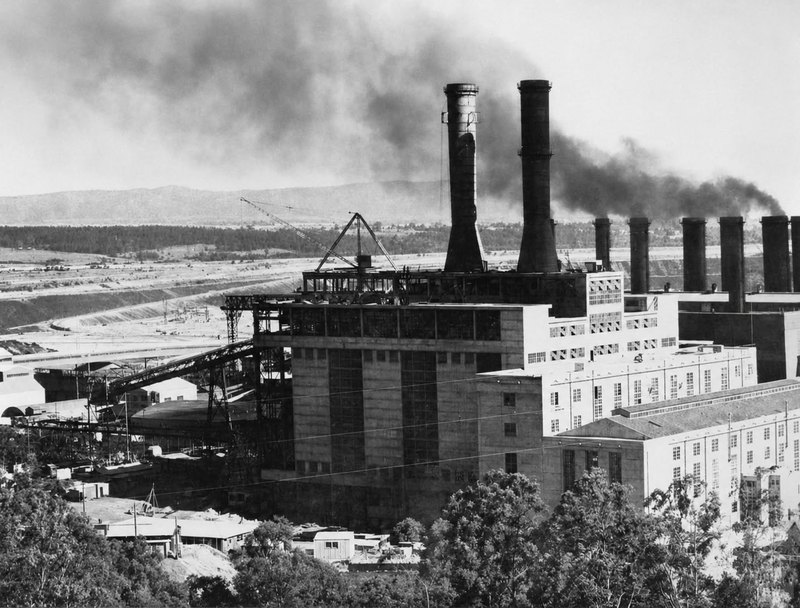
The brown coal came from the open cut. The power station turned that coal into electricity. The electricity fed homes, factories, workshops, railways, and the industrial life of the state. Yallourn was a working town, a power town, and by late 1941 it was treated as critical infrastructure in a country preparing for the possibility of attack.
The defence was real.
A Heavy Anti-Aircraft Battery was formed for the protection of Yallourn Power Station. The machinery itself was protected. Reinforced concrete was placed over the turbo-generators. The boilers were given overhead protection and lateral protection. The people responsible for defence were not only watching the sky. They were protecting the working heart of the station.
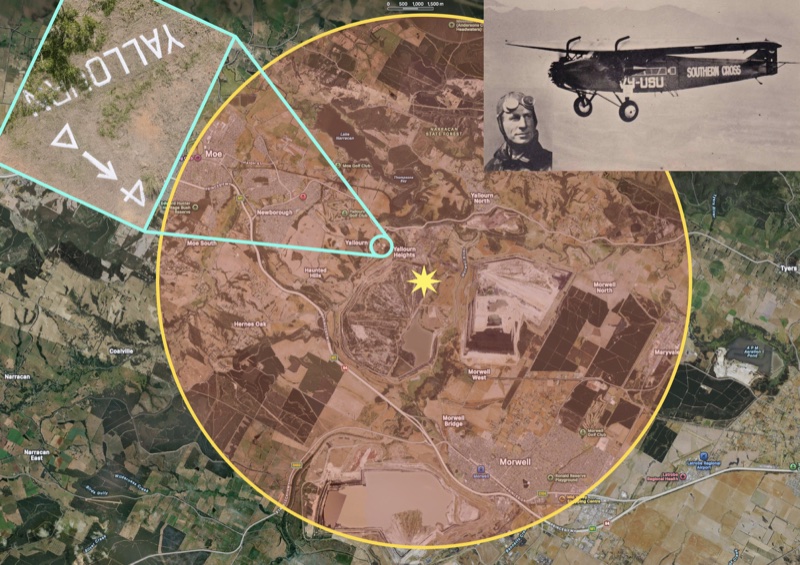
Anti-aircraft guns were positioned around Yallourn and Yallourn North. Local accounts remember gun batteries at both sites, warning shots fired at aircraft that strayed into the restricted area, and the power station complex being treated as a no-go zone from the air. Yallourn North records describe the area within five miles of the open cut mine as a prohibited area for aircraft, with four static guns placed to help protect the mine and State Electricity Commission infrastructure.
The guns were not symbolic. They were practical, heavy, mechanical answers to a terrifying question: what happens if the war reaches the places that keep the country running?
The Bofors gun tells part of that story. The restored gun on Anzac Street in Moe stands today as a reminder of the Latrobe region’s wartime importance. The Bofors was a Swedish-designed 40mm autocannon, capable of firing up to 180 rounds per minute. The local restored example was a static gun, built to be bolted down to concrete. It was not there to move with an army. It was there to defend infrastructure.
That detail matters. A mobile gun follows the front. A static gun declares that the front might come to you.
Then came 1942.
On 19 February, Japanese aircraft bombed Darwin. Mainland Australia had been attacked from the air. The danger was no longer theoretical. Three months later, from 4 to 8 May 1942, the Battle of the Coral Sea stopped the Japanese seaborne invasion force heading for Port Moresby. Had Port Moresby fallen, Japan would have gained a stronger position from which to threaten northern Australia and pressure the sea lanes linking Australia with the United States.
Yallourn sat far to the south, but it belonged to that same wartime map.
This was not a battlefield in the usual sense. There were no enemy troops in the streets. No bombs fell on the power station. The guns did not fire at enemy aircraft. But the town lived under the logic of war. Workers still went to their shifts. Families still drew their blackout curtains. Children still knew where the shelters were. Guards still watched the entrances. The open cut kept producing coal. The power station kept producing electricity.
That was the victory Yallourn was asked to deliver.
Keep working. Keep generating. Keep the lights on.
The eight guns are gone. The blackout curtains are gone. The backyard shelters have disappeared. The old power station has been demolished. But the meaning remains clear.
Yallourn was defended because it mattered.
It powered Victoria in peace. In war, it was protected as a place the state could not afford to lose.
That is the hidden war story of Yallourn. Not a story of distant battlefields, but of a town whose ordinary work became part of Australia’s defence. A coal town. A power town. A community living beside machinery so important that concrete, guns, guards and wartime discipline were placed around it.
The Sir John Monash Museum sits at the heart of that larger story — the story of how Yallourn helped build Victoria, and how, when war came close to Australia, Yallourn stood ready to defend the power that kept the state alive.