The 2020-21 lockdowns are not the first time Victorians felt the pain of government restrictions.
We remember how quickly ordinary life can be reorganised by rules: work, shopping, travel, family visits, school, business hours, movement through our own streets and towns. During COVID, private routines became public responsibilities almost overnight, and daily decisions were suddenly connected to hospitals, supply chains, workplaces and the wider state.
In the 1940s, Victoria lived through another kind of restriction. This one came through coal, electricity and heat. By 1945, after fire had entered the Yallourn open cut, householders were permitted to buy coal for one purpose only: heating water. The fuel used for warmth, cooking, laundries, railways, factories, briquettes and power generation had become so scarce that ordinary domestic life was being organised around it. A cold morning, a load of washing, a bath, a kitchen stove and a factory shift were all tied to the same question: how much fuel could Victoria spare?
This is the crisis behind Yallourn C Station planning, building and innovation. And Victoria becoming energy self-sufficient.
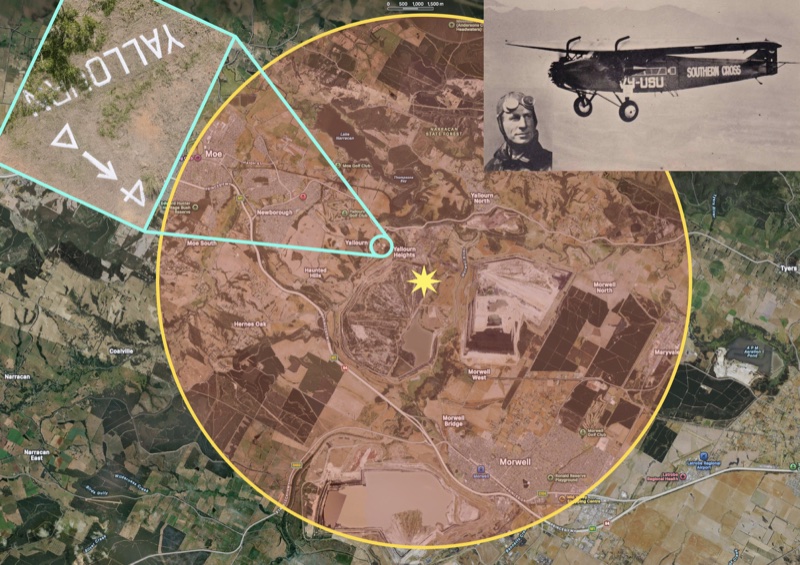
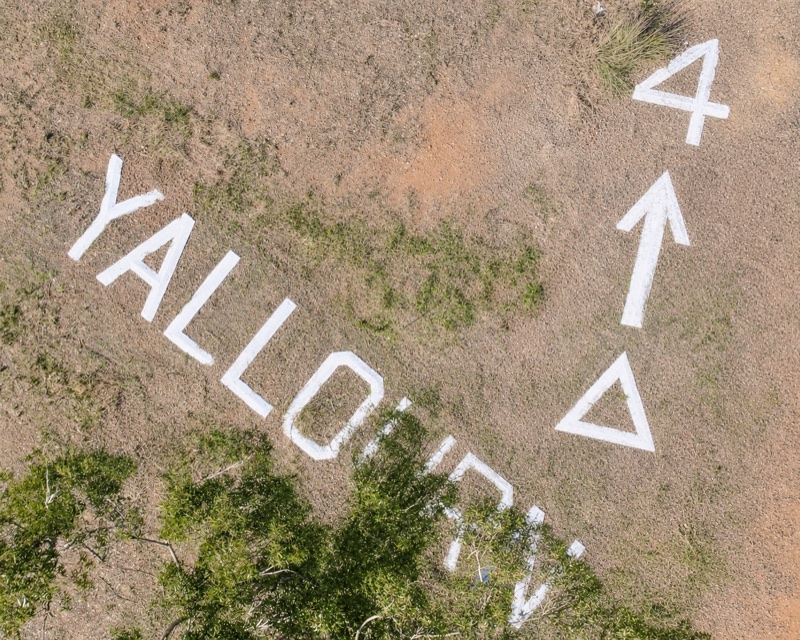
Bob Garvin was a schoolboy in Yallourn on 14 February 1944, the day the fire came. His sister Chris collected him from primary school, and the two of them walked home holding onto fences because the smoke was too thick to see through. The fire had started as a smouldering burn-off on a farm north of town, but by early afternoon the wind had turned north-westerly, the temperature had risen, and the fire was racing towards Yallourn.
Students waited in the schoolyard to be collected by family as smoke rolled across the town from the Hernes Oak direction. Some hedges and shrubs caught alight. Grit and small stones blew through the streets. Children could not get to Morwell or Moe because the roads were blocked. Patients were evacuated from Yallourn Hospital as flames scorched the walls, and at the railway station trucks loaded with briquettes caught alight from flying embers. Soldiers, airmen, volunteers and townspeople fought to keep the township alive.
Yallourn itself survived, with no houses lost in the township and no deaths there. The wider district paid heavily: nine people died and 136 houses were destroyed in Hernes Oak, Morwell and Traralgon. Then the fire reached the open cut.
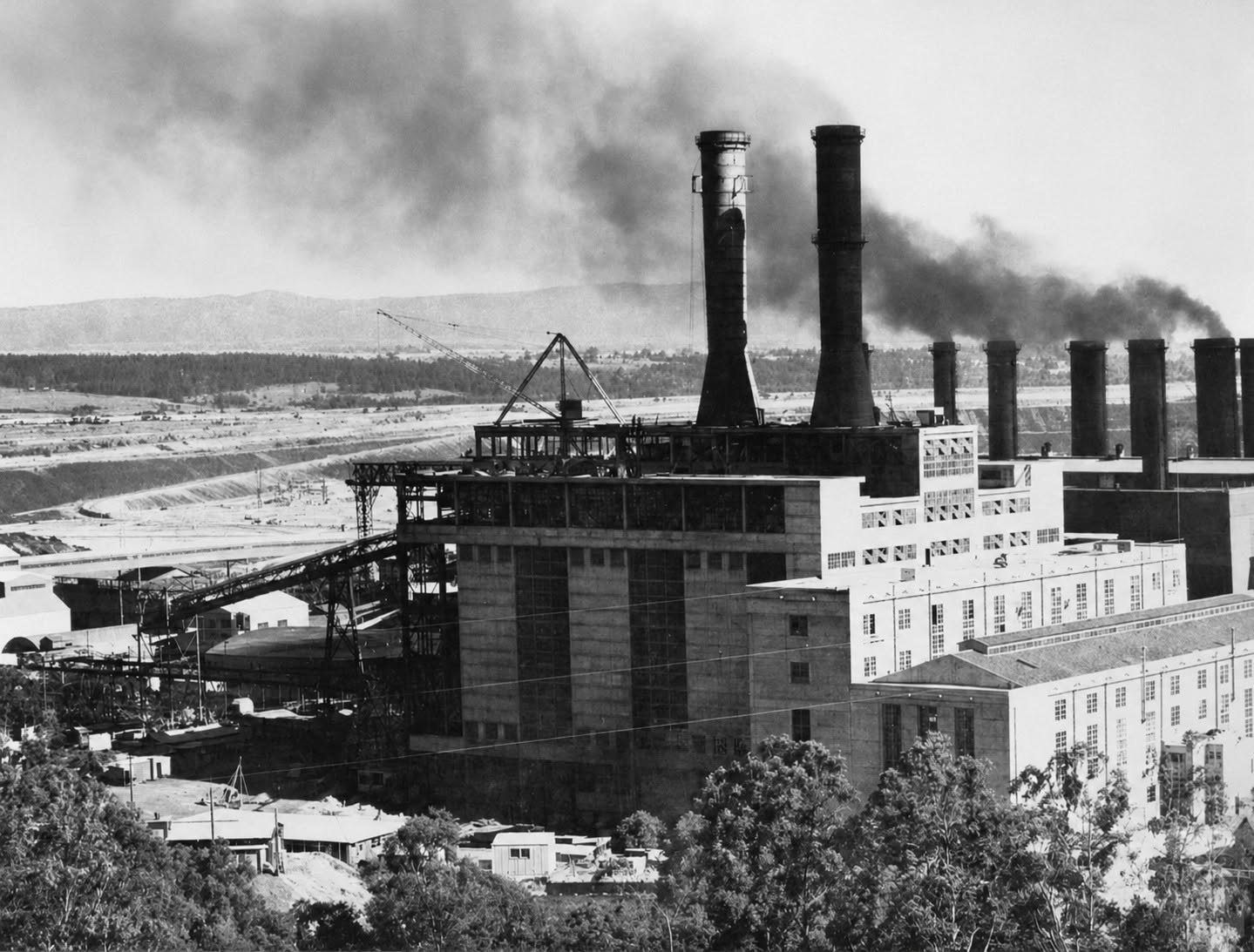
Brown coal is around two-thirds water by weight, yet it burns once it catches. When fire gets into exposed coal seams, the problem becomes larger than flames on grass, hedges or timber. The fire can move into the fuel itself. The Yallourn open cut was the mouth of Victoria’s power system. Coal from that cut fed the boilers; the boilers made steam; the steam drove turbines; the turbines generated electricity; and that electricity ran trams, trains, factories, workshops, streetlights, homes and essential services. When fire entered the open cut, it struck the place where Victoria’s energy began.
The damage tightened an already strained fuel system. Coal supply was disrupted, restrictions deepened, and firewood was made available to Victorian Railways for locomotives doing shunting work in marshalling yards. The state was pushing substitute fuel into jobs normally done by coal. During the war years, the electricity system came close to load shedding several times, a technical phrase that translates into something very simple: at certain times, Victoria was asking for more electricity than its power stations could physically produce.
The State Electricity Commission explained the pressure plainly. On a cold winter morning around 7.30am, every generator in every power station could be working flat out, with boilers producing maximum steam and hydro-electric stations supplying everything they had. Then the morning peak arrived. Trams and trains were running, factories were switching on machinery, homes were using power, industry needed electricity, and essential services had to be protected. Restrictions applied to almost every class of consumer except tramways, while industry was restricted very little because factory production and full employment had to be maintained. Households carried much of the discipline.
This is where the COVID comparison becomes useful, because Victorians remember the feeling of private decisions being connected to a state-wide emergency. In the 1940s, turning on power at home was connected to a boiler at Yallourn. Heating water was connected to coal supply. Factory production was connected to an open cut mine. A cold morning in Melbourne was connected to men working machinery in the Latrobe Valley.
The war had pushed demand for fuel up by around 70 per cent, while black coal from New South Wales and overseas became harder to secure. Yallourn became the base-load workhorse of the SEC’s small fleet, but Victoria was still exposed. In 1949, a seven-week national coal miners’ strike hit Australia. About 23,000 miners were involved, industry was brought to a standstill, and black coal was no longer available to Victoria from interstate. The SEC could not maintain full briquette production, electricity restrictions followed, and those restrictions were not fully lifted until 1953.
From the Yallourn fire in 1944 to the end of electricity restrictions in 1953, Victoria spent almost a decade living with fuel insecurity, coal shortages, power restrictions and rising demand. This was the world that produced Yallourn C Station.
Premier John Cain Senior approved Yallourn C and D stations in 1949 as a decision about independence. Victoria would build new power stations at Yallourn, using Victoria’s own coal from Victoria’s own valley, to protect Victoria’s own industry and homes. The political decision was clear; the engineering problem was brutal. There is enough brown coal in Latrobe Valley to supply energy for over 800 hundred years, but it held around 65 per cent moisture. Three tons of raw coal contained roughly two tons of water. Victoria was trying to make electricity from a fuel that behaved like wet clay.
Yallourn A and B had burned brown coal on travelling grates, with coal dropping by gravity onto a moving steel grate and travelling through the furnace as it burned. That system had powered Victoria for decades, but the post-war state needed more power, greater efficiency and a better way to handle wet coal. C Station changed the method. The coal was crushed and pulverised into fine particles, prepared in fan mills, dried with hot gases from the boiler system, and then blown into the furnace.
The breakthrough was simple to understand and difficult to achieve. C Station did not ask the fire to burn through large lumps of wet coal. It used the furnace’s own heat to help dry pulverised coal before full combustion. The boiler helped prepare its next mouthful.
Six John Thompson water-tube boilers went into C Station. John Thompson of Wolverhampton had supplied Yallourn’s earlier boilers too, but this was a different generation of plant. Each C Station boiler produced 200,000 pounds of steam per hour, with steam pressure reaching 645 pounds per square inch and temperature reaching about 840 degrees Fahrenheit. The boiler walls were water-cooled, and the turbo-alternators were Parsons machines running at 3,000 revolutions per minute. C Station came online in 1954 and became the first Australian power station to burn pulverised brown coal.
Nobody else in Australia had solved that exact problem because nobody else had Victoria’s abundant cheap fuel. The method proven at C Station shaped the Latrobe Valley stations that followed. Hazelwood, Yallourn W and Loy Yang all belonged to the world C Station helped create: large-scale brown-coal generation built around pulverising, drying and burning a wet local fuel at industrial scale.
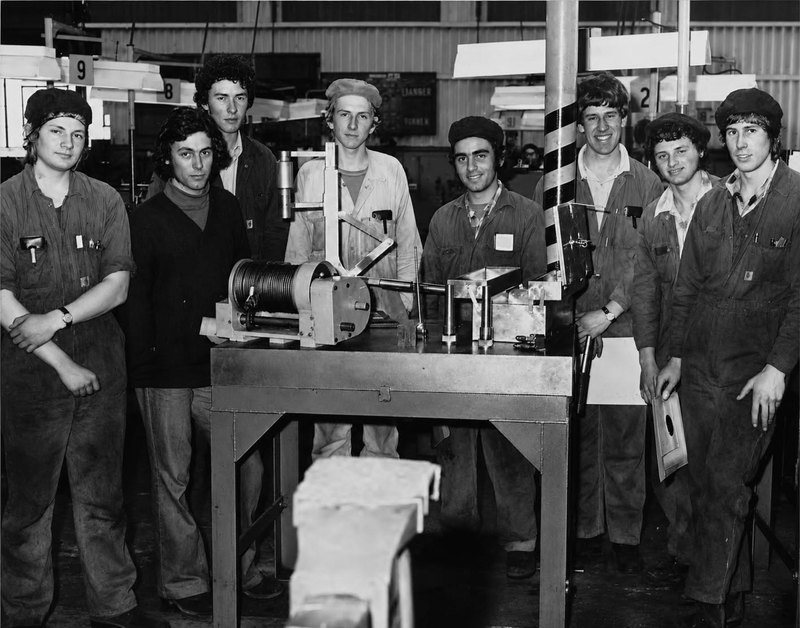
The human side of the story is just as important. Cain’s 1949 decision created a labour problem, because the SECV’s own workforce was already committed to production demands. New stations needed workers, and Yallourn needed more men to build the future Victoria had just ordered. Eastern Hostel went up on the edge of town, standing from 1949 to 1971 across the same period in which the SECV built C, D and E stations in succession.
The men came from far beyond the Latrobe Valley. In May 1949, the SS Misr arrived in Melbourne carrying 751 Maltese men, women and children. Fifty-three tradesmen aboard were bound directly for SECV work at Yallourn, many of them former servicemen, some sponsored by Australian units they had served alongside during the war. Thirteen months later, the SS Asturias brought more than 1,300 British and Maltese migrants to Port Melbourne, with forty-six going straight on to Yallourn.
At Eastern Hostel, new arrivals built lives around the work. Some formed a chess club: Eddie Wagner, Peter Matwijew, Guenther Laengst and Bran Gompelman. Displaced Europeans and migrants met over a chessboard in a hostel built because Victoria needed power. Yallourn’s barber, Wally Lacey, cut their hair and listened to stories from the countries they had left behind.
This was not only steel, steam and coal. It was a town filling with people brought together by a state-wide problem: Maltese tradesmen, British migrants, displaced Europeans, SEC engineers, boiler men, firemen, fitters, electricians, coal workers, clerks, families and children walking home through smoke with their hands on fences.
Living beside the power system carried its own cost. Coal dust settled through Yallourn, landing on washing, entering roof cavities and blowing from the open cut on windy afternoons. SEC maintenance crews vacuumed residents’ ceiling spaces as a fire precaution. People who grew up there remembered the “Yallourn squint,” eyes half shut against dust in the air. That was the price of living beside the machine that powered Victoria.
Sir John Monash had been dead for eighteen years when C Station solved the problem he never lived to see. He never saw the fan mills, watched the first unit come online, or met the Maltese tradesmen who helped build the next stage of Yallourn. But the institution he built was still working in his image. It took a state-wide restriction and answered it with engineering. It took wet coal and turned it into power. It took a vulnerable supply system and built a stronger one from the ground beneath the Latrobe Valley.
By 1945, Victorians could buy household coal only to heat water. By 1954, Yallourn C was burning pulverised brown coal and feeding power into the grid. That is what the Latrobe Valley did: it turned restriction into capacity, crisis into machinery, and wet brown coal into the power that carried Victoria forward.
The building that housed the people who ran that institution still stands at 30 Yallourn Drive.