Inside the Yallourn-Newborough RSL, volunteers clean up and prepare the rooms for what's next. Another meeting. Another commemoration. Another musician carrying a guitar through the door. The work is familiar and practical, performed by people who know where everything belongs and understand that a shared room remains welcoming because somebody returns to care for it.
Some Friday nights belong to the Jam Tin, an open music night where anyone can stand and sing or play. There are experienced performers, people finding their confidence and those who arrive content to listen. The Jam Tin has been running for around twenty-five years. The RSL’s monthly blues sessions have their own place on the calendar, bringing another gathering and another sound into the building. Each survives because people keep turning up.
Music and companionship lived inside the Yallourn RSL story for a long time.
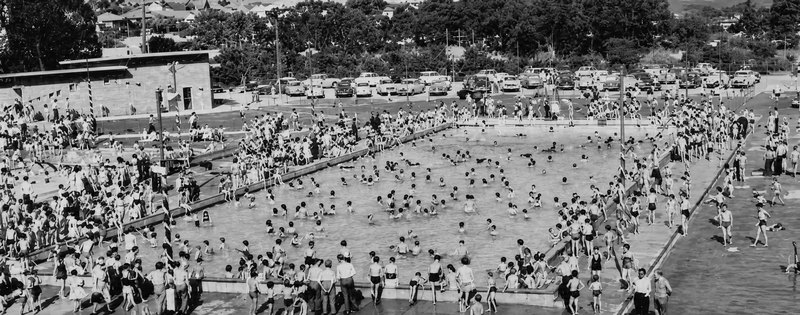
In Yallourn, Friday night drew people towards the RSL Hall. Young men and women met at the dances. Jean and Max Fox first found one another at a Youth Club dance there, beginning a life together in a room filled with other young people doing the same. Music carried across the floor as dancers moved beneath the lights and another week in the power town came to an end.
During the rest of the week, the building changed with the people entering it. Billiard balls travelled across the clubhouse tables. Yallourn played competitive matches against Morwell as early as 1931. Bridge players studied their cards and measured one another across the table. In 1935, Charles Burton Boehm represented the Yallourn RSL at the Gippsland Bridge Championship.
Young people came for the youth club and boxing. Children attended kindergarten sessions in the RSL building before the Uplands Road kindergarten opened in 1948. Community events brought families through the doors. Returned servicemen built a place for civilian life and then shared it with the town.
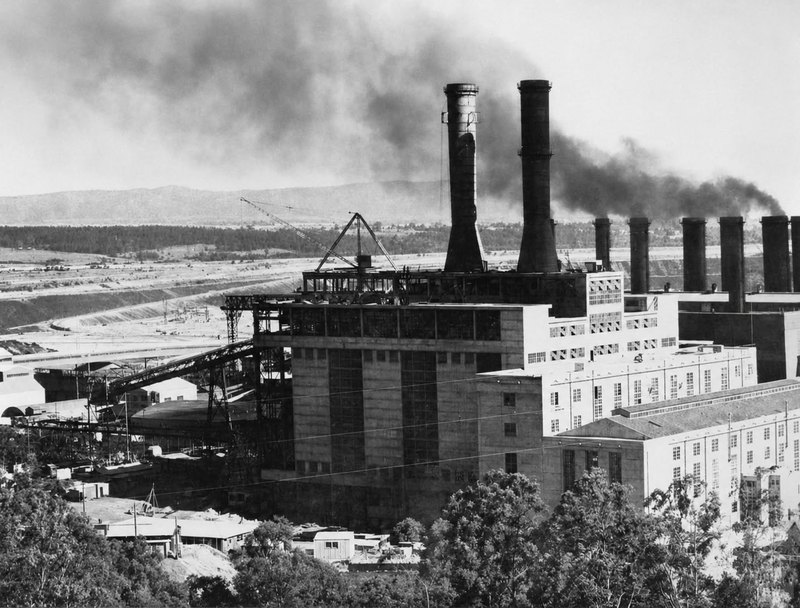
Yallourn was just beginning when Charles Boehm arrived in 1922. Houses, roads, gardens and public buildings were taking shape around an industry intended to change Victoria. Sir John Monash and the State Electricity Commission had visions of turning brown coal into power for Victoria and included town planning into daily life. A population drawn together by work had to learn how to become neighbours.
Boehm brought his service in the Royal Australian Navy into that emerging community. He became one of the original members of the Yallourn RSL branch and served as its president or chairman from the late 1930s, remaining in the position into the 1940s. The organisation was then known as the Returned Sailors, Soldiers and Airmen’s Imperial League of Australia. Its name carried the services its members had returned from. Its rooms carried the lives they were now building.
Men such as Boehm understood what an institution required. Meetings had to be held. Accounts had to be kept. Events had to be organised. Someone had to arrange the cards, maintain the billiard tables, prepare the hall and make sure the next gathering happened. Through those repeated duties, a branch formed inside a town that was itself being formed.
Then another generation went to war.
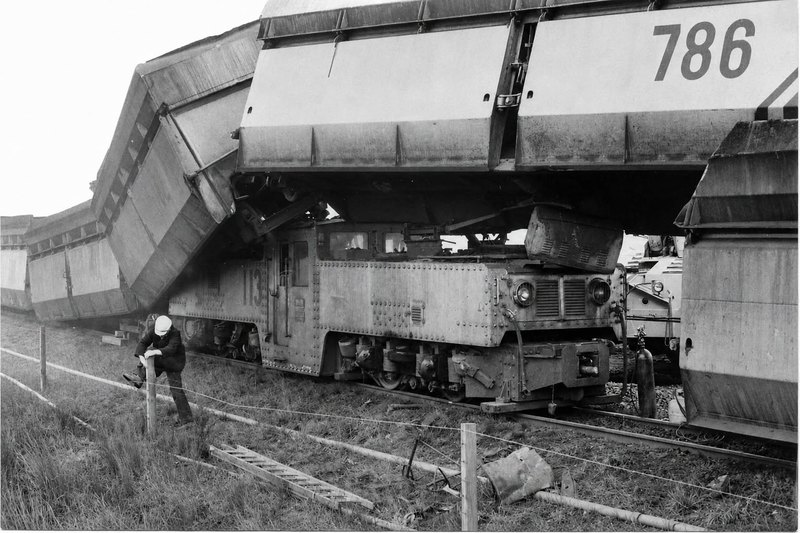
More than 400 State Electricity Commission personnel enlisted during the Second World War. Sixteen did not return. Yallourn lived beneath blackout restrictions and military defence while the power station continued supplying electricity to Victoria. Anti-aircraft positions guarded the industrial complex. Families drew their curtains. Workers passed guarded gates. The town understood that the electricity moving out of Yallourn had made the place a target.
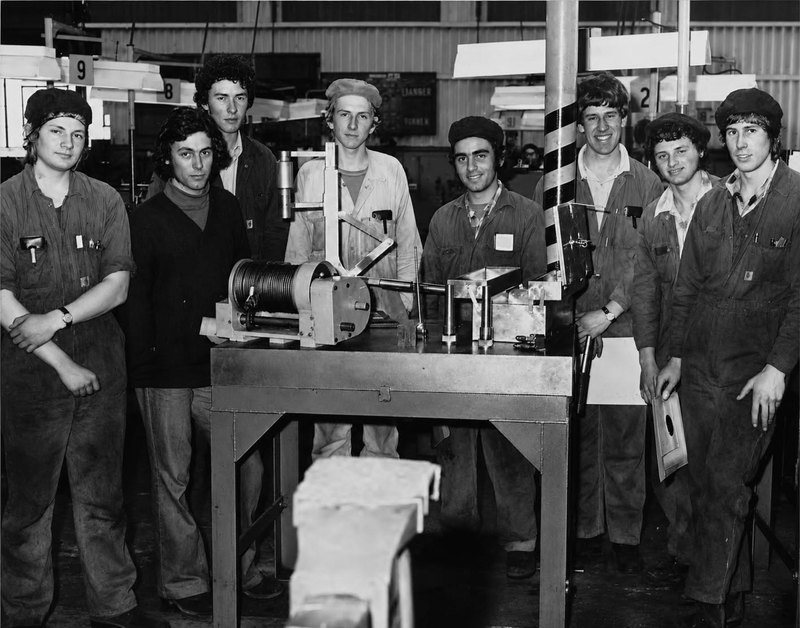
Bill Fleming returned from that war as a former prisoner of war. He came home to the briquette factory, where he spent forty-three years helping turn Yallourn’s brown coal into fuel. His working life unfolded among the heat, machinery and disciplined production of the SEC. Beyond the factory, he gave his time to the Yallourn Band and became its Band Sergeant. He served on the RSL committee and, for a period, as secretary.
At commemorations, Fleming lifted the bugle.
Its notes called Yallourn into silence on ANZAC Day and Remembrance Day. At RSL burial services, the same instrument sounded above the gathered mourners as another veteran was farewelled. Fleming had returned from captivity and resumed an industrial life measured in shifts and years. In those brief ceremonies, his breath became the sound through which the town remembered those who had been denied the same return.
Memory in Yallourn lived in people, rituals and honour rolls. By the late 1940s, members of the RSL began considering something permanent in the centre of town.
The idea for a war memorial emerged at a branch meeting around 1948. The matter went to a local plebiscite, and the town chose a Cenotaph. Public subscriptions raised the money. Residents were contributing towards a place where the names, losses and silences carried since two world wars could be held in common.
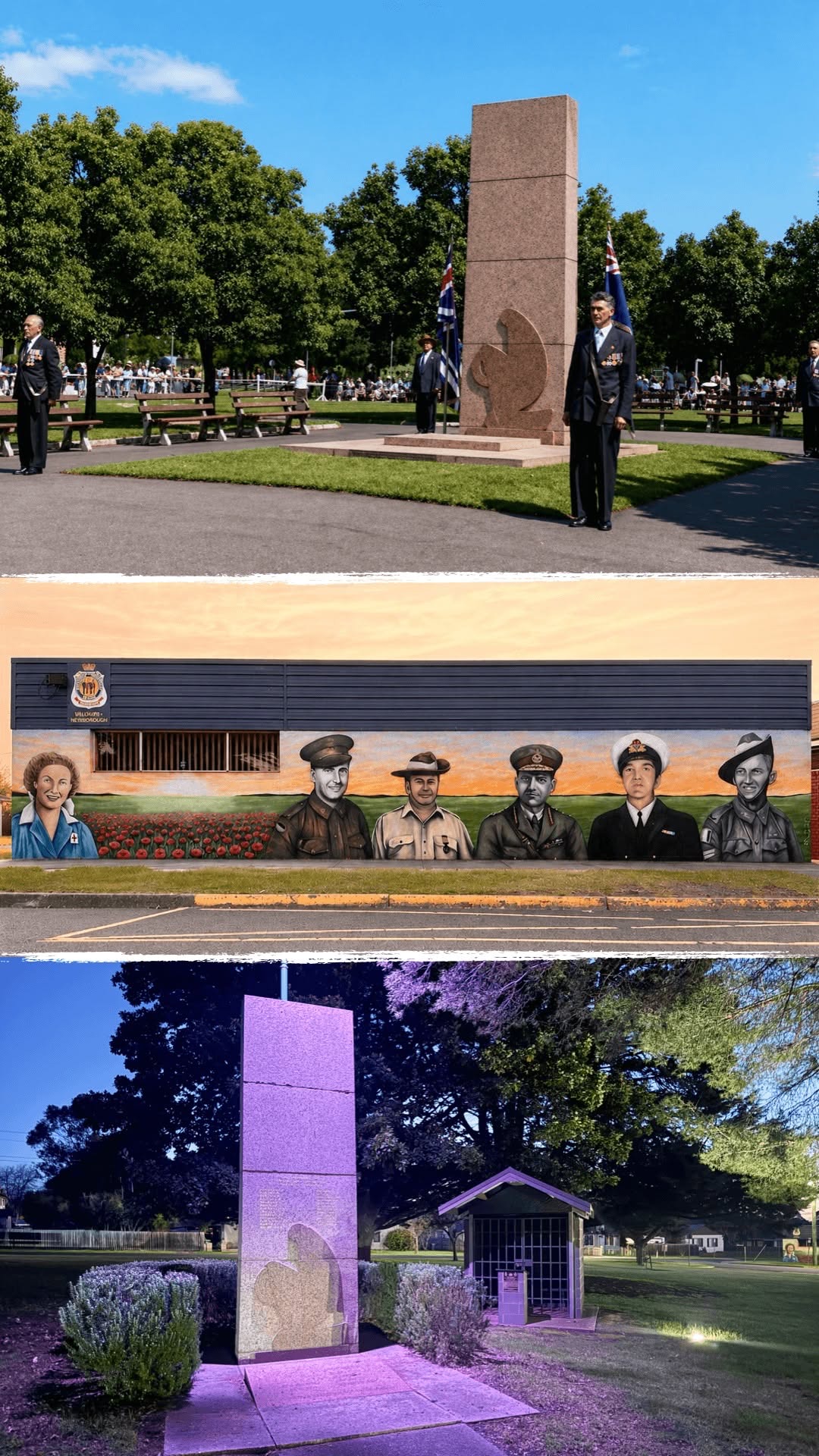
The memorial cost £1,800. Its red granite came from Murray Bridge in South Australia. SEC architects W. Gower and W. Eales developed the design: a restrained Grecian column rising fifteen feet above Monash Square. On its front face, sculptor Andor Meszaros carved a relief of a kneeling woman laying a wreath upon the stone of remembrance. Contemporary reporting described her as sorrowing motherhood. Her body bends towards the absent dead, caught forever in the act of placing flowers where they cannot be received.
On Sunday, 12 April 1953, nearly 2,000 people filled Yallourn’s Town Square for the unveiling.
Members of the RSL lined the pathway and formed a guard of honour. Among the crowd stood members of the Citizen Military Forces and the SEC’s 99th Construction Squadron. Scouts, Guides and Brownies gathered with returned servicemen, families and residents. The children stood among people who carried memories of the First World War and others who had only recently returned from the Second.
The Governor of Victoria, Sir Dallas Brooks, came to unveil the memorial. Before the crowd, the covering was removed and the red-granite column entered the civic life of Yallourn. Meszaros’s kneeling woman faced the square with her wreath. The town had paid for the stone, assembled around it and given its grief a permanent address.
The square was renamed Monash Square that same year. Sir John Monash had died in 1931, yet his presence remained throughout Yallourn. He had led the SEC when the power scheme and town were being established. A bronze bust erected in the square in 1932 kept his face within the civic centre. Now the Cenotaph stood nearby, joining the garden town’s founding ambition to the service and loss carried by the people who lived there.
For years, commemorations returned to that ground. Wreaths accumulated at the base. The bugle sounded. Children who had once stood with the Scouts, Guides or Brownies grew older and brought children of their own. The memorial gathered meaning through repetition: the same walk, the same silence, the same words and the same names held before the town.
One of those wreaths belonged to Robert Pritchett.
Robert had served as a driver in the Royal Army Service Corps during the Second World War. He was captured at Singapore and died as a prisoner of war in 1943. His son Tom grew up with a father held in photographs, records and the memories of others. Each ANZAC Day after the war, Tom laid a wreath for him at Yallourn.
The gesture survived every passing year. It would eventually have to survive the loss of Yallourn itself.
The decision to mine the coal beneath the town emerged in the late 1960s and was endorsed following a Parliamentary Public Works inquiry in 1970. Yallourn then came apart gradually. Through the 1970s and into the early 1980s, families left streets they had known for decades. Houses were removed. Schools, shops, churches, gardens and meeting places closed. The post office ceased operating in 1980. By 1982–83, the town that had grown around the SEC’s great power project had largely disappeared into the advancing open cut.
The slow dismantling gave every family and organisation its own moment of decision. Household belongings could be packed. Plants could sometimes be lifted. Bricks were salvaged from Yallourn High School for the Newborough Guide Hall. Clubs searched for new grounds and new rooms. Each choice revealed what people intended to continue.
The Yallourn RSL branch moved into Newborough during this period, establishing the Yallourn-Newborough RSL. Its Honour Roll came with it. So did its ceremonies, its responsibilities and the relationships built across decades.
The Cenotaph came too.
Moving a fifteen-foot granite memorial required a decision larger than sentiment. The column had to be removed from the square, transported beyond the disappearing town and erected again. Meszaros’s granite woman travelled with it, still bending towards the stone with her wreath. The memorial now stands in the park between Boolarra and Darlimurla Avenues, near the RSL at 30 Darlimurla Avenue.
The exact year and circumstances of the relocation remain to be recovered from the surviving records. The physical result stands in Newborough. Red granite once surrounded by Monash Square now rises among another community’s streets. At its base, a simple dedication holds the two wars together: “Lest We Forget 1914–1919 1939–1945.”
Tom Pritchett followed the memorial.
Each ANZAC Day, he continued laying a wreath for Robert. The walk that began in Yallourn resumed in Newborough, year after year, until it had been repeated for more than seventy-five years. His father’s story passed from one town to another through the hands of the same son carrying the same act of remembrance.
Others carried the branch through the years after relocation. Jack Hamilton served for many years as president of the Yallourn-Newborough RSL, taking his place in the long succession of people who accepted responsibility for meetings, commemorations, premises and members. The work once undertaken by Charles Boehm in a new industrial town continued under different leadership in Newborough.
In 2022, artist Steve Bechaz brought several generations together across the RSL wall. The mural holds the faces of Jean Bickerton, Robert Pritchett, George Harris, Sir John Monash, Ernie Clegg and Jack Hamilton. Their portraits occupy the same surface, drawing the SEC’s founding chairman, servicemen, community figures and later RSL leadership into one gathering.
Robert Pritchett’s face looks out from the building where Tom continued to honour him. Monash appears in the town that received so many of the people displaced from the garden town he helped create. Jack Hamilton stands among those whose memory the branch had been entrusted to carry. Jean Bickerton, George Harris and Ernie Clegg take their places beside them, held within the continuing public identity of the RSL.
Inside, the rooms keep changing with the people who enter.
The bugle belongs to the commemorative ground. On Jam Tin nights, guitars, voices and other instruments fill the clubhouse. Anyone can get up and perform. The invitation has remained open for around a quarter of a century, allowing established musicians and first-time performers to occupy the same floor. At the separate monthly blues sessions, another community gathers around the music.
The sounds have changed since the Friday dances in Yallourn. The human movement remains familiar: people arrive after a working week, greet those they know, find a place in the room and share the evening. New friendships begin without announcing themselves. New memories settle into a building already carrying many older ones.
Then Friday night ends. Volunteers return to clean up. The instruments are packed away, the rooms are put in order and the RSL prepares to open its doors again.
Outside, the woman in granite is still laying her wreath.
Yallourn Newborough RSL
30 Darlimurla Ave
Newborough, Victoria
Open from 2pm
Sun, Mon, Thu, & Fri
Sir John Monash Museum
30 Yallourn Drive, Yallourn
Open
Tuesday 10:00am–2:00pm
Sunday 10:00am–3:00pm