For young tradesmen at the beginning of their working lives, it was an extraordinary result. Their entries were submitted to the Apprenticeship Commission of Victoria’s annual competition, where they were judged against the best from Victoria. The result showed the calibre of training being delivered inside the SEC’s apprentice workshops and the high standard expected of those entering the electricity industry.
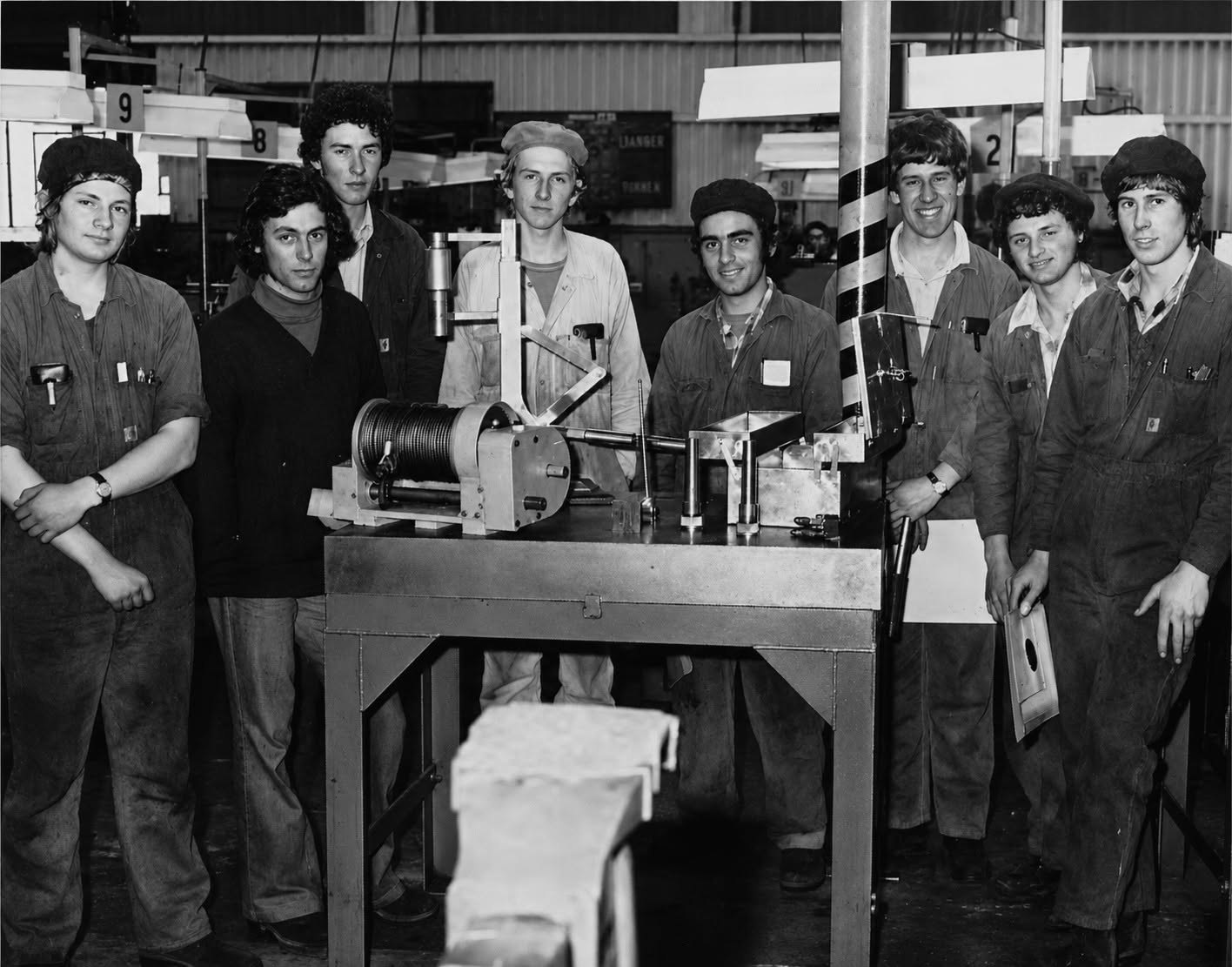
The top award, a Bronze Medal, was won by Lenny van Berkel, an apprentice boilermaker, for a multi-drawer tool box. It was a practical object, made for a working life, and its quality spoke to the careful hand skills being developed in the workshop. David Mintern, an apprentice fitter and turner, received a Special Honourable Mention for fitting mating parts. Honourable Mentions were awarded to John Gatt for surface gangs, John Christiansen for a power winch, David Fyfe for a centre drill holder, and Colin Sim for a centre drill holder.
The article appeared in the October 1972 edition of Contact, the State Electricity Commission Latrobe Valley Department magazine. Its headline was direct: High Standard of Craftmanship Shown by Valley Apprentices (photo above).
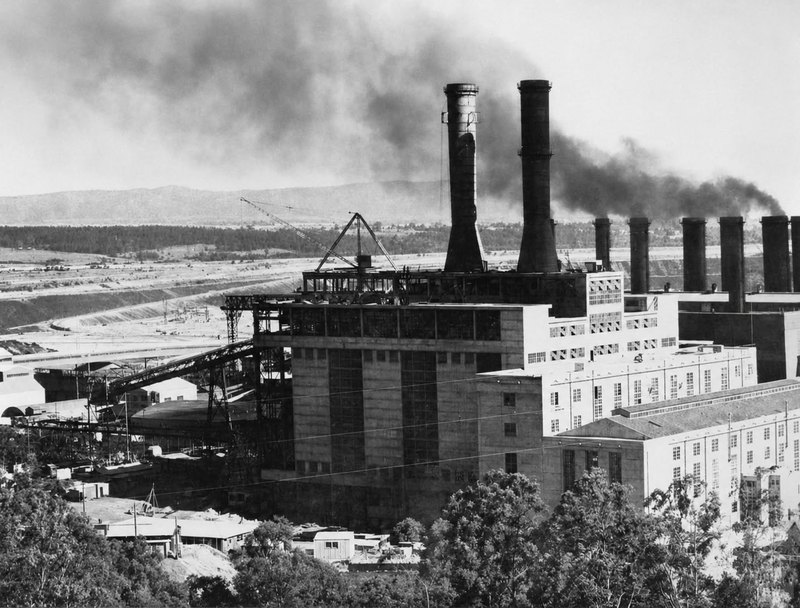
That phrase captured the culture of Yallourn. Craftsmanship was the standard expected in the workshops and the discipline behind the power stations, the briquette factory, the mines, the conveyors, the boilers, the turbines, the switchyards and the heavy machinery that kept Victoria running. In Yallourn, skill was measured in accuracy, patience and pride. A tool box had to be square. A fitting had to match. A drill holder had to hold. A winch had to work. A surface had to be true.
In an electricity industry, precision was public service. A poor measurement could become a broken machine. A broken machine could become lost production. Lost production could become homes without heat, factories without power and industry without momentum. The SEC trained apprentices inside that reality, where the standards of the workshop were tied directly to the reliability of the state’s electricity supply.
Yallourn was an education town with an industrial purpose. Its schools, workshops and technical training formed part of the same larger project. The town existed to power Victoria, and its young people were educated in a culture that valued practical knowledge, disciplined skill and service to something larger than themselves.
Yallourn Technical School carried the motto Knowledge is Power. In the apprentice workshops, that motto became physical. Knowledge became a clean cut, a measured hole, a machined surface, a boiler repair, a lathe setting and a young apprentice learning that near enough had no place beside heavy machinery. The classroom gave the theory form; the workshop tested it under steel, heat, pressure and consequence.
The October 1972 presentation linked the school and the workshop in one telling scene. The awards were presented in the Apprentice Workshop by Mr G. Blampied, Vice-Principal of Yallourn Technical School. That detail matters because it places technical education and industrial training in the same room. The SEC workshop taught the trade. The technical school carried the education. The power industry gave the work its purpose. The town gave the apprentice a community around it.
Yallourn produced electricity, briquettes and skilled people. The State Electricity Commission needed fitters, turners, boilermakers, electricians, linesmen, instrument technicians, draughtsmen, plant operators and workshop staff. It needed people who could read drawings, work safely, maintain machinery, repair equipment and take responsibility for systems larger than themselves.
A power station is a world of pressure, heat, weight and movement. Steam moves through pipes. Coal moves along conveyors. Turbines spin. Pumps run. Switchgear carries load. Workshops support the whole operation. The apprentice entered that world at the bench, at the lathe, at the drill press and beside the tradesman who understood that a job done properly carried value far beyond the object in front of him.
The training was respected because the work demanded respect. SEC apprentices from the Latrobe Valley entered statewide competitions and won. They were judged against other apprentices and recognised for the standard of their work. Their success reflected a system that took training seriously and understood that an apprentice was being prepared for responsibility, reliability and the long discipline of a trade.
In the 1972 photograph (above), the young men stand around their entries in the competition area. They are named left to right: Ian Boyes, John Christiansen, David Mintern, Len van Berkel, John Gatt, David Fyfe, George Gatt and Colin Sim. They are in work clothes, surrounded by machines, benches and the plain architecture of the workshop. There is no ceremony in the image itself. The dignity comes from the work.
This is Yallourn’s education story in one of its most practical forms. A classroom can teach theory, a workshop can test it, and a power industry can depend on it. The SEC apprenticeship program gave young people a trade, a standard and a future. It gave Victoria the skilled hands required to maintain one of the most important industrial systems in the state.
The Latrobe Valley powered Victoria through coal, steam and electricity. It also powered Victoria through skill. Every boiler repaired, every pump maintained, every fitting machined, every line restored, every turbine supported and every workshop job completed belonged to a larger story of public service. The SEC generated electricity. It also generated tradesmen.
That is the legacy shown in the October 1972 Contact article. Six of eight first-year apprentices won awards, and their success came from a culture that expected skill, recognised effort and understood that craftsmanship was essential to keeping Victoria moving.
The Sir John Monash Museum stands in the former administrative heart of the SEC’s Yallourn story. The building at 30 Yallourn Drive belongs to this history. Decisions were made there, systems were planned there, and the work of powering Victoria was organised from there.
The apprentices belonged to that same story. They were part of the machinery of Yallourn: the trained hands behind the power.