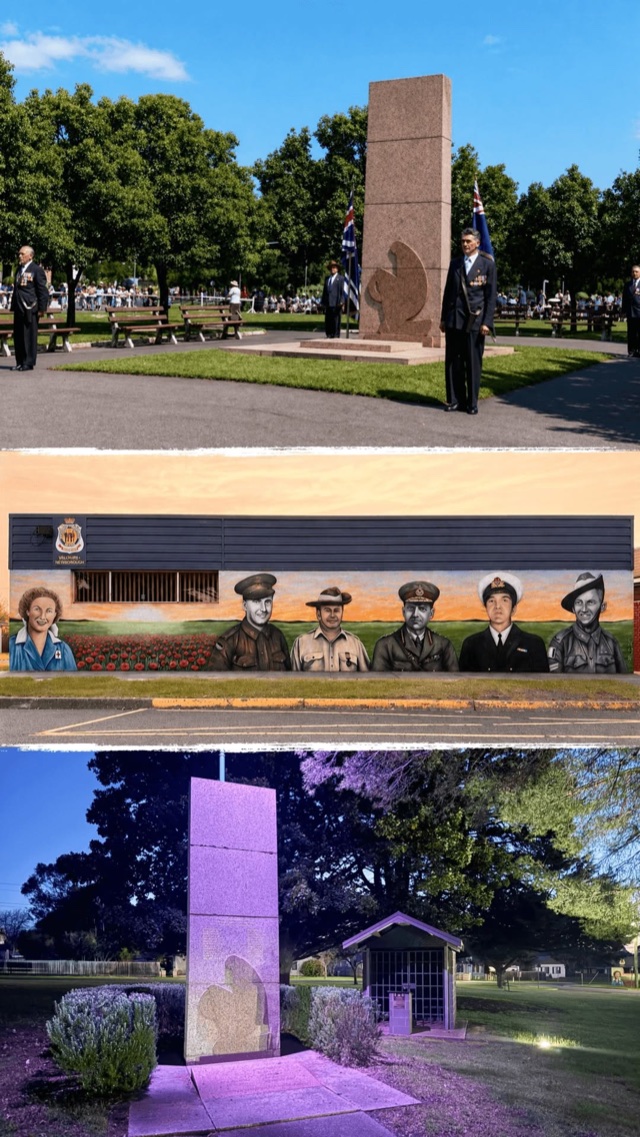
It could be seen in a lawn cut evenly across a broad public reserve, in the clean edge of a garden bed, in an avenue of trees planted with patience and purpose, and in sporting grounds prepared for another Saturday afternoon. The same standard travelled through the gates of the power industry, into the workshops and onto the machinery that carried the physical weight of Victoria’s electricity industry.
Even the coal locomotives were expected to look as though somebody cared for them.
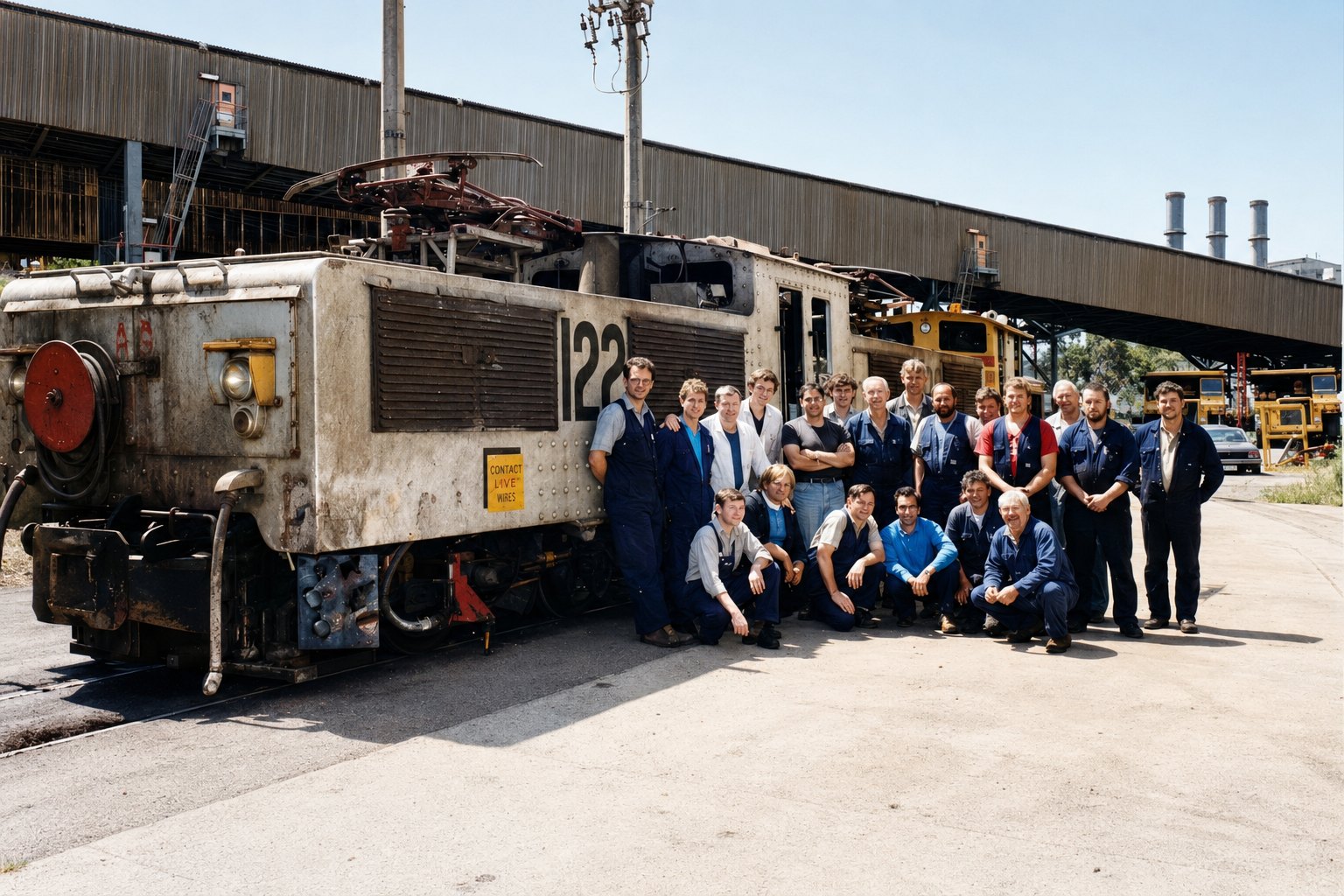
Locomotive 122 stands beside its workforce carrying the evidence of years spent in one of the hardest industrial environments imaginable. Its pale body has disappeared beneath coal dust, oil, corrosion and grime. The ventilation shutters are dark. The paint is worn. Dirt has settled into every rivet line, ledge and recess. The locomotive has spent its working life under electrical wires, hauling trains through a landscape shaped by open-cut mining, power generation and the constant movement of brown coal.
Around it is a group of men.
Some wear overalls. Others have work shirts, jumpers or jackets thrown over the clothing of the day. Several crouch at the front while the rest gather between the locomotive and the workshop behind them. Their faces carry the relaxed expression of men who know one another, know the machine and understand the work ahead.
The locomotive beside them is waiting for a facelift.
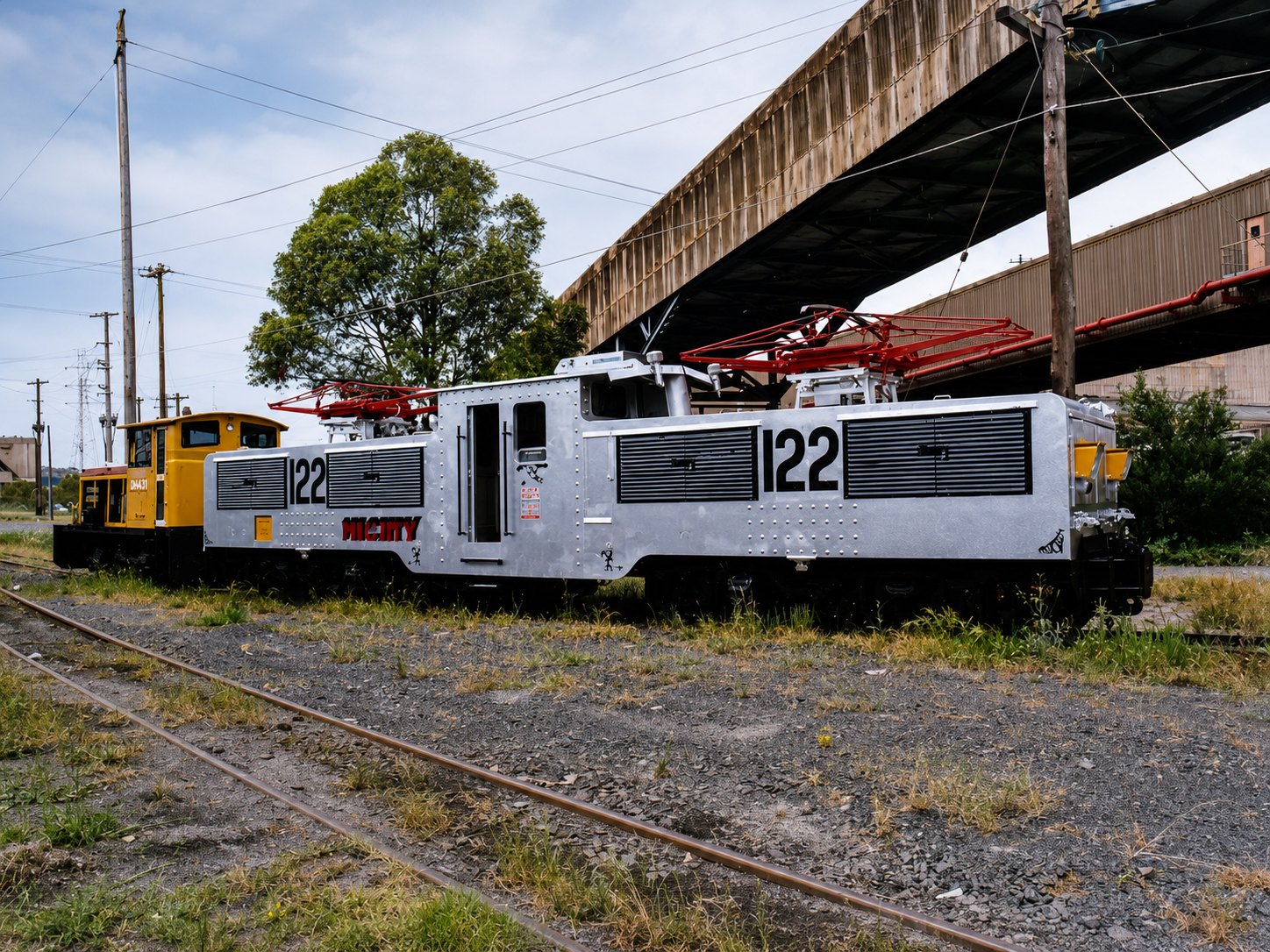
When it emerges, it presents a renewed vision. Its body has been returned to bright silver. The broad shutters along its sides are painted deep blue. The pantographs mounted across the roof carry the same colour. The large black numerals remain, but the machine now has a name painted across its flank in bold red lettering: Mighty Mouse.
A small cartoon mouse appears beside the cab, arms raised with the confidence of a hero far larger than his physical size. A jagged electrical design decorates the rear bodywork. The locomotive’s industrial form remains intact—riveted panels, heavy buffers, headlights, vents and electrical apparatus—but the people responsible for its transformation have given it wit, colour and personality.
Locomotive 122 has returned as a character.
The SEC gave them numbers
The State Electricity Commission’s railway system existed to perform serious work. Its locomotives moved coal and overburden through Yallourn and carried Yallourn coal along the interconnecting railway to Morwell, where it was blended for briquette production.
This was a specialised industrial railway built to a gauge of 90 centimetres, or a little under three feet. The narrow track allowed the railway to operate within the demanding geometry of the open cut, where working levels shifted as coal was removed and temporary tracks were repeatedly repositioned.
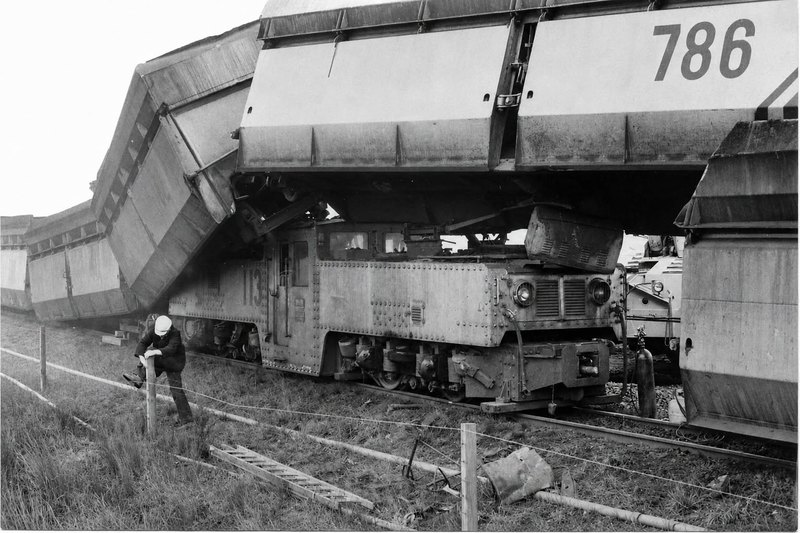
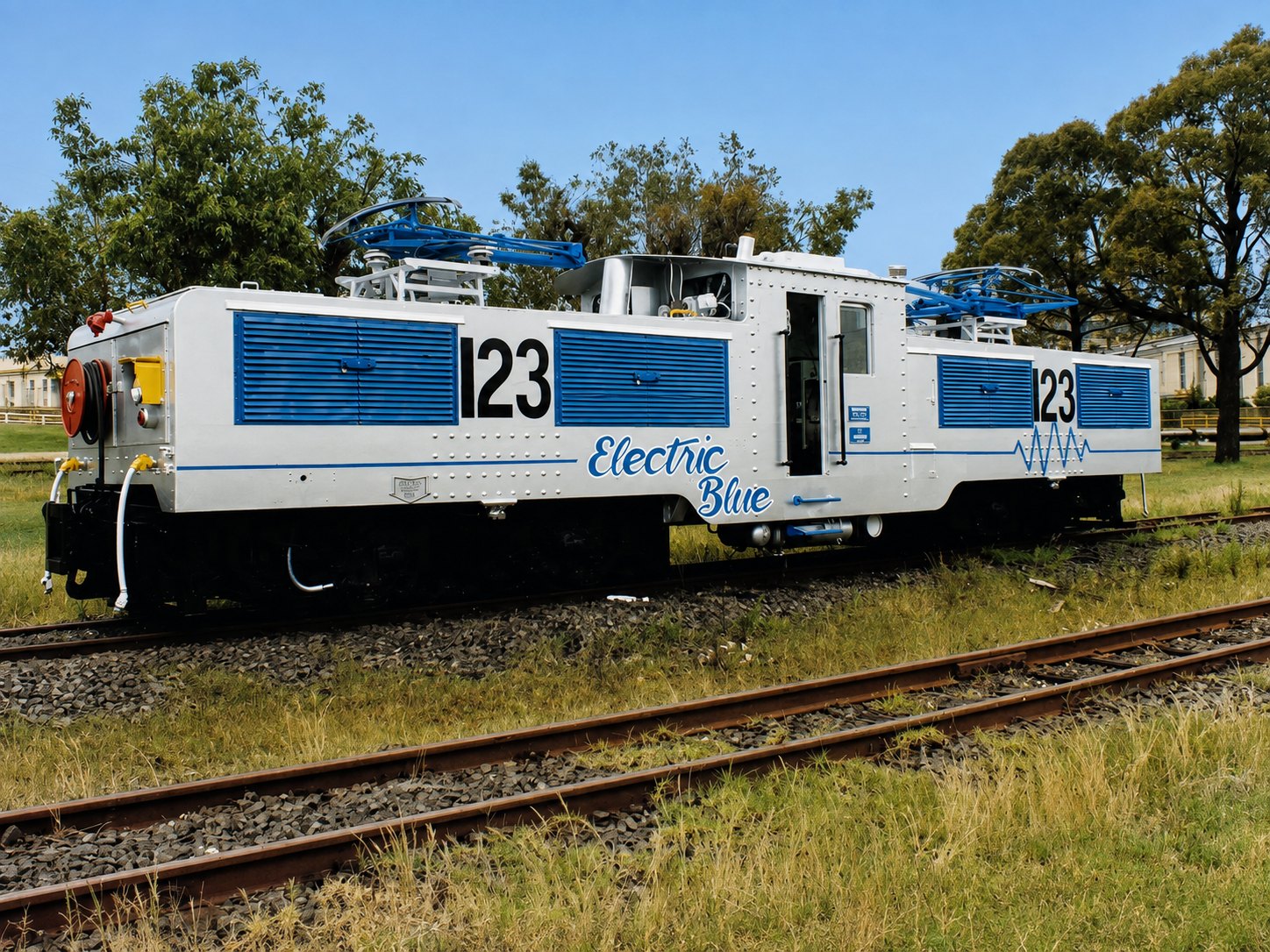
Locomotives 121, 122 and 123 entered service in 1963. Their bodies were built by Henschel, with electrical equipment supplied by Siemens-Schuckert. Each locomotive weighed 62 tons, produced 1,020 horsepower and developed 40,000 pounds of tractive effort. On a standard coal working, one could haul thirteen 33-ton hopper wagons with a combined gross train weight of approximately 725 tons.
These were compact machines carrying enormous strength.
Their low bodies sat across two bogies. Large ventilation shutters allowed air to circulate around the traction equipment inside. Pantographs collected electrical current from the overhead system. Air-operated sanders delivered sand to the rails when additional adhesion was required. Forged couplings, safety chains and anti-derailing beams reflected the railway’s unforgiving operating conditions.
On permanent track, the permitted speed could reach 30 miles an hour. Across temporary track on the working faces, speed dropped to around 10 miles an hour. The rails moved with the mine as it expanded. Levels and alignments changed. Coal dust settled between wheels and track, quietening the approach of trains so thoroughly that metal “janglers” were fitted to wagon axles to warn workers and vehicles through their continuous clanging.
Every component had a purpose. Every system carried consequence.
A failure could stop a train. A stopped train could interrupt the movement of coal. Interrupted coal supply could affect briquette production and the wider industrial system it supported. The people maintaining these locomotives worked inside a chain of responsibility stretching from a workshop bench in Yallourn to factories, power stations and homes across Victoria.
Yallourn’s workers gave them names
The three locomotives had entered service as 121, 122 and 123. During the later years of their working lives, they emerged with identities of their own.
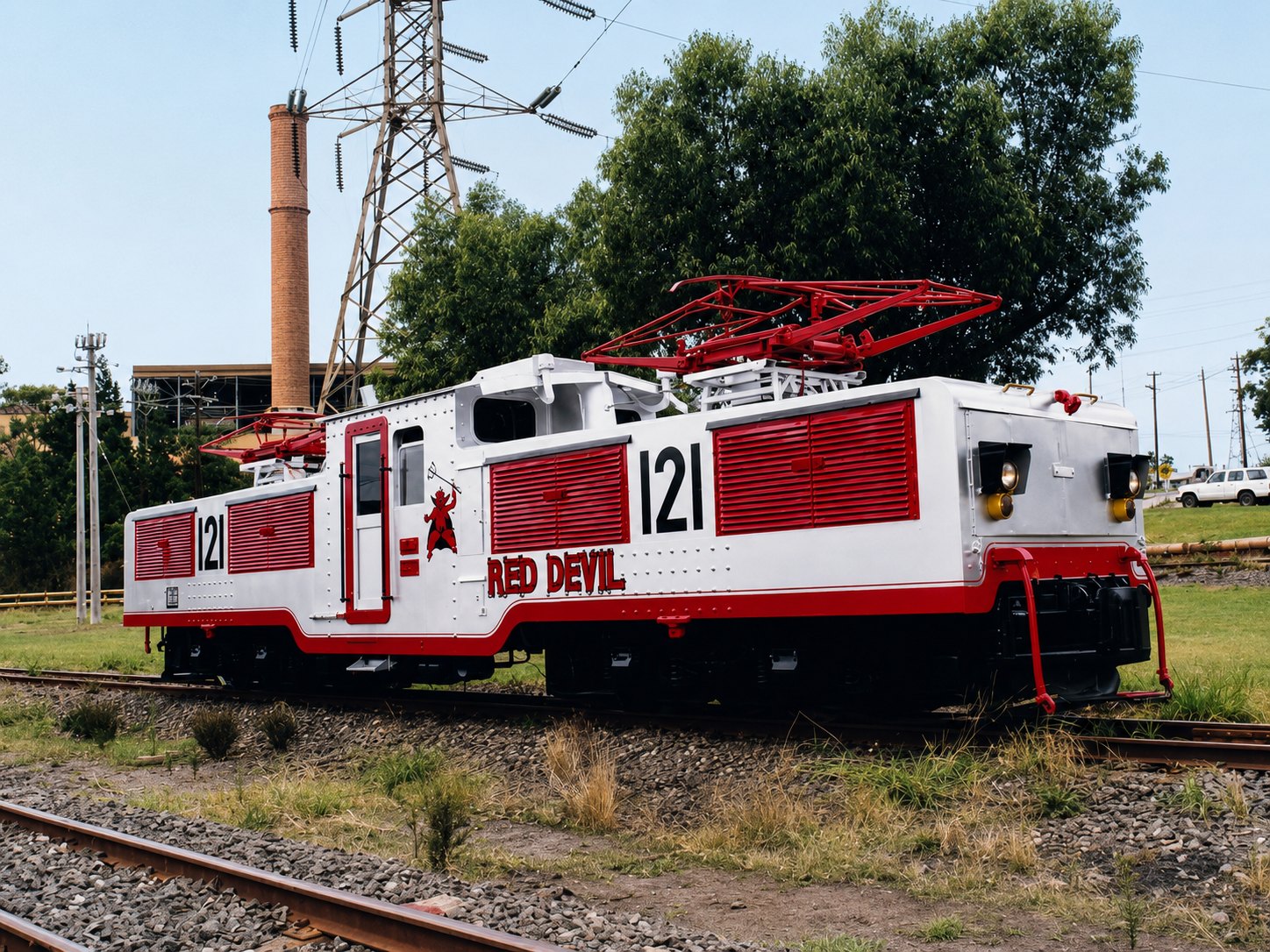
No. 121 became Red Devil. Its shutters were painted red. Its pantographs carried the same strong colour. The name appeared in large lettering across the lower body, accompanied by a red devil figure beside the cab. A protective frame at the front was picked out in red, extending the theme across the whole machine.
No. 122 became Mighty Mouse. Its shutters and pantographs were blue, its lettering red, and its small painted mascot stood proudly against the pale body. The name suited a locomotive running on narrow-gauge rails while possessing the power to move hundreds of tonnes of coal.
No. 123 became Electric Blue. Blue shutters, blue pantographs and flowing script gave it a cleaner, more elegant personality. A lightning motif reinforced the electrical theme. The name worked as description, joke and design at once.
The precise date, organiser and official reason for the painting program have yet to be established. The photographs confirm the visible transformations. They show a coordinated treatment built around the same silver body, black numbering and individually selected colours, names and graphics. The surviving visual evidence is consistent with a workshop-led expression of identity carried out while the locomotives remained part of Yallourn’s working railway, but the origin of the program remains an open research question.
Somebody selected the names. Somebody designed the lettering. Somebody drew the characters. Somebody prepared the steel, cleaned the grime from around hundreds of rivets, treated worn areas, masked components and applied the paint.
Somebody stood back when the job was finished and decided the machine was ready to leave.
The standard travelled
The museum reads the decision to finish these locomotives so carefully as part of a wider Yallourn culture.
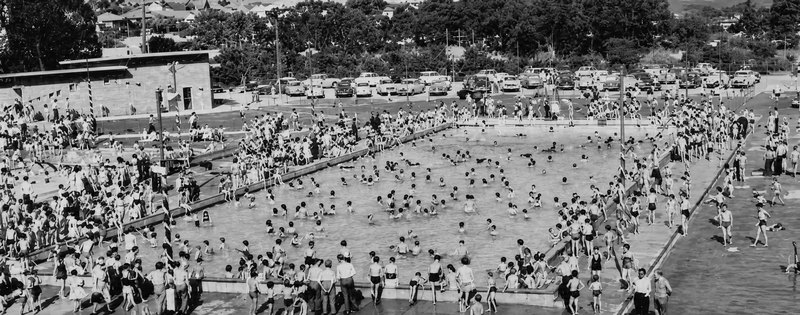
Yallourn was conceived as an industrial town built for human life. Its planning drew upon Garden City ideas, creating a settlement in which housing, industry, green space, education, recreation and community facilities formed parts of the same organised environment. The SEC administered the town during its formative decades and provided substantial gardens, sporting facilities, schools, a hospital and a theatre.
The town’s lawns and gardens carried a visible standard. They required people who understood soil, drainage, propagation, pruning, mowing, seasonal growth and the patience involved in creating mature public landscapes. Gardeners worked ahead of the result. A tree planted in one decade gave shade in another. An oval depended upon preparation performed before the players arrived. A clean edge along a garden bed lasted because somebody returned to maintain it.
The power undertaking demanded the same discipline in another form.
Fitters learned tolerances. Electricians traced faults. Boilermakers shaped and joined metal. Machinists worked to measurements that allowed large systems to move correctly. Drivers learned how a locomotive responded under load. Maintenance crews recognised wear before it became failure. Supervisors expected the completed work to meet a standard capable of carrying industrial responsibility.
The lawn and the locomotive belonged to the same place because the people caring for them carried the same principle: do the job properly, leave it ready and let the finish show the standard of the person who completed it.
That culture reached beyond basic function. A lawn could be serviceable without being immaculate. A locomotive could haul coal without matching blue pantographs, hand-painted lettering or a cartoon mouse beside the cab. The additional care revealed the part of workmanship that cannot be measured solely through output.
It revealed ownership—not legal ownership, but the relationship formed through knowledge, responsibility and repeated care.
The SEC owned the locomotive. The workers knew it. They knew the sound made when the electrical equipment came alive. They felt the moment the couplings tightened and the weight of the wagons arrived through the frame. They recognised the difference between a healthy vibration and the beginning of a fault. They understood how the machine behaved in wet conditions, beneath changing overhead wires and across tracks laid through coal dust.
A fleet number identified the asset. A name expressed the relationship.
People and their machines
Working people have always found ways to place part of themselves into the machinery they use. A truck receives polished tanks and painted wheels. A tractor is cleaned after harvest. A fishing boat carries carefully finished timber and a name across its stern. A motorcycle is rebuilt over winter, with each piece returned to the exact position chosen by its owner. A work ute receives attention on Sunday afternoon despite facing dust, mud and tools again on Monday morning.
The value lies in the act of care.
A machine occupies a large place in the working day. It carries the person operating it into danger, difficulty and achievement. Its reliability affects the whole crew. Its failures create stories repeated for years. Its strengths become part of workplace folklore. People remember the machine that always started, the one that pulled harder, the one that caused trouble and the one they trusted when the job became difficult.
Names grow naturally in such places.
Humour belongs there as well. Red Devil, Mighty Mouse and Electric Blue carry the tone of a workforce confident enough to enjoy its own machinery. The names have personality without grandeur. They sound as though they were created over benches, in crib rooms, inside cabs and during the conversations that fill the spaces between demanding jobs.
The artwork carries the same confidence. It avoids corporate language and formal heraldry. The locomotives received a cartoon mouse, a cheeky devil, coloured shutters, lightning flashes and painted script.
The result feels unmistakably local.
Pride beneath the coal dust
The bright finish faced an immediate and unavoidable enemy: coal dust.
The first clean journey placed the newly painted locomotives back into the environment that had blackened No. 122 before its facelift. Dust would settle across the horizontal surfaces. Grime would collect around the shutters. Rain would leave trails down the bodywork. Grease, oil and industrial wear would begin marking the silver paint.
The workers understood this before they started. That knowledge gives the work its meaning.
They were painting machines that would become dirty again. They were applying detail to locomotives built for a task that showed little respect for appearances. They were creating beauty inside an industrial system that would immediately begin wearing it away.
The temporary nature of the finish strengthened the statement.
Standards are maintained because conditions keep testing them. Lawns grow. Garden edges soften. Paint fades. Metal corrodes. Machinery wears. Coal dust returns. The work begins again because pride is a practice rather than a permanent condition.
Yallourn’s appearance was created through repetition. Its gardens remained beautiful because gardeners returned. Its machinery remained reliable because tradespeople inspected, repaired and rebuilt it. Its railway continued carrying coal because crews maintained the locomotives, wagons, overhead system, signals and tracks.
Quality existed through people repeatedly choosing it.
The people in the photograph
The most important part of the first photograph is the group standing beside No. 122.
The locomotive dominates the frame through sheer size, yet the people supply its meaning. Without them, it is riveted steel, electrical equipment and fleet number 122. Their knowledge kept it moving. Their labour returned it to service. Their humour may have given it its name.
The image catches a workforce at the point where an ordinary industrial task became a visible expression of local character.
These people belonged to a region frequently described from outside through coal reserves, megawatts, industrial disputes, restructuring and closure dates. Their lives carried greater detail. They possessed trades, habits, humour, loyalties and standards formed through working beside one another. Their skill appeared in machines that operated successfully. Their pride appeared in the way those machines looked when they left the workshop.
The painted locomotives give us a rare view of that culture.
They show that workmanship was never confined to the hidden component fitted inside a machine. It extended to the surface. It included the lettering. It included the colour of the pantographs. It included the little red devil and the mouse standing beside the cab.
The necessary work made the locomotives run. The finishing work told everyone who had sent them back.
The Yallourn standard
Yallourn’s contribution to Victoria was measured in electricity, coal and briquettes. Its deeper contribution lived in the people trained to carry responsibility.
They carried it into power stations, mines, workshops, railways, offices, schools, sporting clubs, gardens and communities across the Latrobe Valley. The town eventually disappeared, yet the standard travelled with them into Moe, Newborough, Morwell, Traralgon, Yallourn North and far beyond.
That inheritance remains visible wherever people from the Valley bring care to practical work.
No. 121, No. 122 and No. 123 began as three powerful electric locomotives supplied for the State Electricity Commission. They hauled the coal required by an industry on which Victoria depended. During their later working years, the people of Yallourn gave them something their original engineering drawings could never provide.
They gave them personalities: Red Devil, Mighty Mouse and Electric Blue.
Their paintwork captured the quality that held Yallourn together. The same pride that cut its lawns, maintained its gardens, prepared its sporting grounds and kept its great industrial systems operating flowed onto three coal locomotives.
In Yallourn, the finish mattered because the people mattered. And when the work carried their standard, they made sure it showed.
Sources and further reading
John L. Buckland, “Briquettes and Power: SECV Industrial Railways at Yallourn and Morwell, Part II: The Morwell Project,” Light Railways, no. 84, April 1984, pp. 3–23. The supplied research copy is retained in the internal article evidence package.
Historical photographs sourced via Virtual Yallourn; photographer unknown. Restorations by the Sir John Monash Museum. The images are published with the approval of the Sir John Monash Museum using the credit recorded with each photograph.
Research note
The locomotives’ established specifications and operating history are drawn principally from Buckland’s 1984 study of the SECV industrial railways. The exact date, organisers and stated rationale for the named paint schemes remain open research questions. The article therefore treats the connection between the paintwork, workshop pride and Yallourn’s wider culture as a museum interpretation grounded in the photographs rather than as a documented SEC policy. Further evidence may refine that interpretation as the Museum’s research continues.