Thursday, 29 June 1950 began as an ordinary winter morning.
At Meadows Bakery, fifteen-year-old Nellie Rowan was placing a tray of cakes in the window when the ground moved.
In that instant, the everyday became terrifying. She dropped the tray and ran.
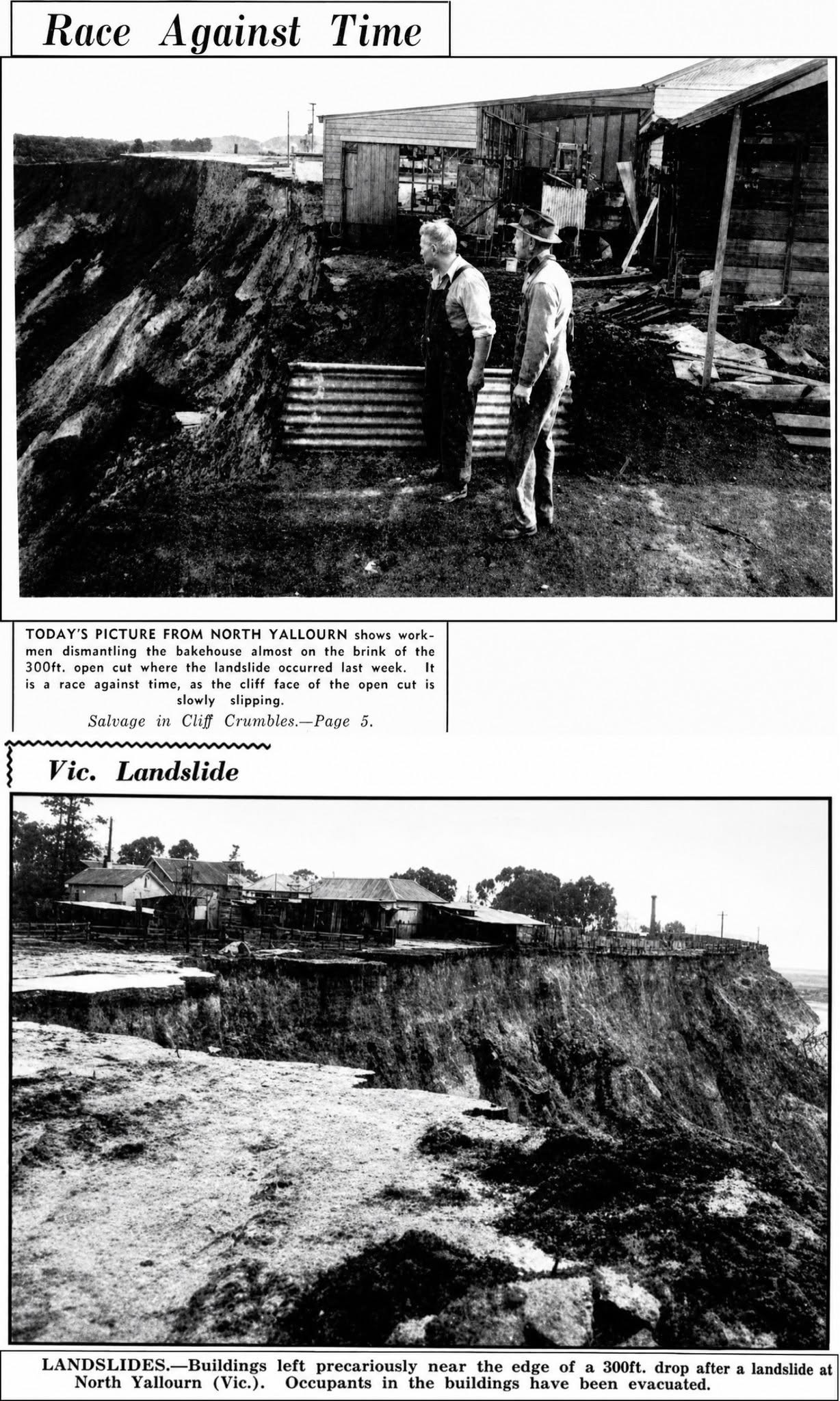
At 8.40am, around 250,000 tons of earth and brown coal slipped away from North Yallourn and crashed into the open cut below. A great section of the cliff face collapsed. Fences went with it. Part of Post Office Place disappeared. Buildings that had seemed solid only moments before were suddenly standing on the brink of a drop more than 300 feet deep.
SEC foreman Arthur Pearson was standing near the edge when the earth shifted beneath him. He leapt back just in time.
Another foreman, Jack Kelso, ran towards the danger, not away from it. Three bakery cart horses were stabled close to the collapsing ground. Kelso released them before the slip could take them. In the panic, the horses bolted and were never seen again.
Then came the race against time.
People did not know how much more of the town would go. Cracks were opening. The cliff face was still moving. Houses, shops and sheds that had been part of ordinary life that morning were now places people had to enter quickly, salvage what they could, and leave before the ground decided for them.
Eleven families, including around thirty children, were evacuated from homes and shops near the fall. Migrant workers were moved from huts at the nearby hostel. Storekeeper T.C. Mills had two petrol bowsers dragged clear from the front of his shop, while other items had to be abandoned as the ground began moving again.
The photographs from the days that followed show the scale of the danger plainly. Men stand beside damaged buildings and look out across the open cut. A bakehouse is being dismantled almost on the brink. Corrugated iron, timber, fences, sheds and shopfronts sit beside a cliff that should never have been there.
Then the town went to work.
Fifty SEC men spent the day moving furniture and belongings out of houses that might soon be lost. It was rescue work for the things that made a house a home — tables, chairs, beds, clothing, family possessions, whatever could be carried before the edge moved again.
PMG linesmen worked into the night trying to recover damaged telephone lines. The town's ordinary systems had to be rebuilt almost as quickly as the ground was breaking them apart.
By evening, an emergency post office and bank had been set up in the YMCA hut at the camp. In the space of a single day, North Yallourn had been torn open, evacuated, salvaged and partly reorganised.
Then, at 8.30pm, the ground moved again.
Engineers watched new cracks widen through the night, expecting more earth to fall by morning. The danger had not passed. The town had survived the first shock, but no one could be certain what would still be standing when daylight returned.
And yet, in a disaster that could so easily have become a tragedy, not one life was lost.
The 1950 North Yallourn landslide made news across Australia. Newspapers from Melbourne to Perth, from Cairns to Adelaide, carried images of the broken cliff, the threatened buildings and the men racing to salvage what they could before more of the town slipped away.
For North Yallourn, the event was not just a frightening day. It changed the shape of the town. Streets were altered. Businesses relocated. The settlement was redrawn around the knowledge that the land itself could not always be trusted.
Locally, it became known as the Big Slip.
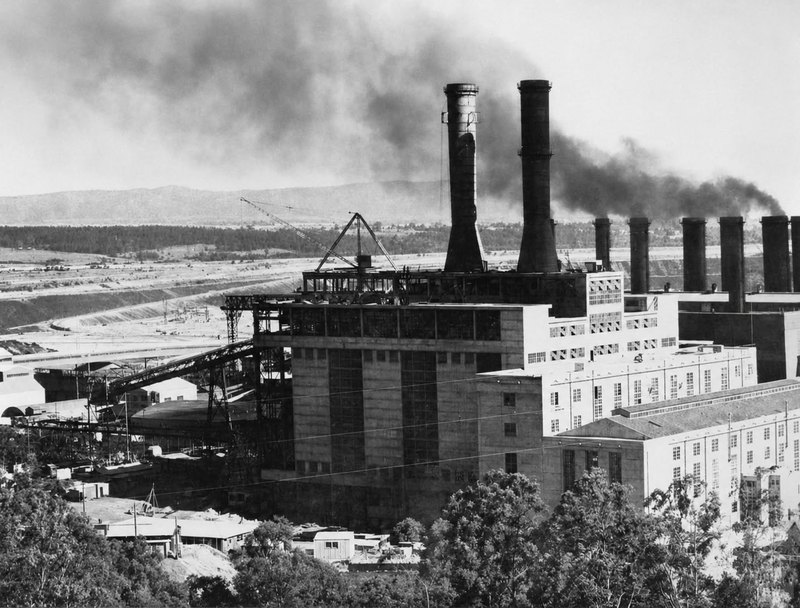
For the Sir John Monash Museum, this story sits within the larger history of the SEC and the communities built around power, work and public purpose — engineering and mining, risk and recovery, and above all, the people who lived through it.
A girl with a tray of cakes.
A foreman leaping back from a moving edge.
Another running to release horses before the ground took them.
Families leaving homes they may never enter again.
Men carrying furniture out of houses while the cliff kept slipping.
A town, suddenly unsafe, deciding that life came first.
The ground gave way at North Yallourn in 1950.
The people did not.