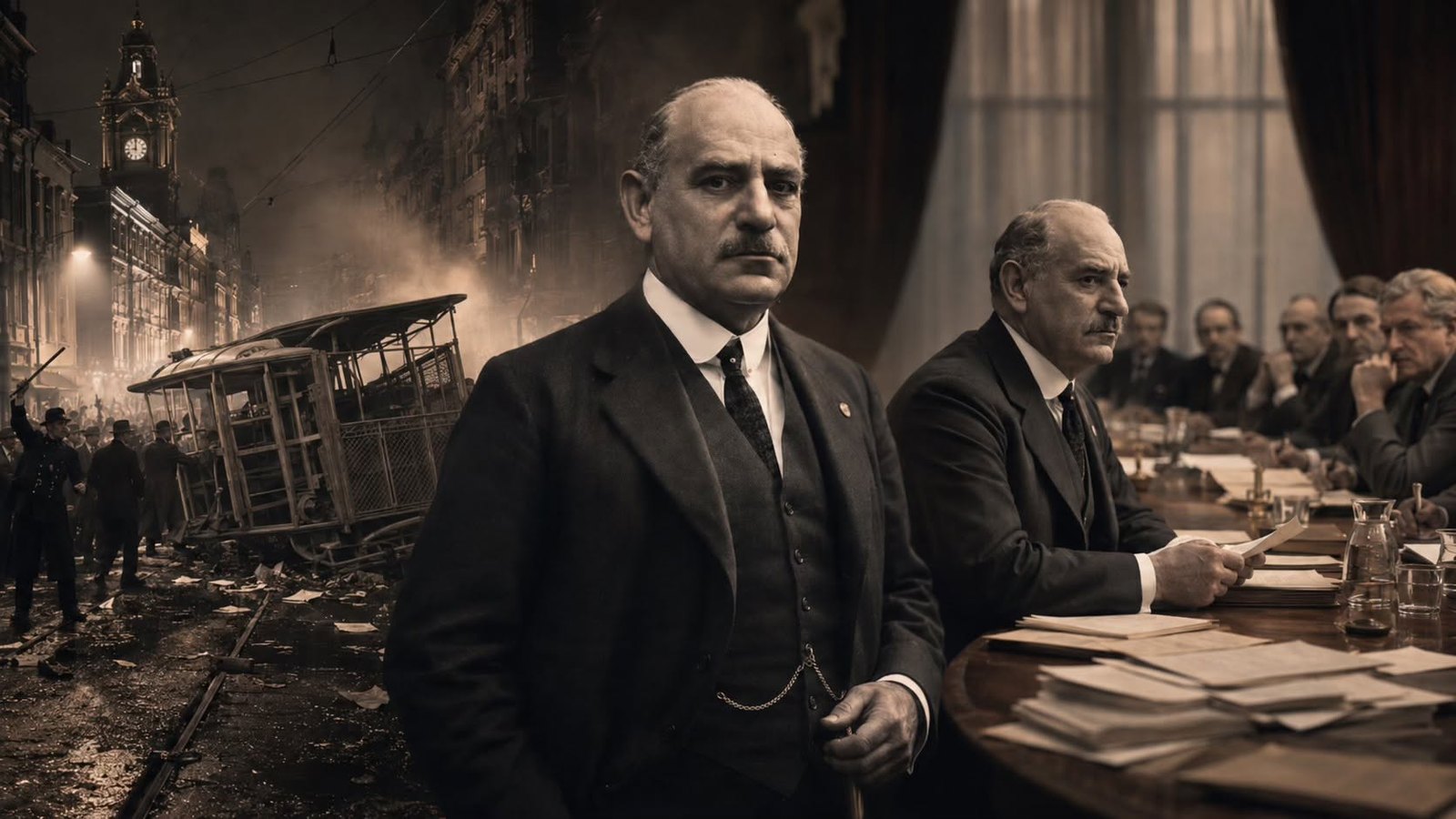
Since 1902, Victorian police had no pension — the only state force in Australia without one. Their pay ran 3/7d per day below their New South Wales counterparts. They worked eight-hour days spread across twelve. One Sunday off in four.
The immediate trigger was the appointment of four senior constables in plain clothes to secretly monitor officers on the beat. The men called them spooks. Strike leader Constable William Thomas Brooks put it plainly: "So much of our time is taken up watching for the supervisors that we do not get a fair opportunity to detect crime."
The government's response was to sack them. All 636.
The Premier turned to Sir John Monash.
Over the following days, Monash assembled 5,000 special constables at Melbourne Town Hall, led by AIF veterans and CMF officers — 56% of the volunteers had served in the First World War. By Melbourne Cup Day, 6 November, order was restored. Monash later said the response had been immediate: "At a word, the AIF sprang to it."
The strike was broken. The men were gone.
And then the government appointed Monash to chair the Royal Commission into why it had happened.
The Commission sittings began on 8 September 1924. When the findings came down, they acknowledged that the strikers' grievances had been valid. Not that their action was justified — the Commission refused to say that. But that the grievances were real. That the pay gap was real. That the absence of a pension was real. That the surveillance was real. The 636 men who had lost their jobs received no reinstatement. But the Police Pensions Act 1923 was passed before the year was out. Pay increased substantially. Public expenditure on police stations and accommodation doubled.
The men who had struck never came back. Those who came after them got what had been fought for.
This is what Pikuach Nefesh — the sanctity of individual life — looks like when the individual life cannot be saved. The 93-minute Battle of Hamel is the better-known expression of the value: every resource marshalled, every plan exhausted, so that fewer men die. But the 1923 Commission is the same value applied in a different register. Monash used the authority of investigation to protect the dignity and conditions of people he could no longer protect directly. He did not need to chair that Commission with an open mind. He chose to.
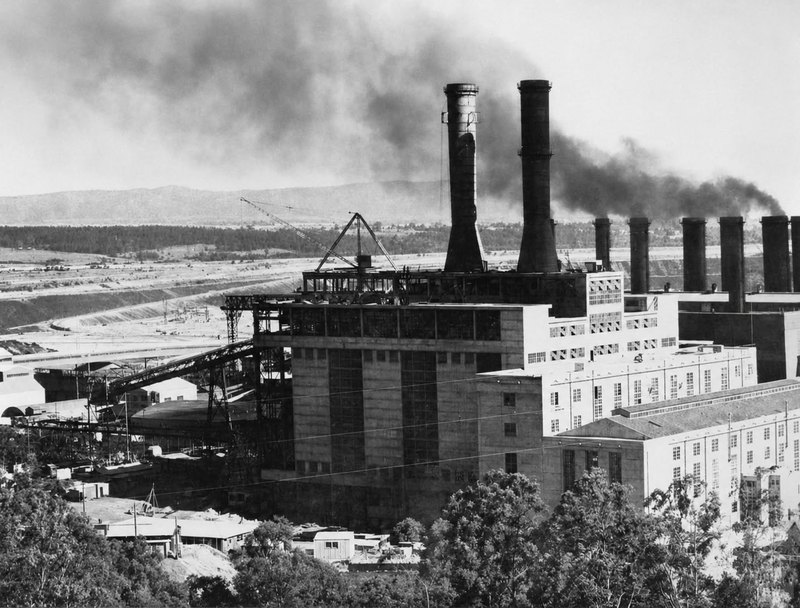
The museum traces Pikuach Nefesh across the full arc of Monash's life — from the Western Front to the brown coal frontier to the halls of a Royal Commission — and asks what it looks like to hold every life at its full weight, even when you have already lost it.