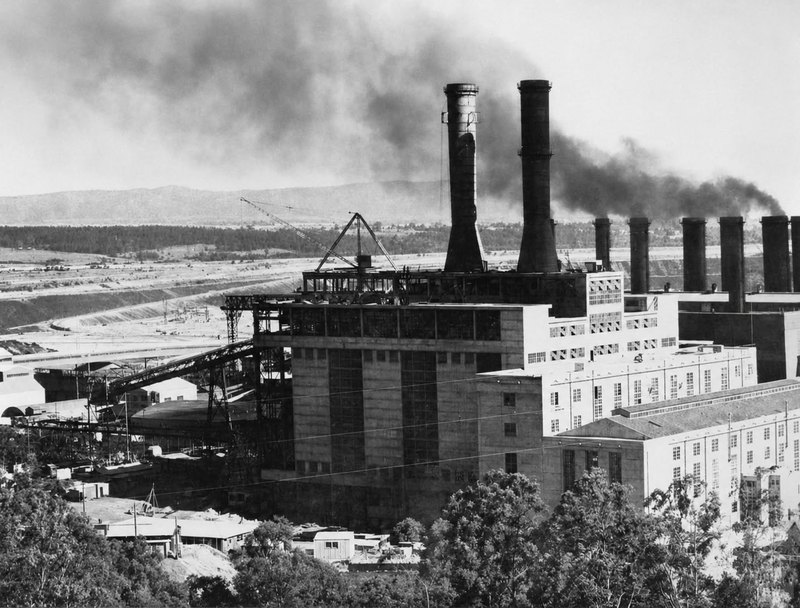
His daughter, Fae Lawson, grew up there during Yallourn’s earliest years. She remembered the nursery surrounded by bush. Before reticulated services reached that part of the site, draught horses worked from the stables, pulling drays loaded with young trees and seasonal bedding plants bound for streets, parks, schools and recreation reserves across the township. From the open ground around the nursery, Fae watched steam rise from the power station before hearing its whistle drift across the bush.
Jock Lawson was born in South Queensferry, Fife, Scotland, in 1901. He trained at the Glasgow Botanic Gardens while studying botany at night school before broadening his experience at Kew Gardens in London. After arriving in Australia he joined the Ballarat Botanical Gardens. In 1929 the State Electricity Commission appointed him Head Gardener at Yallourn, where he served for the next thirty-seven years.
Yallourn emerged from the Garden City movement, combining industry, open space and community life into a single vision. Every home stood on a generous block with room for gardens, vegetables and fruit trees. Sir John Monash wanted families to enjoy healthy surroundings and enough land to keep a horse and cultivate a garden. Lawson gave that vision its landscape.
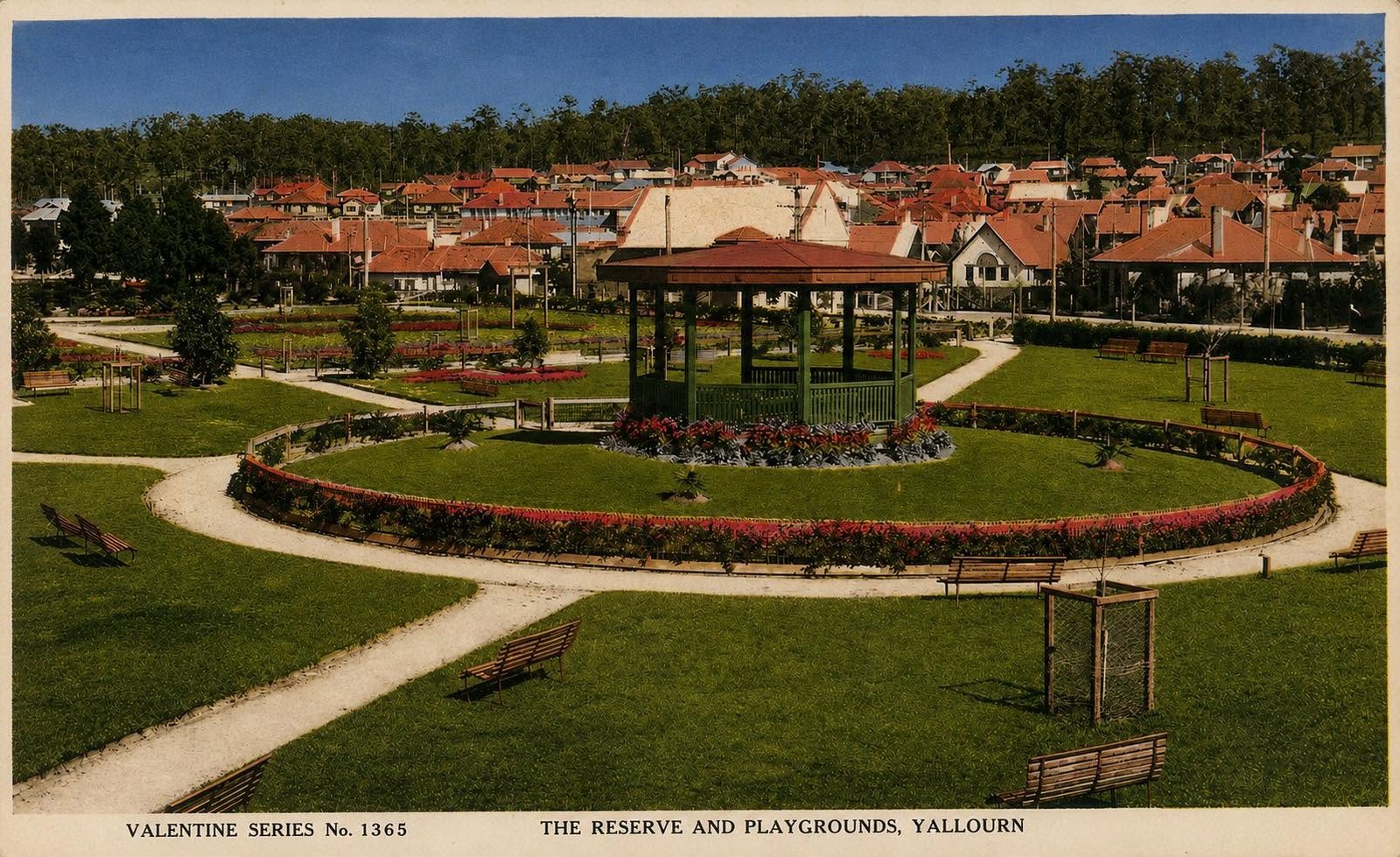
His nursery became the centre of Yallourn’s horticultural programme. Thousands of plants were propagated there before being distributed throughout the township. Monash Square developed into a formal civic garden with sweeping lawns, clipped hedges and seasonal displays. Broadway became a tree-lined boulevard linking the shopping centre with the railway station. Bedding displays followed the rhythm of the seasons. Spring bulbs gave way to summer begonias and geraniums, autumn chrysanthemums and winter glasshouse displays. Streets, schools, sporting grounds and public reserves all passed through Lawson’s hands.
Every street tree, every public hedge and every seasonal flower display began life in Lawson’s nursery.
Each summer Lawson’s gardeners also maintained an extensive network of firebreaks through the surrounding ti-tree scrub, stringybark, messmate and fern gullies. They cleared vegetation by hand, cutting strategic breaks across the prevailing winds to protect the power station, workshops, homes and public infrastructure. The same teams who planted gardens also protected the town from fire.
Lawson’s work quickly earned recognition beyond Gippsland. In 1936 the Yallourn Bowling Club’s green attracted a sixty-two-member inspection tour from the Tree-Planters’ Association of Victoria. Curators and horticultural leaders travelled from Adelaide, Launceston, Albury, Essendon and across Victoria to study the standard of his work.
His influence extended beyond Yallourn. In 1947 he designed and landscaped the grounds surrounding the Morwell Church Community Gardens, creating another public landscape that continues to serve the Latrobe Valley.
Cricket carried Lawson’s reputation even further. In February 1955, Sir Leonard Hutton’s MCC touring side arrived to play a Victorian Country XI at Yallourn Oval. Schools and banks closed early as thousands gathered for one of the largest sporting events in the town’s history. Lawson and his assistant, Alf White, prepared the wicket and surrounding grounds to first-class standard. Afterwards Hutton wrote personally to thank Lawson, comparing the wicket to that year’s Adelaide Test pitch. Visiting players described Yallourn Oval as the finest country cricket ground they had encountered.
Lawson devoted himself to the community as completely as he did its gardens. He served as club secretary and president, founded the Yallourn and District Horticultural Society, acted as a trustee of the town’s recreation reserves and served on the Yallourn High School Council. His wife Nan often remarked that he was rarely home because Yallourn itself had become his life’s work.
In 1959 tragedy touched the Lawson family when their son Ian was killed while serving with the RAAF in Malaya. Lawson continued serving the community he had helped build. He retired in 1966 after thirty-seven years with the Commission and received the British Empire Medal in 1970 for his service to Yallourn.
Jock and Nan later moved to Morwell. They watched the gradual closure of Yallourn and the removal of the gardens he had spent a lifetime creating. Fae remembered her father’s response as one of quiet acceptance. He understood that landscapes continue to change, even when people cannot imagine them any other way.
Today the Yallourn Botanic Garden continues that story. It reflects the same belief that communities flourish when beauty, planning and care grow alongside industry. Nearly a century after Jock Lawson planted Yallourn’s first nursery, the seeds of his vision continue to grow.