
The Governor agreed with the principle but revised the list to Australia's first three Prime Ministers — Barton, Deakin, and Watson. The Advisory Council overruled them both. The 1953–54 pound note series — 10 shillings, £1, £5, and £10 — went to print with colonial-era figures: Matthew Flinders, Charles Sturt, Hamilton Hume, Sir John Franklin, and Arthur Phillip.
When the Bank drew up contingency designs for higher denominations — a £20 and a £50 should they ever be needed — Monash was the designated portrait for the £20. They were never printed. Australia converted to decimal currency in 1966, and the pound series was retired before those notes were required.
In 1984, when Australia introduced the $100 note, the faces chosen were Antarctic explorer Sir Douglas Mawson and astronomer John Tebbutt. Monash was passed over again.
He finally appeared on 15 May 1996, when Australia issued its first polymer $100 note — designed by Bruce Stewart of Note Printing Australia. He has been on every version since, including the current note released 29 October 2020. There are approximately $30 billion worth of $100 notes in circulation.
The face is Monash's. But the Reserve Bank went further than the portrait. In the microprint — too small to read without a lens — they reproduced his words to graduating students at the University of Melbourne:
"Adopt as your fundamental creed that you will equip yourself for life, not solely for your own benefit but for the benefit of the whole community."
Community before self. On the note you use to pay your bills.
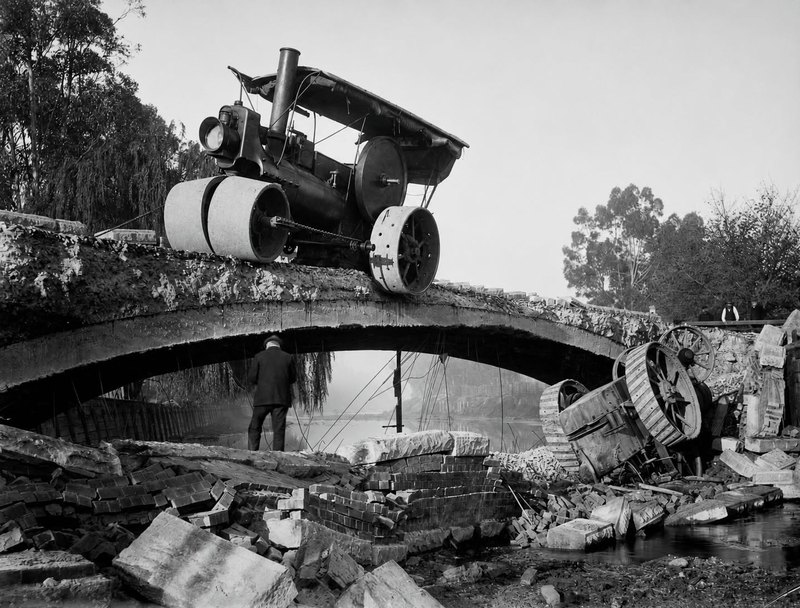
It took fifty-three years from first nomination to the note. The argument for him was always the same: that a man who rebuilt a bridge at his own ruin rather than walk away from the consequences, who planned warfare so precisely because he loathed its cost, who refused political power and spent his final decade in service to others — that man carried something Australia recognised as its own. Values that belong to all of us.
The Sir John Monash Museum does not argue that these values belong to one man, or to one faith tradition, or to one generation. It argues that they are available to every household and every person — which is why they are recognised, formally, in the permanent record of Australian currency, as the foundation of a life well lived.
Because they do.