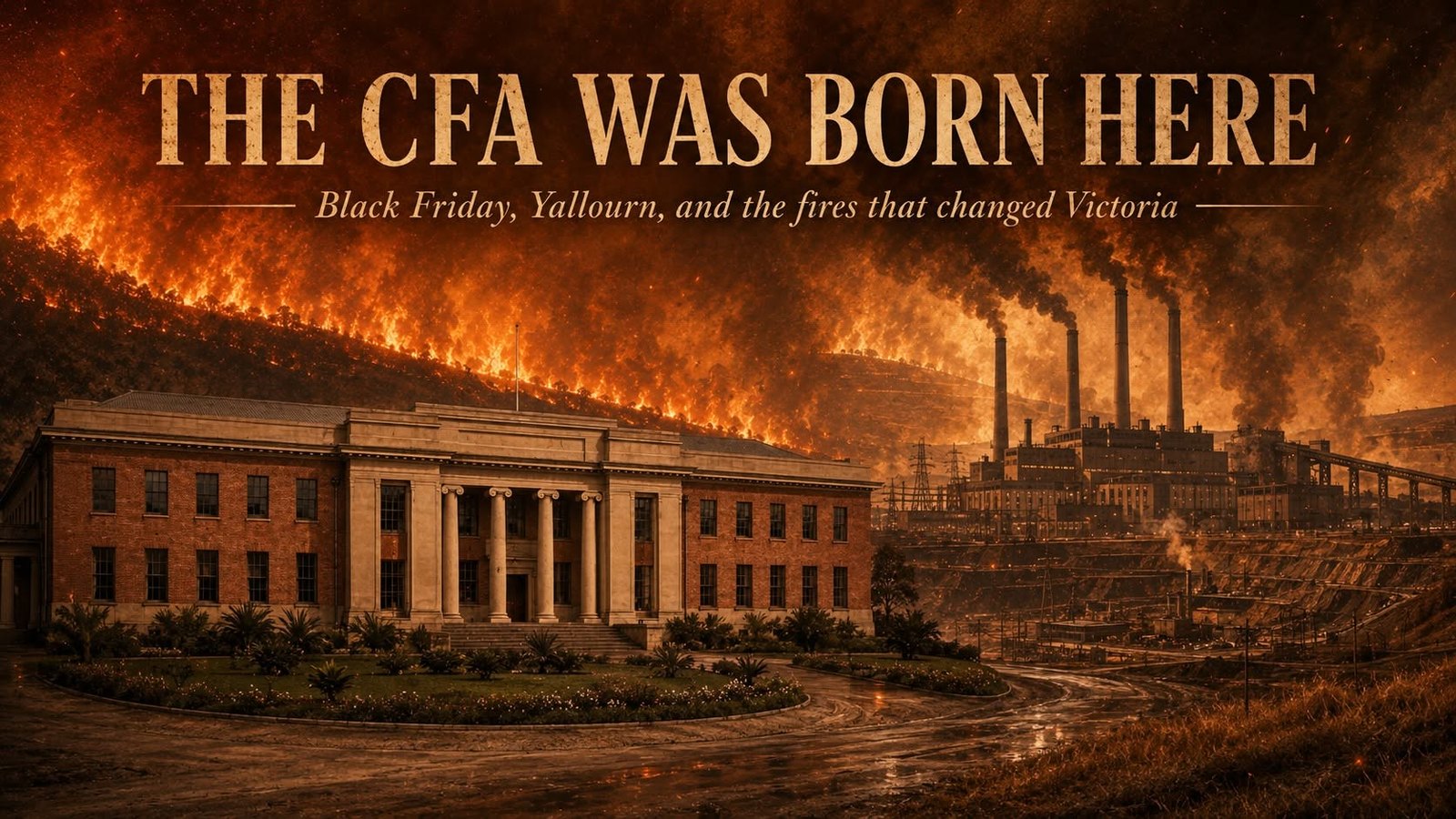
When it was over, 71 people were dead. Nearly two million hectares had burned. That’s the same area as all of Wales or Israel or El Salvador. The smoke, ash and heatwave from the fire was so severe that three-quarters of Victoria was affected by the disaster. Whole townships — Narbethong, Noojee, Woods Point, Nayook West, Hill End — were gone. Sixty-nine sawmills were destroyed. Thousands of sheep, cattle, and horses were killed. Warrandyte, Yarra Glen, Omeo, and Pomonal were severely damaged.
Judge Leonard Stretton was appointed to a Royal Commission on 25 January 1939 — twelve days after the fires. He began hearings on 31 January. His report was tabled on 28 June 1939.
Stretton was not a bureaucratic writer. His report opened: "It appeared the whole State was alight on Friday, 13 January 1939." Of the people who had lived through the years leading to it, he wrote: "Men who had lived their lives in the bush went their ways in the shadow of dread expectancy. But though they felt the imminence of danger they could not tell that it was to be far greater than they could imagine. They had not lived long enough." The prose was later anthologised in nature writing collections and set as prescribed reading for Victorian students.
His investigation heard from more than 200 witnesses across 34 sitting days, producing over 2,600 pages of transcript. His conclusion was unambiguous: the fires were "lit by the hand of man." His recommendations were equally clear: establish an authority with overall responsibility for bushfire management, build forest roads and firebreaks, construct fire towers and dams, deploy RAAF aerial patrols linked by radio, and introduce officially sanctioned controlled burning.
The centrepiece recommendation was a unified fire authority — a single organisation with the power and the mandate to coordinate Victoria's response to fire.
The Victorian government attacked his report savagely in Parliament. Deputy Premier and Minister for Forests Alfred Lind led the charge. The Labor opposition moved a motion of no confidence. It was defeated on party lines. None of Stretton's recommendations were acted upon. Not one.
For five years, they sat.
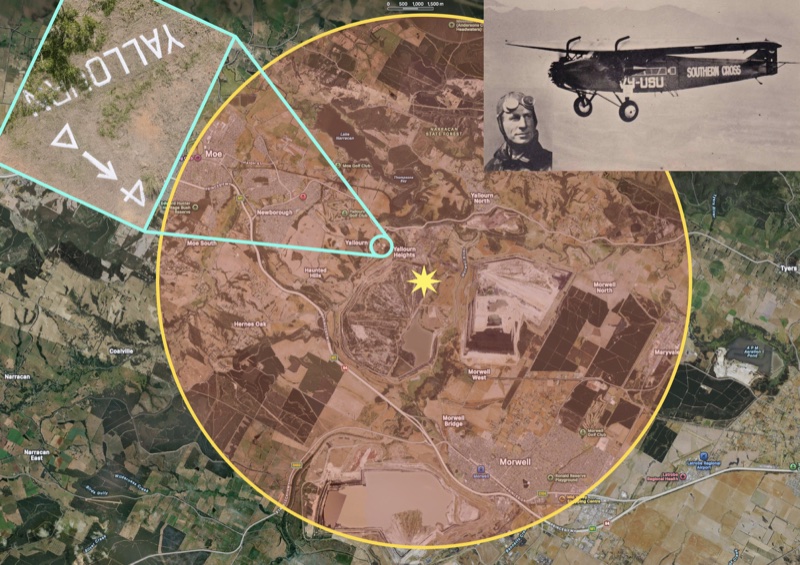
Then, on the morning of Monday, 14 February 1944, the weather began cool and cloudy at Yallourn.
Around lunchtime, the wind changed to north-westerly. Temperatures soared. A smouldering farm burn-off north of the town — the kind of routine paddock fire that happened across the region every summer — was whipped into flames that raced toward the township.
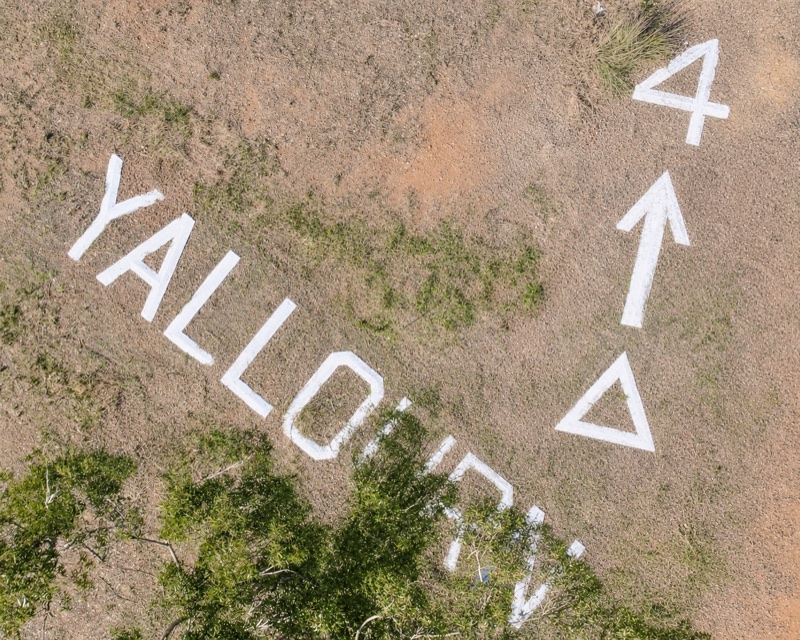
Homes burned in Haunted Hills, near Yallourn's outskirts. Patients were evacuated from Yallourn Hospital when fire scorched the building's walls. Hedges caught alight across the town. At the railway station, trucks loaded with briquettes ignited from flying embers and burned fiercely. A student named Bob Garvin later remembered: "My sister Chris collected me from Primary School and took me home hanging onto the fences all the way as we could not see through the thick heavy smoke."
The township itself was saved. No houses damaged in the main town. No deaths in Yallourn proper.
Then the embers reached the open cut.
Initially it appeared safe. But embers landed on exposed coal seams and fires broke out simultaneously across a wide area. Brown coal — despite containing 66% moisture — burns once ignited. Subsurface fires took hold, burning underground where firefighters could not reach them. Surface fires burned for several days. Underground fires took weeks to extinguish.
Coal supply from the Yallourn open cut was not restored until May 1944. Three months.
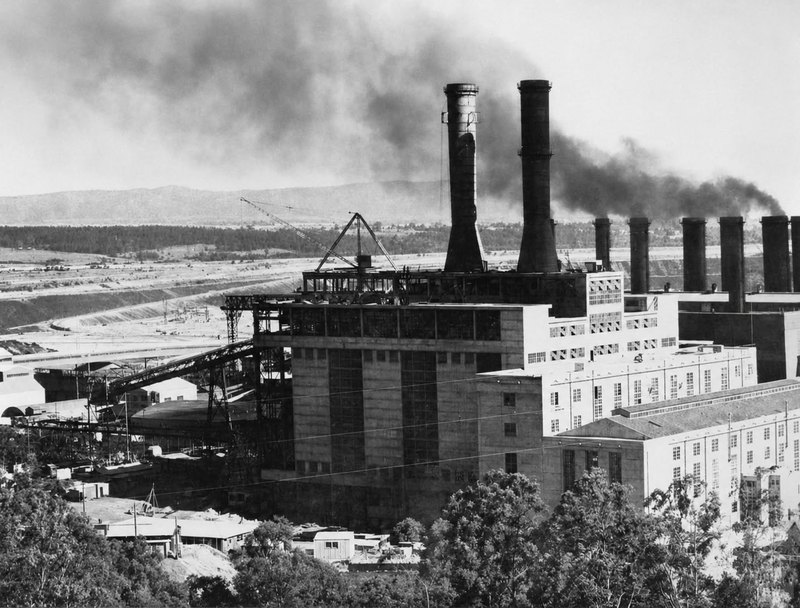
The scale of what that meant in February 1944 requires a moment to consider. Yallourn produced 67% of Victoria's electrical energy.
In 1939, 89% of Australia's entire munitions industry had been concentrated in Victoria — Maribyrnong, Footscray, Fishermans Bend — manufacturing artillery shells, small arms ammunition, explosives, and uniforms. By the peak of production in 1943, one third of 60,000 munitions workers nationally still worked in Victoria, their output flowing directly to the Southwest Pacific campaign.
In February 1944, General Douglas MacArthur's forces were preparing the amphibious assault on Hollandia in Dutch New Guinea — the operation that would launch Allied forces up New Guinea's northern coast toward the Philippines. The factories running on Yallourn's power were making the shells, the vehicles, and the equipment those campaigns required. The power station had been formally identified as a prime target for enemy air raids — anti-aircraft batteries and gun crews were stationed there to protect it from bombing. The Japanese had not been able to cut Yallourn's power. A farm burn-off had.
Electricity restrictions were introduced immediately. They lasted eight working days — held to that short duration only by emergency coal drawn from the hastily reopened Brown Coal Mine (Yallourn North), which had been shut since 1930. The broader fire season of that summer killed 51 people, injured 700, destroyed 650 buildings, and burned approximately one million hectares across Victoria. It was the driest summer recorded in Melbourne until 2002, with just 46mm of rain in the preceding two months.
The government that had buried Stretton's 1939 recommendations now recalled him.
Premier Albert Dunstan and Minister Albert Lind — the same Alfred Lind who had led the parliamentary charge against Stretton's first report — asked Stretton to chair a second Royal Commission.
Stretton's second report made pointed references to the recommendations that had sat unacted upon for five years. On the broader question of Yallourn, he surprised many by opening not with fire findings but with a hard assessment of the SEC's administration of the town itself: "Here indeed, the townsman enjoys all that the heart of man may desire — except freedom, fresh air and independence." He called it "suffocating paternalism" and found "legitimate dissatisfaction" among residents. His point was practical: protecting Yallourn in a fire depended on the goodwill of the people who lived and worked there. That goodwill had held in 1944. He cautioned it could not be assumed indefinitely.
After six months of debate in State Parliament, legislation passed in two stages — 22 November and 6 December 1944. The Chairman and Board of the new organisation were appointed 19 December 1944. The Country Fire Authority came into legal effect on 2 April 1945, with 768 Bush Fire Brigades and 35,000 volunteer members transferred to the new organisation on its first day.
Seventy-one people had died in 1939. A Royal Commission had recommended a unified fire authority. The government had refused. It took a farm burn-off reaching a coal seam — threatening the power supply of a nation at war — to make inaction politically impossible.
The CFA was not born from the worst fire in Victoria's history.
It was born here.
In Yallourn