
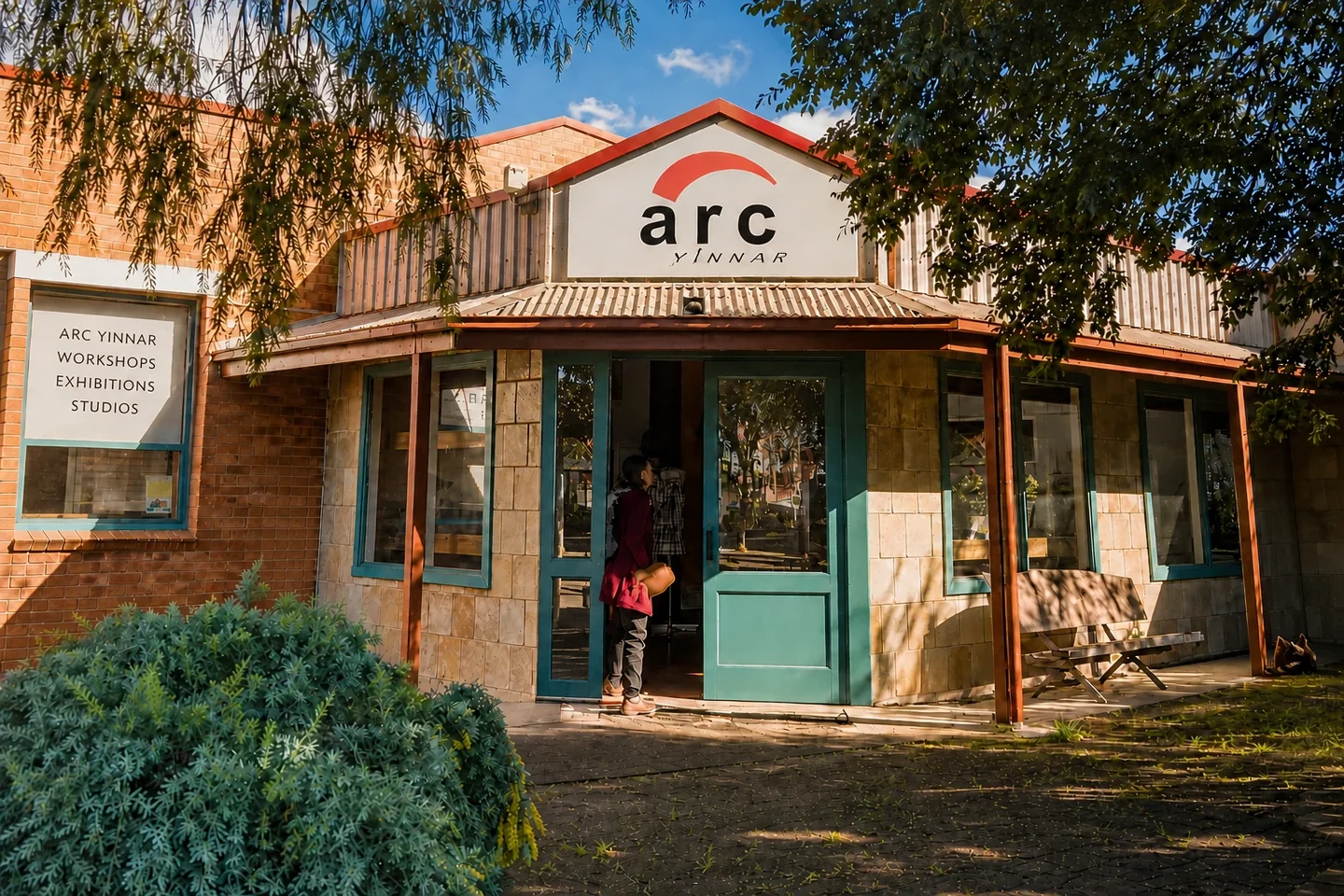
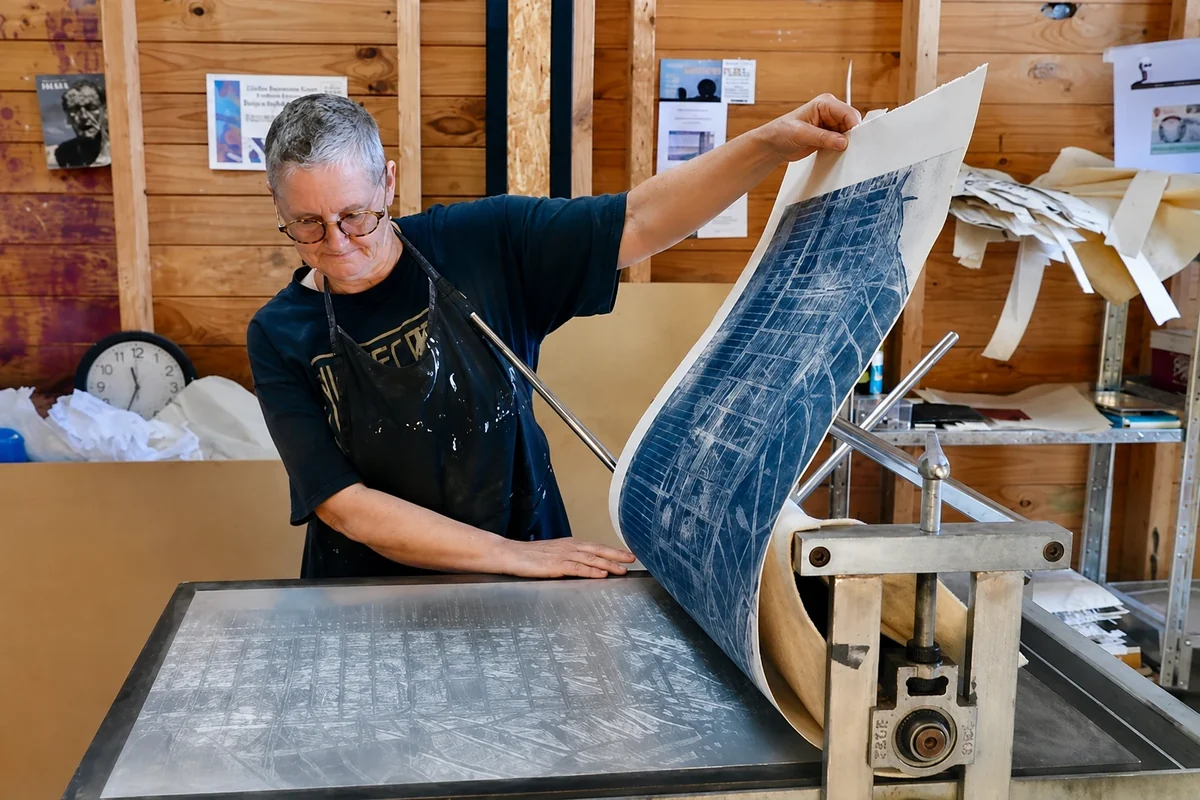
Inside Yinnar's former butter factory, pottery wheels stand beside workbenches, shelving, a slab roller and kilns. Classes give newcomers a way into ceramics, and the fitted studio gives people room to continue their practice. The building was constructed for dairy production from 1929. Artists began converting it into the Yinnar Art Resource Collective in 1982.
The sequence is written into the building: industry, adaptation, art and continuing use. Each chapter depends on people arranging rooms, equipment and time around the work at hand.
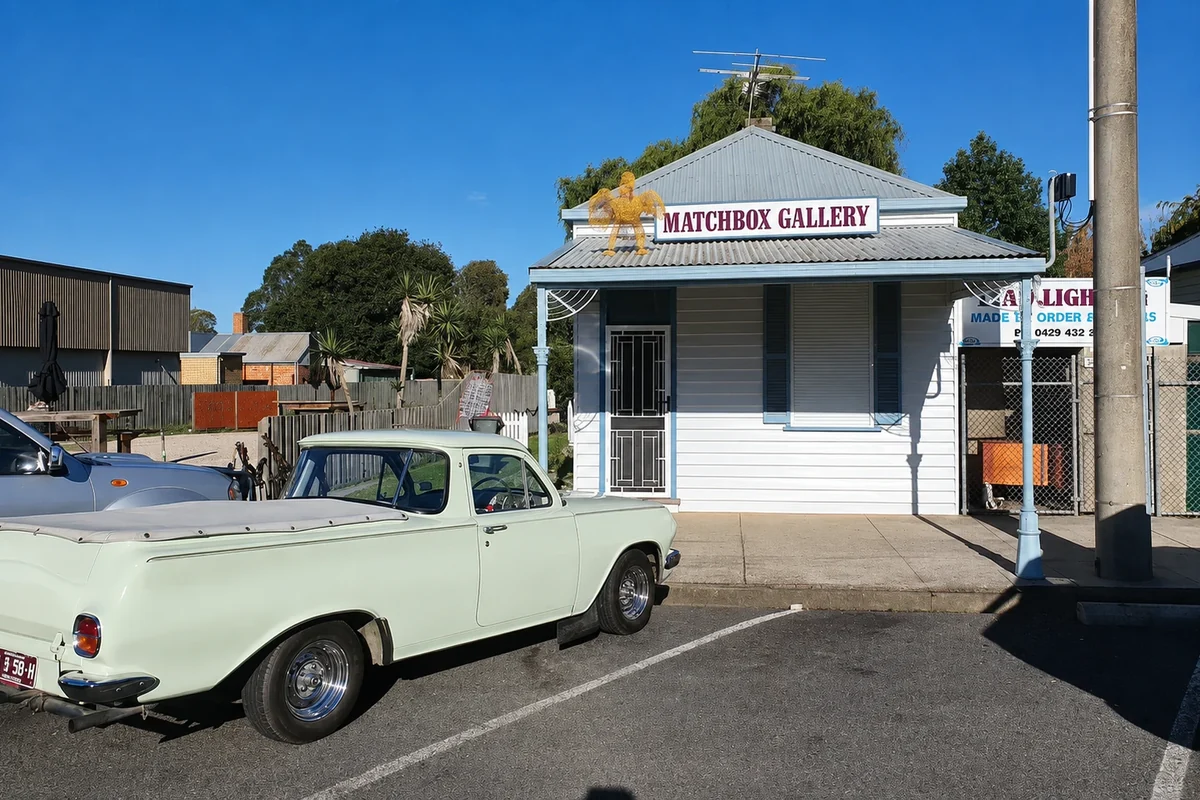
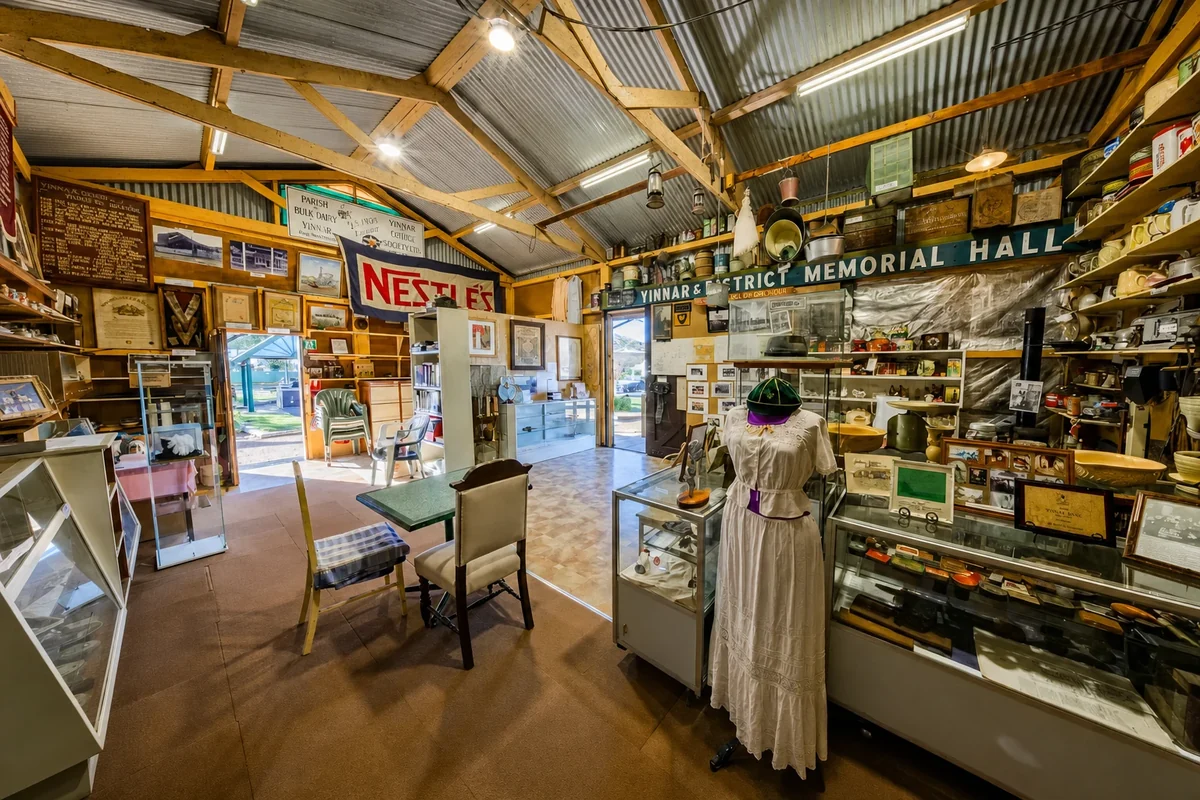
That working life extends along Main Street. ARC Yinnar provides places to make and perform. Matchbox Gallery gives art a cottage-sized exhibition space and keeps leadlight work in the town's creative practice. At the former railway precinct, the Yinnar & District Historical Society and Museum cares for the photographs, documents, books and objects through which local history can be examined again.
Open House Latrobe brings the three places into one Yinnar program on Saturday 10 and Sunday 11 October. Together they offer a way to read the town through the work people continue to do inside its buildings.
Open House Latrobe · 10–11 October
Open doors in Yinnar
 Open House Latrobe · Program place
 Open House Latrobe · Program place
 Open House Latrobe · Program place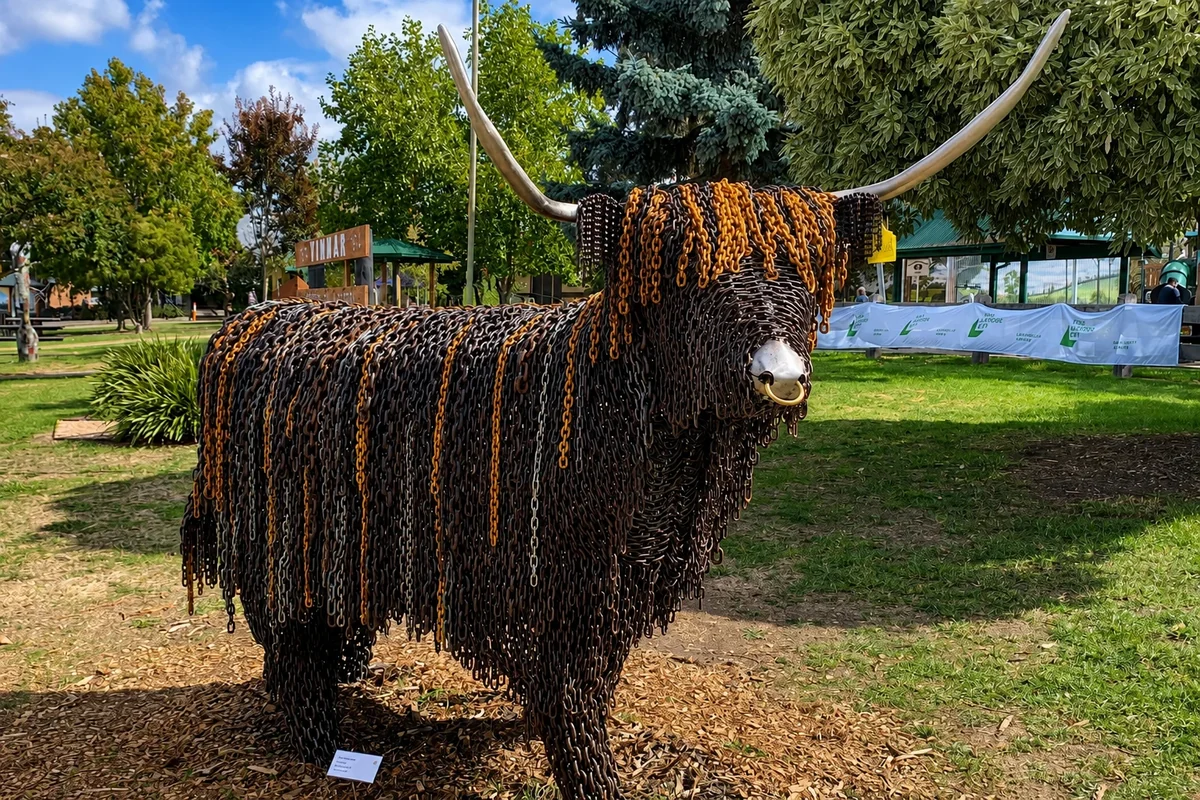
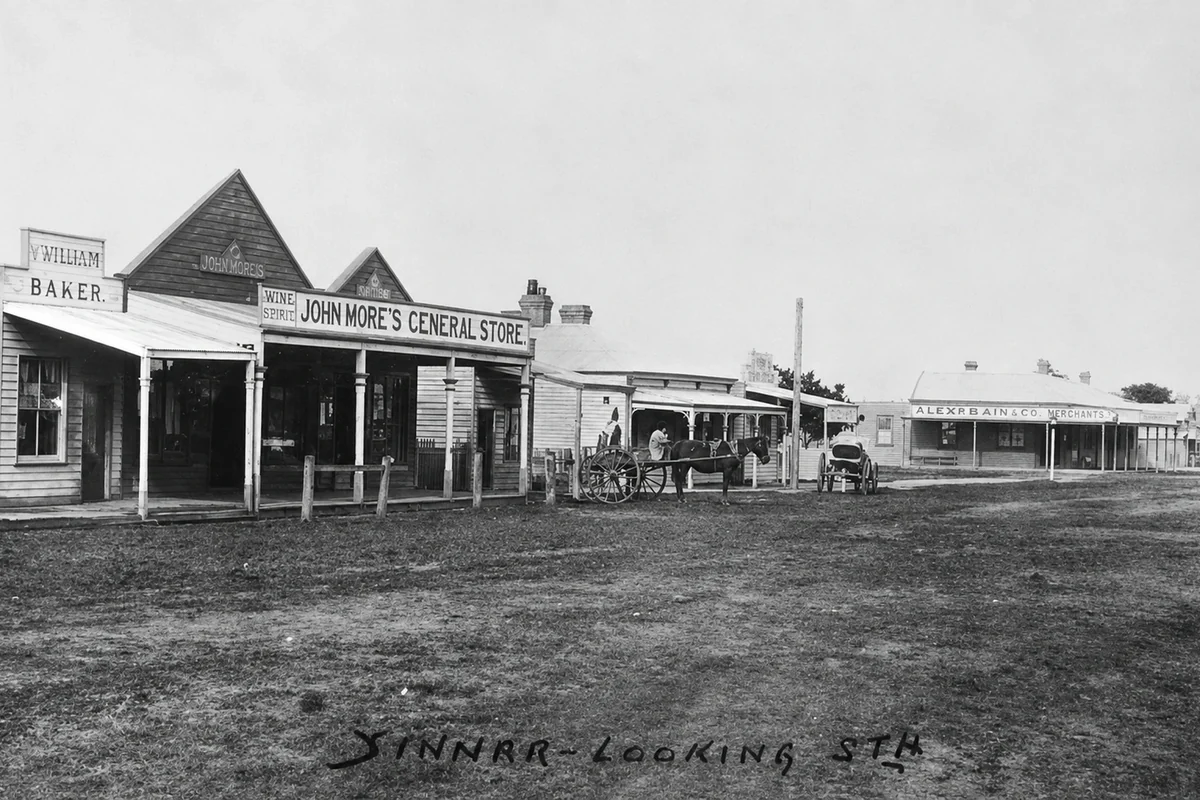
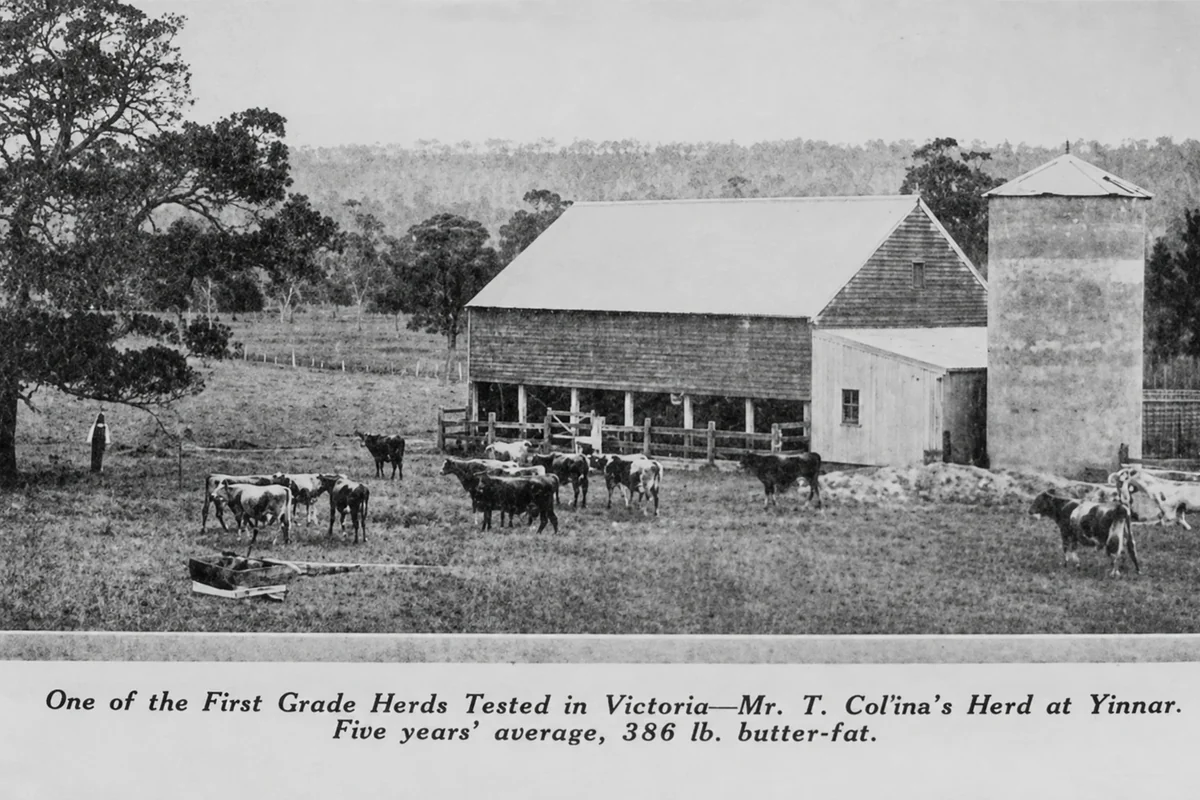
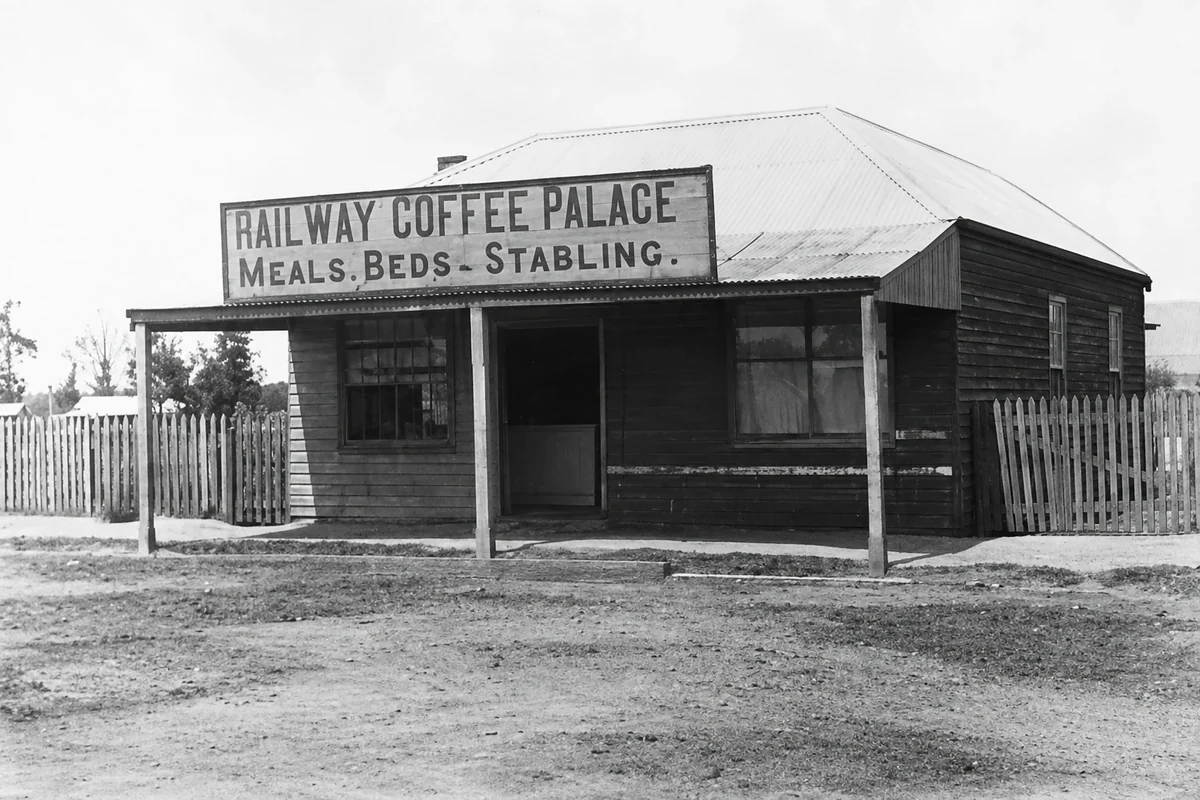
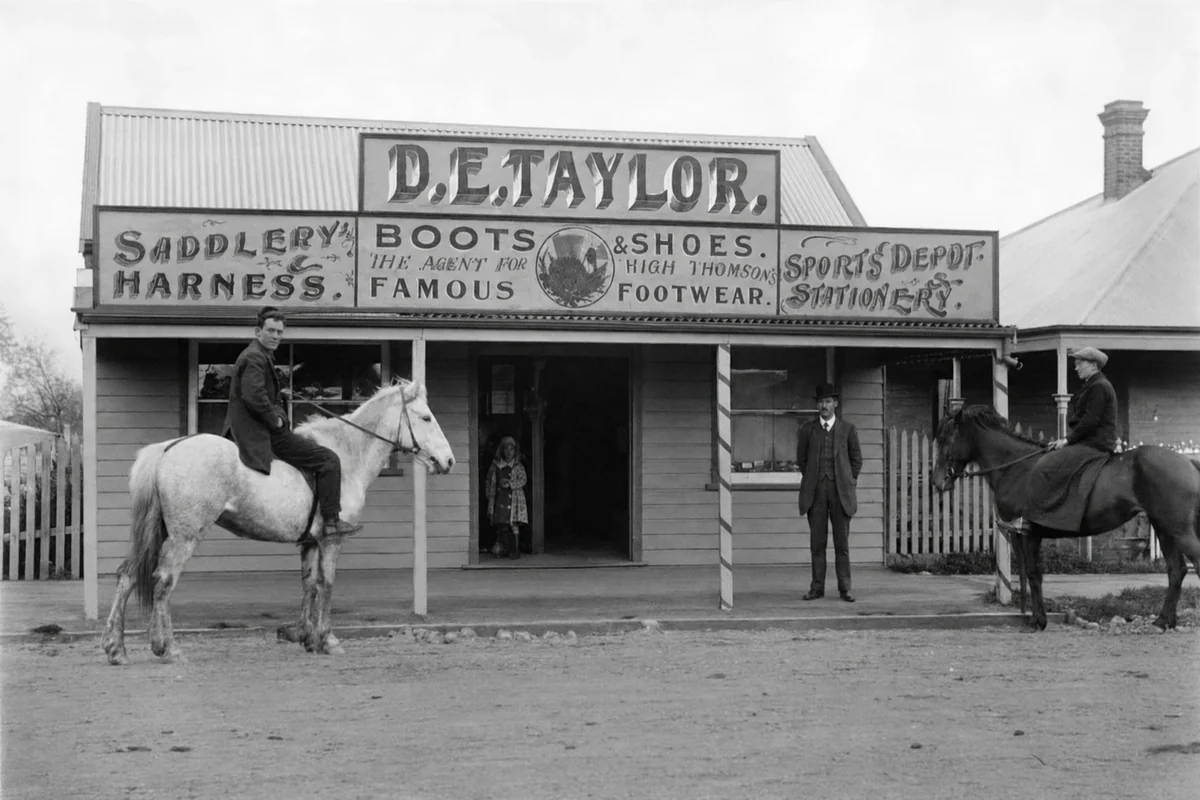
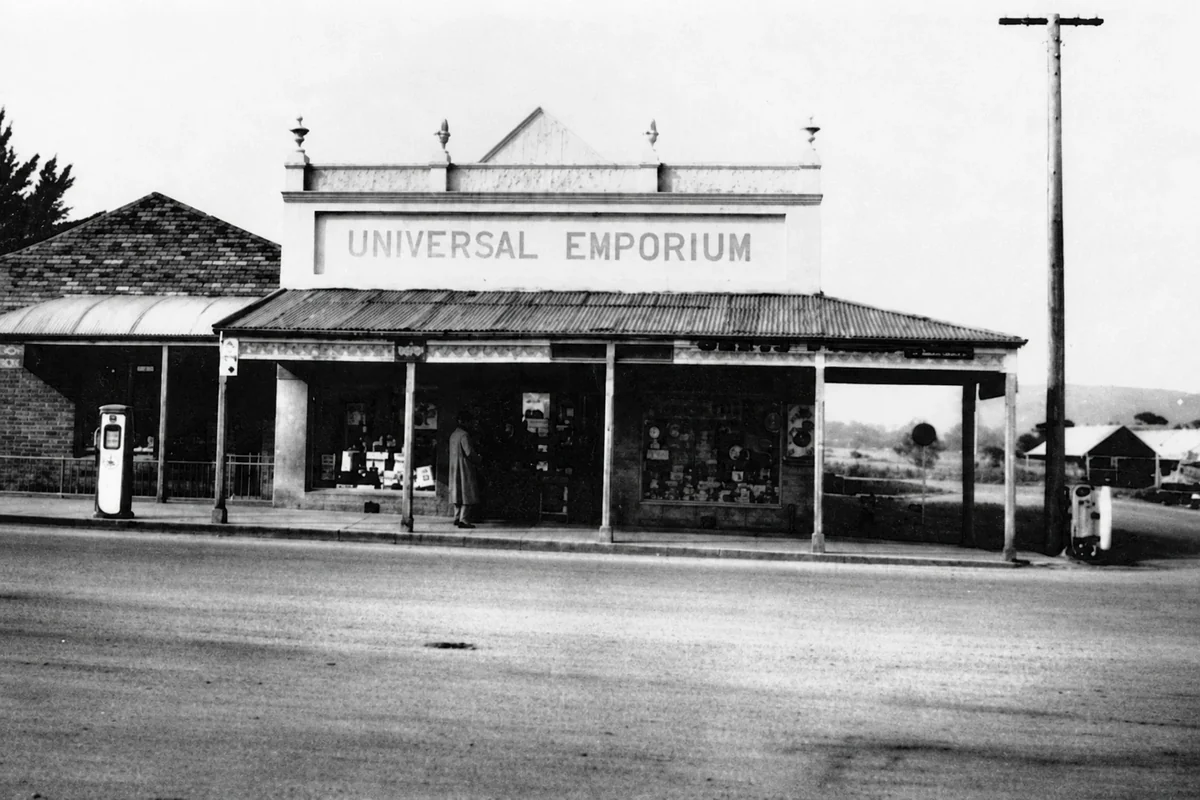
Yinnar grew around movement and production. The railway opened in 1885 and supported the timber and dairy activity developing around the township. Main Street gathered the places that served that life: shops, homes, churches, railway structures and the butter factory. Many of those buildings remain legible in the town today.
The former butter factory is among the largest physical records of that period. Its buildings were developed from 1929 and passed through major chapters of Gippsland's dairy industry, including associations with Nestlé and Murray Goulburn. Production ended in 1978. Four years later, artists began the work of converting the complex for the Yinnar Art Resource Collective. The arts centre officially opened in 1987.
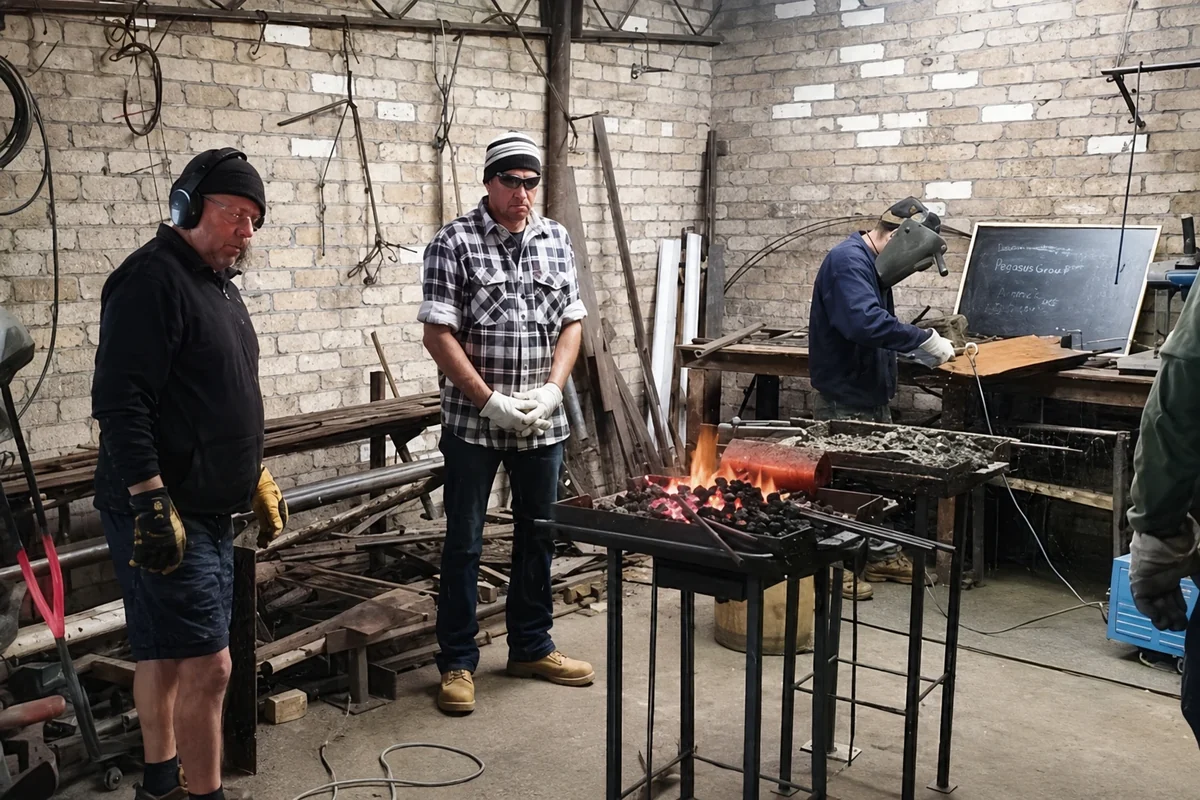
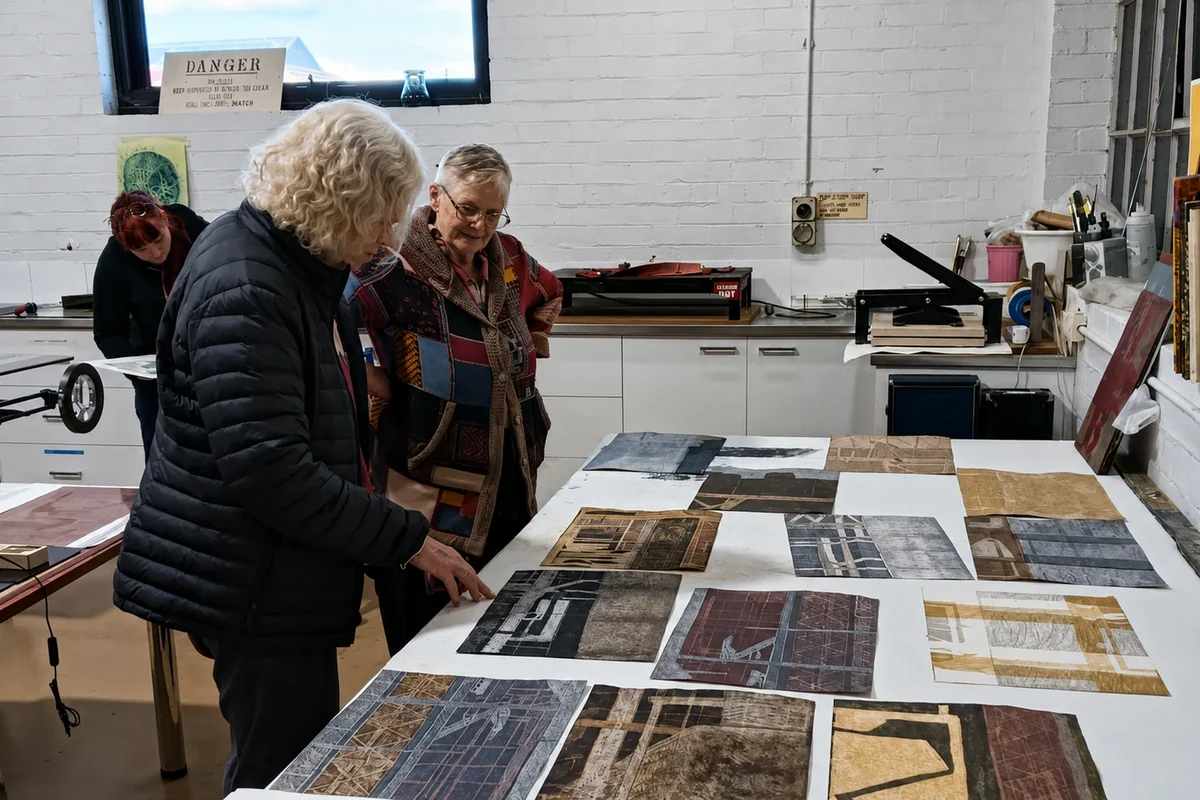
Ceramic artist Kiyoshi Ino was among the people involved in establishing an artists' space in the old factory. The collective created a base where artistic work could be made, taught, exhibited and performed. ARC Yinnar continues as an artist-run community arts centre, with galleries, studios, workshops and performance activity held within the former industrial complex.
The ceramics studio makes that continuity especially clear. Pottery wheels and kilns support the physical stages of working with clay. Entry-level classes create a first step, and ongoing studio practice gives skills time to develop. The factory remains a place of production, organised around a different material and a different community of makers.
Main Street · dairying · railway
Yinnar's history
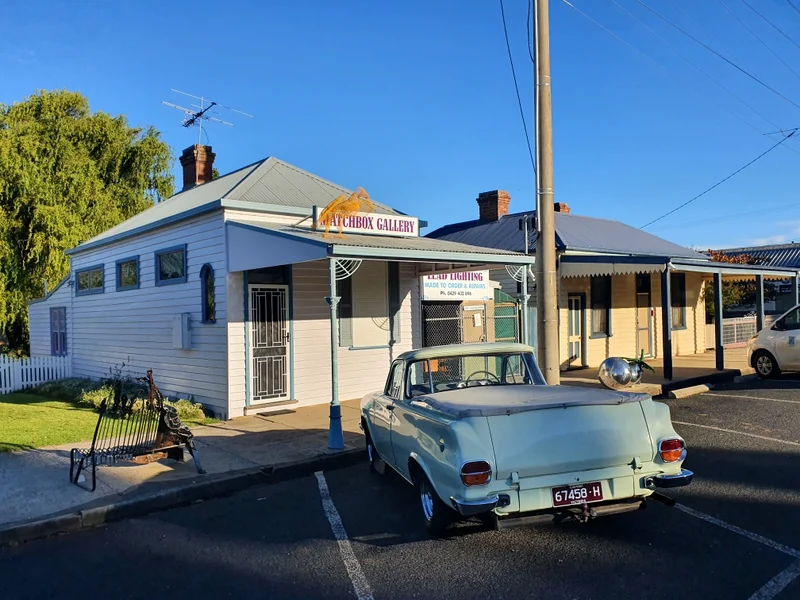
Further along Main Street, Matchbox Gallery works at the scale of a cottage. The gallery opened in 1999 as an art gallery and leadlight business. Group and solo exhibitions occupy its rooms, while leadlight design and repair keep glasswork connected to the daily life of the place.
Matchbox adds another part to Yinnar's creative rhythm. Work made by artists enters the gallery, spends time in public view and finds its way into homes and collections. The cottage gives that exchange a recognisable address on Main Street. Its full story belongs to Eden's separate feature on Matchbox Gallery; here, it forms the showing part of a wider town sequence.
At the former railway precinct, the work turns towards records, objects and local memory. The retained railway elements include the goods shed, parts of the platform and siding, and a trolley shed. The goods shed has a gabled roof, corrugated-iron cladding, a timber floor, sliding doors and a railway mural. These details belong to a building made for receiving, holding and dispatching goods.
The Historical Society gives the precinct an active role in understanding the district. Photographs preserve faces, streets and occasions. Documents and books hold names, dates and accounts. Objects retain the form of work and everyday life. Collection care, research and public access allow those pieces to be brought together when a family question, a building or a local event needs its history.
The three places carry distinct forms of stewardship. ARC makes room for practice. Matchbox makes room for artists to show their work. The Historical Society makes room for evidence of the district's life to remain available. Their buildings hold those activities in public view along the same Main Street.
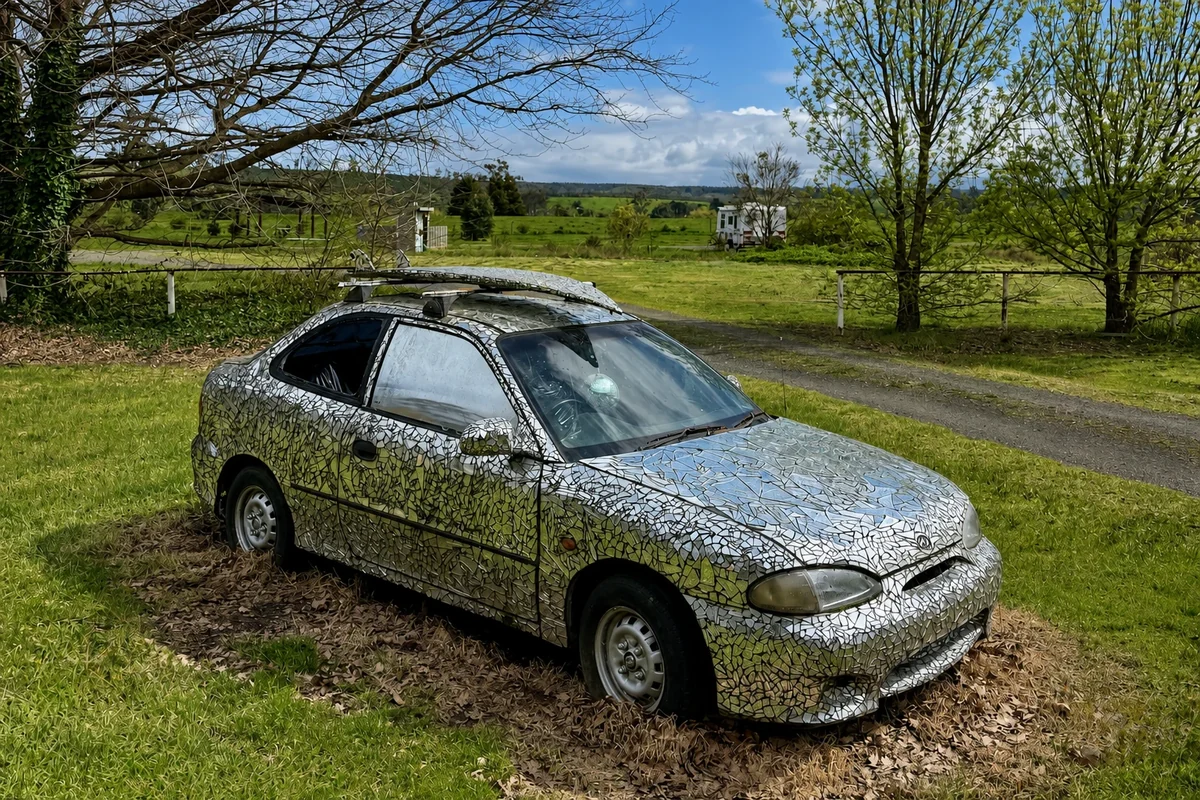
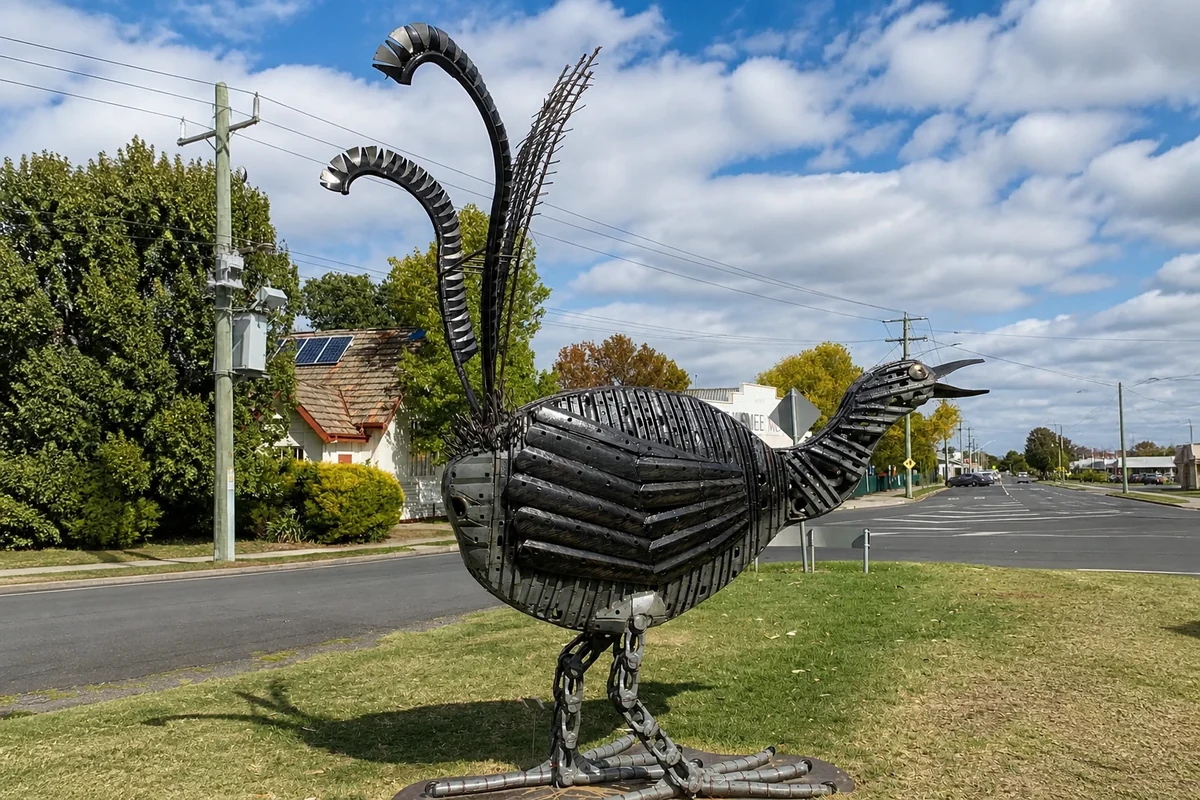
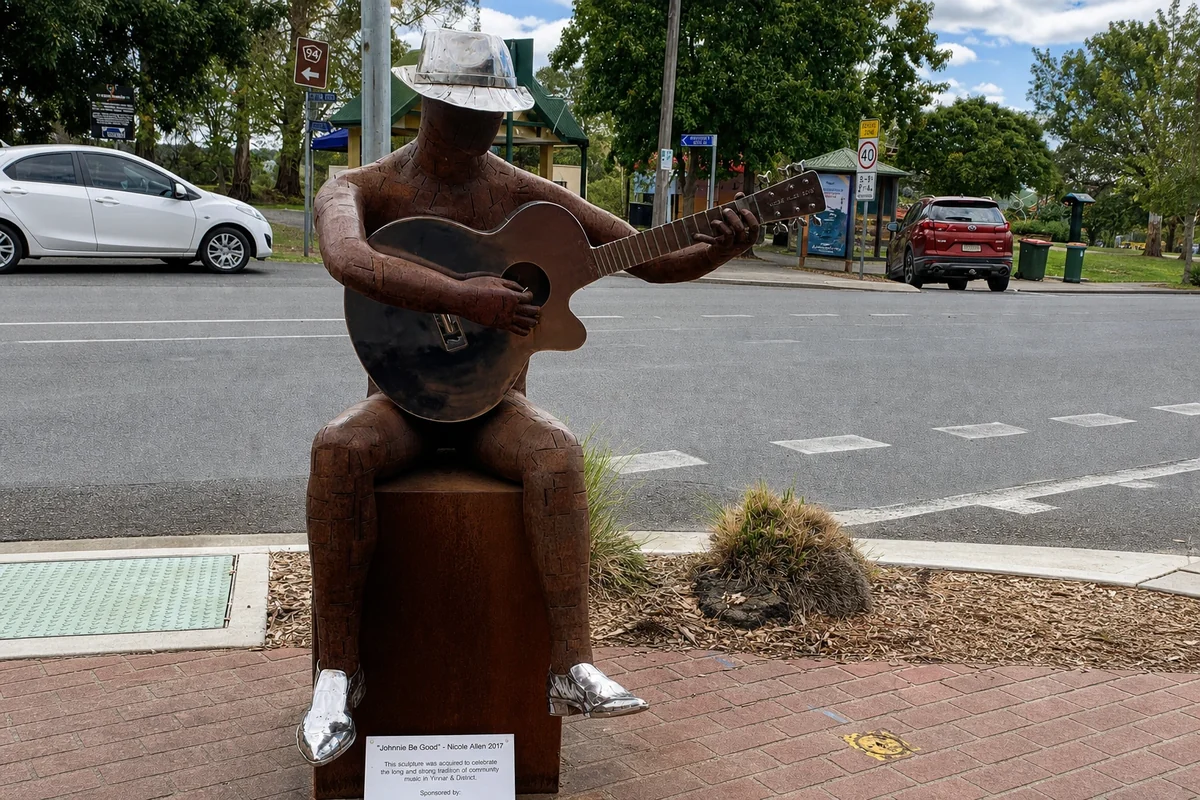
Art also reaches beyond their doors. Permanent sculptures are placed along Main Street, and the recurring Gippsland Sculpture Exhibition brings work into Yinnar's streets and galleries. Exhibitions change. Classes begin. Research questions lead back into the collection. Each return can open another part of the town.
Across the festival
Open House Latrobe
Open House Latrobe offers a particular weekend for entering this sequence. The current program lists ARC Yinnar, Matchbox Gallery and the Yinnar and District Historical Society and Museum across 10 and 11 October. Individual opening details and activities should be checked in the official program when planning a visit.
Inside the former butter factory, tools are ready for creative work. In the cottage gallery, artworks and leadlight occupy domestic-sized rooms. At the railway goods shed, collections keep the district's questions within reach. Yinnar's buildings continue to earn their place in town life through the work happening inside them.
An Eden of the East Foundation initiative
Power of Colour Awards 2026
On 14 and 15 November, Power of Colour celebrates Latrobe's gardens, gardeners and shared creativity through garden visits, awards, and community and industry showcases.
Explore Power of Colour