 Eden of the East
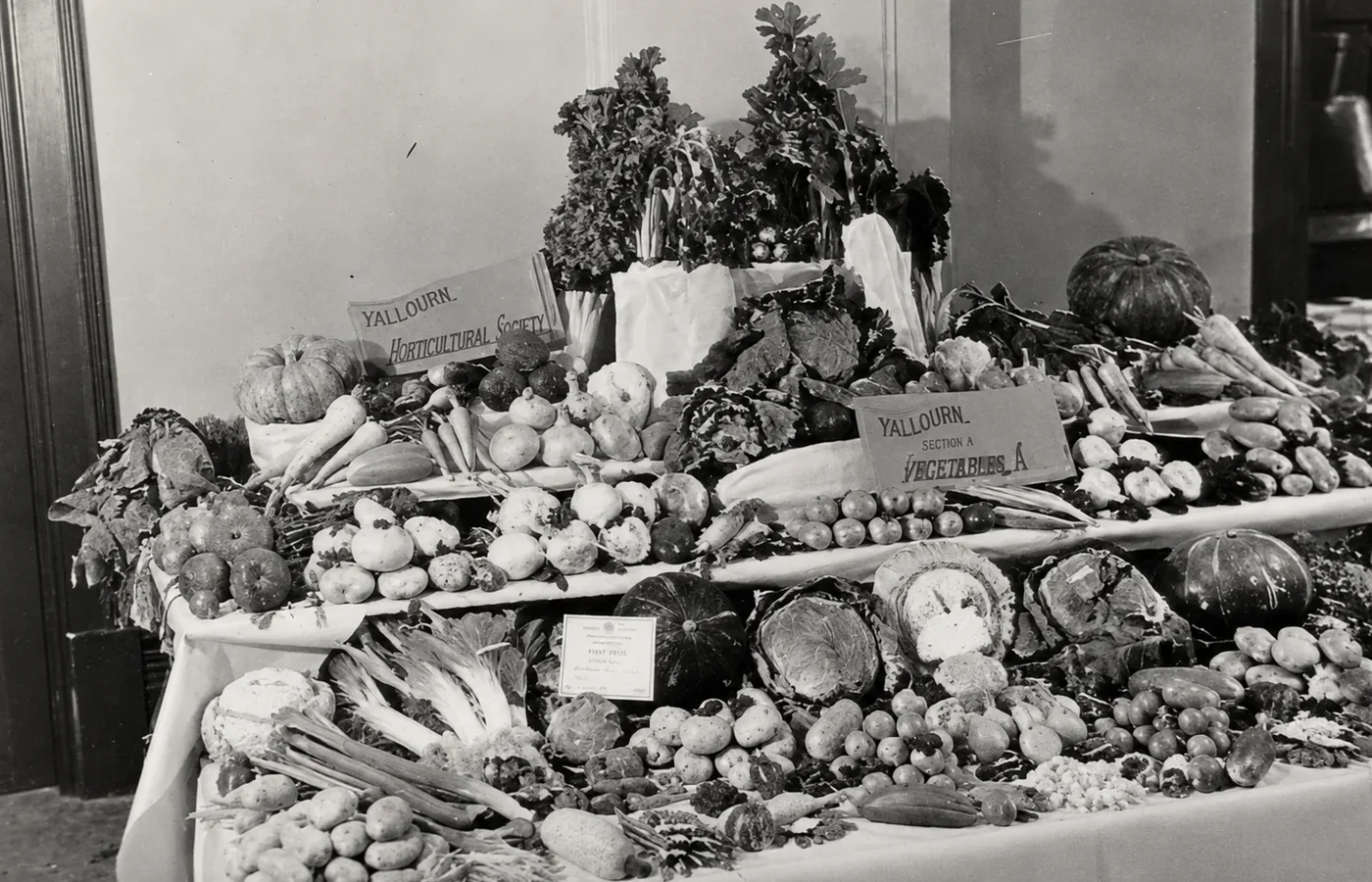
Sweet peas. Pansies. Antirrhinums and stocks. Irises, Iceland poppies, roses and flowering shrubs. Bowls arranged for colour and harmony. Vegetables grown for the table.
The results of Yallourn's 1945 flower show read like a garden opening itself one exhibit at a time. Each entry began somewhere else: in separate ground, under separate hands, through the private decisions of a growing season. At the show, those decisions could be seen together.
That gathering gave private work a public setting.
A flower grown at home already carries attention. Someone chose its place, worked with the soil, watched the weather and learned what helped it flourish. Cutting a stem and carrying it into a shared room gives that work another life. It becomes something neighbours can notice, discuss and remember. One person's practice becomes part of a community's view of itself.
The Yallourn and District Horticultural Society gave this work a shared structure. Its 1945 show results record cultivation and creative arrangement side by side: individual blooms, collections, flowering shrubs, bowls of roses, harmonious arrangements and vegetables.
The categories made different kinds of knowledge visible. A strong bloom carried the timing of its cultivation. An arrangement brought colour, proportion and form together. Vegetables carried another expression of the same patient attention. The show gave each contribution a place within a larger whole.
The Society formed a shared structure around individual work: a schedule, categories, a room, recorded results and a place for each contribution. A garden supplied the material. Organisation created the meeting point.
The Society's role extended into the practical conditions of gardening. A later history records that Yallourn residents were encouraged to grow vegetables during the war years and that the Society supplied members with lime and fertiliser at wholesale prices. Shows made the results visible. Practical cooperation helped people keep growing.
Individual skill took on a public life through this shared support. The display gave people material to compare, questions to ask and ideas to carry back to their own ground for the next season.
People brought one thing they had grown or made into the same place. Each person contributed in their own voice. The flower, bouquet, arrangement or harvest carried its own evidence of care. Placed beside other entries, it became part of an exchange among gardens of different sizes, purposes and characters.
Across Latrobe, community gardens create places where people can participate, share skills and knowledge, organise activities and work with others around living things. Their value grows through the contributions people make: a task completed, a method explained, a plant divided, an idea shared, another pair of hands arriving when the season calls.
Home gardens create their own version of this relationship. The work develops through repeated choices: what to plant, what to tend, when a flower is ready to be cut and how the material might be used. The gardener learns through that repetition. Which stem will hold. Which colours belong together. Which foliage gives an arrangement its shape. Which plant will earn another place next season.
Power of Colour creates a new regional frame for garden knowledge and creative judgement. Across Latrobe, people grow flowers, tend foliage and develop a personal eye for colour and form. The community showcase brings those individual choices into one occasion where local creativity becomes visible together.
The Homegrown Bouquet Award brings flowers and foliage from a home garden into shared display. One garden supplies the material. The person who watched it grow supplies the judgement.
The Open Floral Arrangement Award gives colour, creativity and personal expression a shared setting. It recognises the decisions that happen after the material is gathered: what to pair, what to leave open, where to create height, how to find balance and which colours will carry the arrangement.
These pathways connect cultivation with expression. One begins with the relationship between a gardener and the plants they have raised. The other makes room for the arranger's individual response to colour and form. Both allow a private practice to enter a public conversation.
Participation carries a quiet declaration: this is what grew here; this is what I noticed; this is what I chose to make with it.
Each declaration adds to a human-scale portrait of Latrobe. The region's horticultural character lives in public landscapes, nurseries, community gardens and the work of people who care for plants at home. A bouquet or floral arrangement gathers that broad identity into something one person can hold in their hands.
The Power of Colour Awards are scheduled for 14–15 November 2026, with registration scheduled to open on 1 October. The Power of Colour website is the home of current programme and participation details.
The 1945 show results preserve the names of flowers, vegetables, arrangements and the people whose entries were recognised. In that record, separate gardens remain visible together because people built a way for individual work to be shared.
A stem is selected. A bouquet takes shape. An arrangement finds its balance. Something nurtured in a private garden is carried through the door and placed among the work of others.
The garden has entered community life.
Power of Colour
Power of Colour Awards 2026
The Homegrown Bouquet Award brings flowers and foliage into shared display. The Open Floral Arrangement Award recognises colour, creativity and personal expression. Registration is scheduled to open on 1 October 2026; final eligibility and participation details remain to be published.
Explore Power of Colour