
At 75, Alec McGregor carried the Olympic flame up the steepest hill in Yallourn North.
The year was 2000. The Olympic torch relay had reached a town whose steep streets rise quickly from the Latrobe River. Local accounts remember Alec running the entire climb and still finding enough pace to sprint towards the changeover point.
For the people watching, it was a national celebration passing through their town. For those who knew Alec’s record of service, it was also a fitting picture of the man himself. He accepted something important, carried it as far as he could and made sure it reached the next person.
By then, Alec had spent most of his life carrying responsibilities that never came with a crowd beside the road. He had carried the obligations of wartime service. He had carried positions in clubs and volunteer organisations that depended on people doing the work after meetings ended. Most of all, he had carried a commitment to families whose lives had been changed by war.
Alec began work as a mechanical apprentice in 1941. In early 1943, at 18, he entered the army. Six months later he transferred to the Royal Australian Air Force and served overseas from October 1944 until March 1946.
He returned to the Brown Coal Mine settlement, now Yallourn North, in 1948. He resumed his apprenticeship and married Pat on 1 May. Their marriage became inseparable from the life they built in and around the town: work, football, volunteer service and the steady habits of looking after other people.
Alec played in Yallourn North’s 1950 football premiership side before moving to Echuca, where he joined the fire brigade. When illness in Pat’s family brought them home in 1954, he returned to community life. From 1956 to 1962 he served with the Yallourn North Fire Brigade, including two terms as secretary.
Football and the brigade were places where a town learned who could be relied upon. Teams needed people who trained, organised and returned the following season. Brigades needed volunteers prepared to accept responsibility before it was convenient. Alec belonged to both worlds. His relationship with football lasted long enough for Yallourn North’s reserves best-and-fairest award to carry his name.
The deepest measure of his service, however, was found in his work with Legacy.
Alec joined in 1960 and spent more than 40 years supporting local widows and their children. Across those decades he served as president, secretary, treasurer and subgroup leader. The list of offices records trust placed in him. The work behind them reveals why that trust mattered.
Legacy service entered people’s lives where war had left an absence. It meant maintaining contact with families over years, helping widows navigate service pensions and taking responsibility for children whose circumstances carried the consequences of a conflict they had never chosen. Alec did that work long enough for families to know that he would return.
For 10 consecutive years, he used his annual leave to serve as camp chief at Melbourne Legacy’s two-week Christmas camp at Portsea. Those camps required more than a name on a committee. For a fortnight each year, someone had to be answerable for the children, the program and the innumerable practical decisions that turned an organised camp into two weeks of real care and activity. Alec kept accepting that responsibility.
Local accounts record that he preferred to meet his own expenses instead of seeking reimbursement. He spent 15 years as the Latrobe Valley’s badge appeals officer. He helped several widows obtain service pensions. Each act was practical, but together they gave substance to a promise: families connected to service would not be left to manage alone.
That promise also shaped the life Alec shared with Pat. From 1985 until 2006, the two of them delivered Meals on Wheels throughout the Moe area. By the time they finished, they were both in their eighties.
The phrase ‘delivered Meals on Wheels’ can make two decades of care sound like a line in a record. In practice, it meant travelling familiar roads, arriving at people’s homes and placing a meal directly into someone’s hands. Each delivery turned the broad idea of community care into something immediate and useful. Alec and Pat continued doing it year after year.
This was the pattern of Alec’s contribution. He worked through structures—Legacy, the fire brigade, football, bowls and Meals on Wheels—but his impact was carried person to person. An organisation gave the service a name. A volunteer made sure somebody received it.
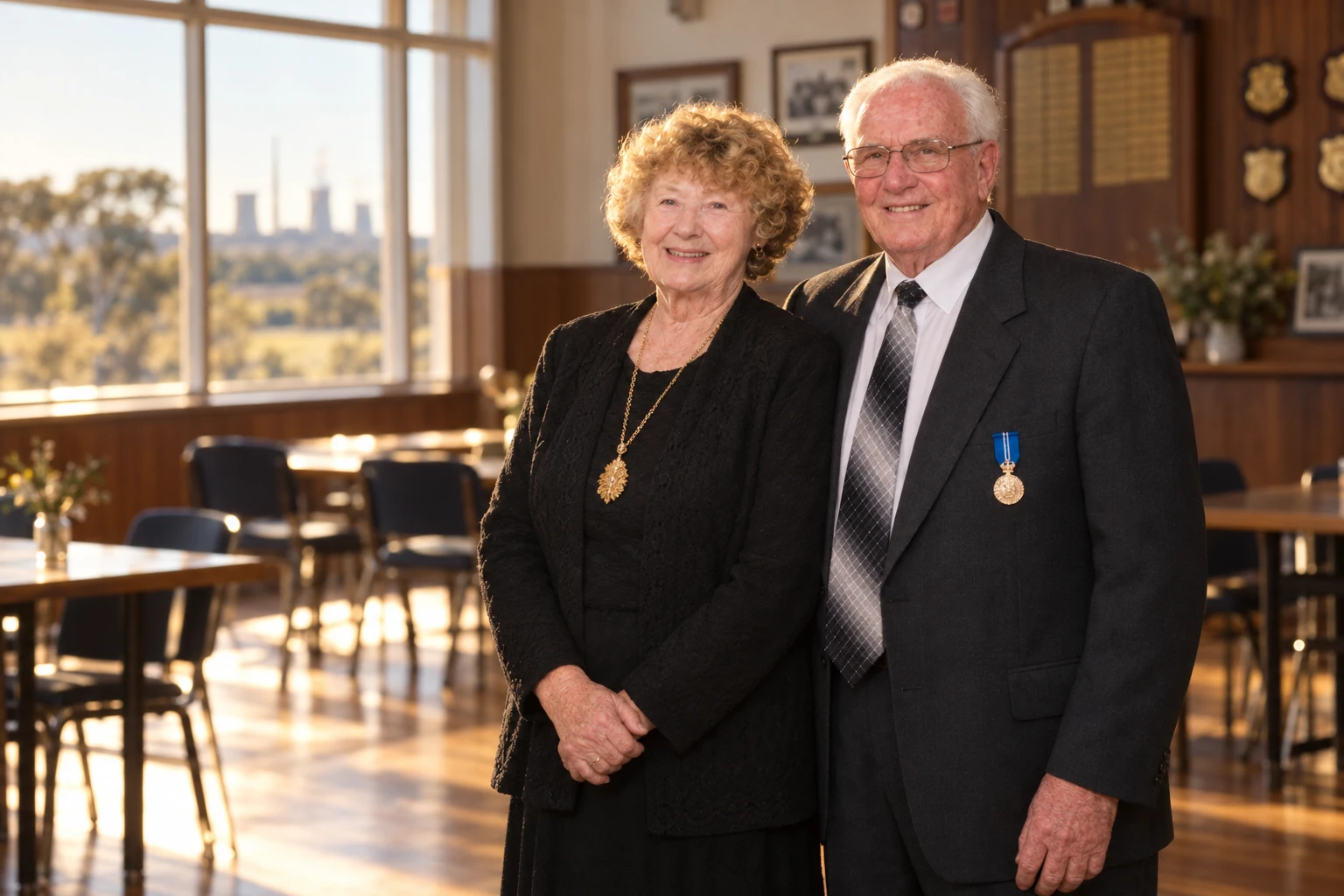
Public recognition eventually followed. In 2001, Alexander Mitchell McGregor received the Medal of the Order of Australia. The official citation honoured his service to the Narracan region, particularly through social welfare, sporting and service groups.
The citation was accurate, but necessarily brief. It could not hold the years of annual leave given to children at camp, the pension applications pursued for widows, the meals carried to people’s doors or the ordinary occasions when a club, brigade or family needed someone dependable. Yallourn North already knew the life contained inside that sentence.
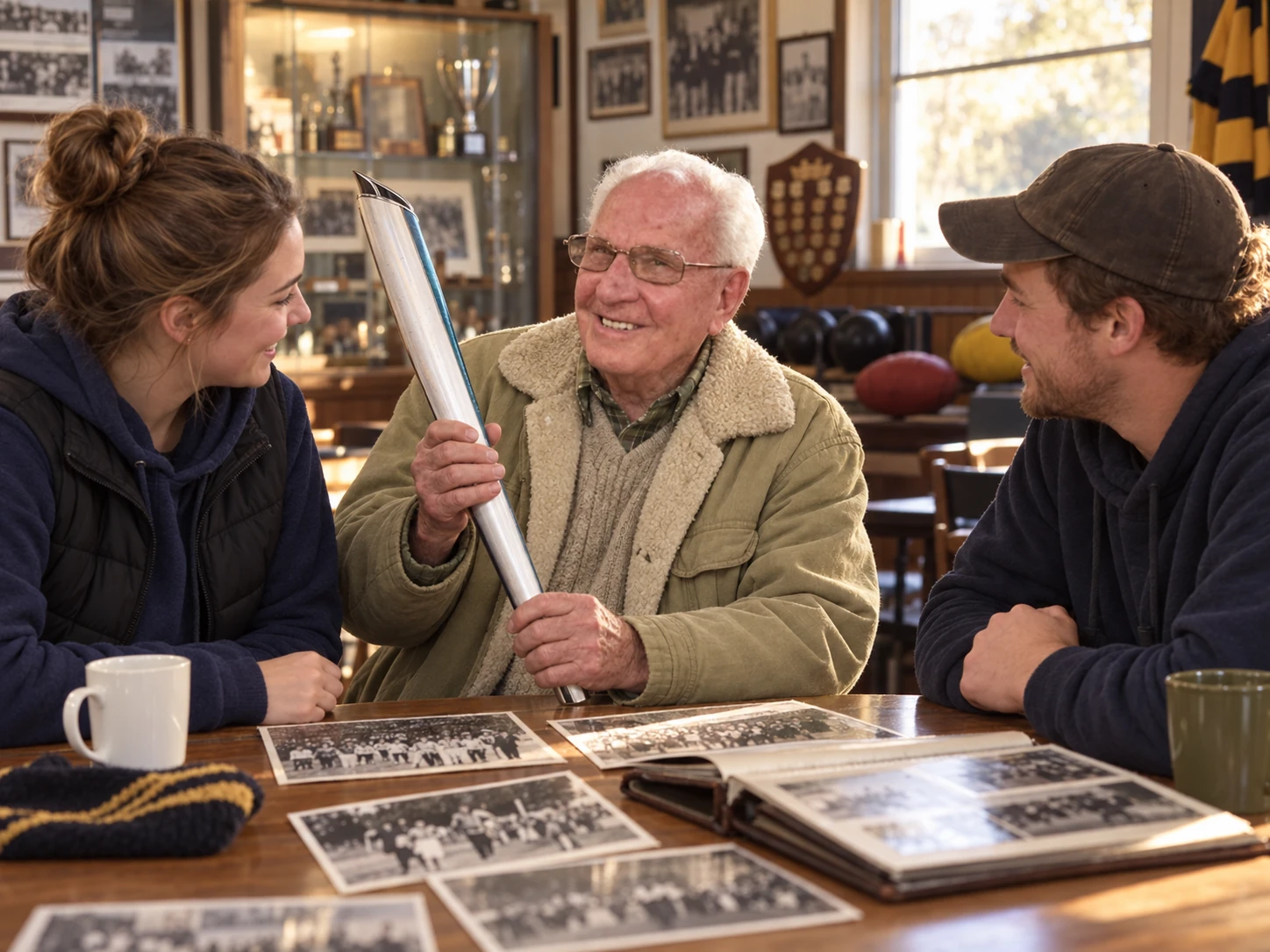
Alec treated the Olympic torch in much the same way he treated recognition. After carrying it through his town, he donated the torch and the relay T-shirt to the Old Brown Coal Mine Museum. A moment that belonged to him became an object the whole community could keep. Visitors can encounter it there as part of Yallourn North’s story: a national flame carried through a local place by a man whose service was already woven through it.
The same story is written into the town’s landscape. In December 2018, the former Yallourn North Recreation Reserve was officially registered as McGregor Reserve. The community’s account says the name honours both Alec and Pat as town stalwarts.
Their names now sit beside a place that continues to do what community places have always done. Cricket is played on its turf oval. People use the hall and clubrooms. Volunteers maintain the facilities, organisations gather and another generation learns that shared life depends on people willing to contribute to it.
That is what Alec McGregor carried up the hill in 2000. The torch was visible, but the weight behind the moment had been accumulated over a lifetime: responsibility for people, loyalty to a town and the belief that care becomes meaningful when somebody turns up and does the work.
He carried the flame to the next person. The life behind it still asks the same of everyone who comes after him.