
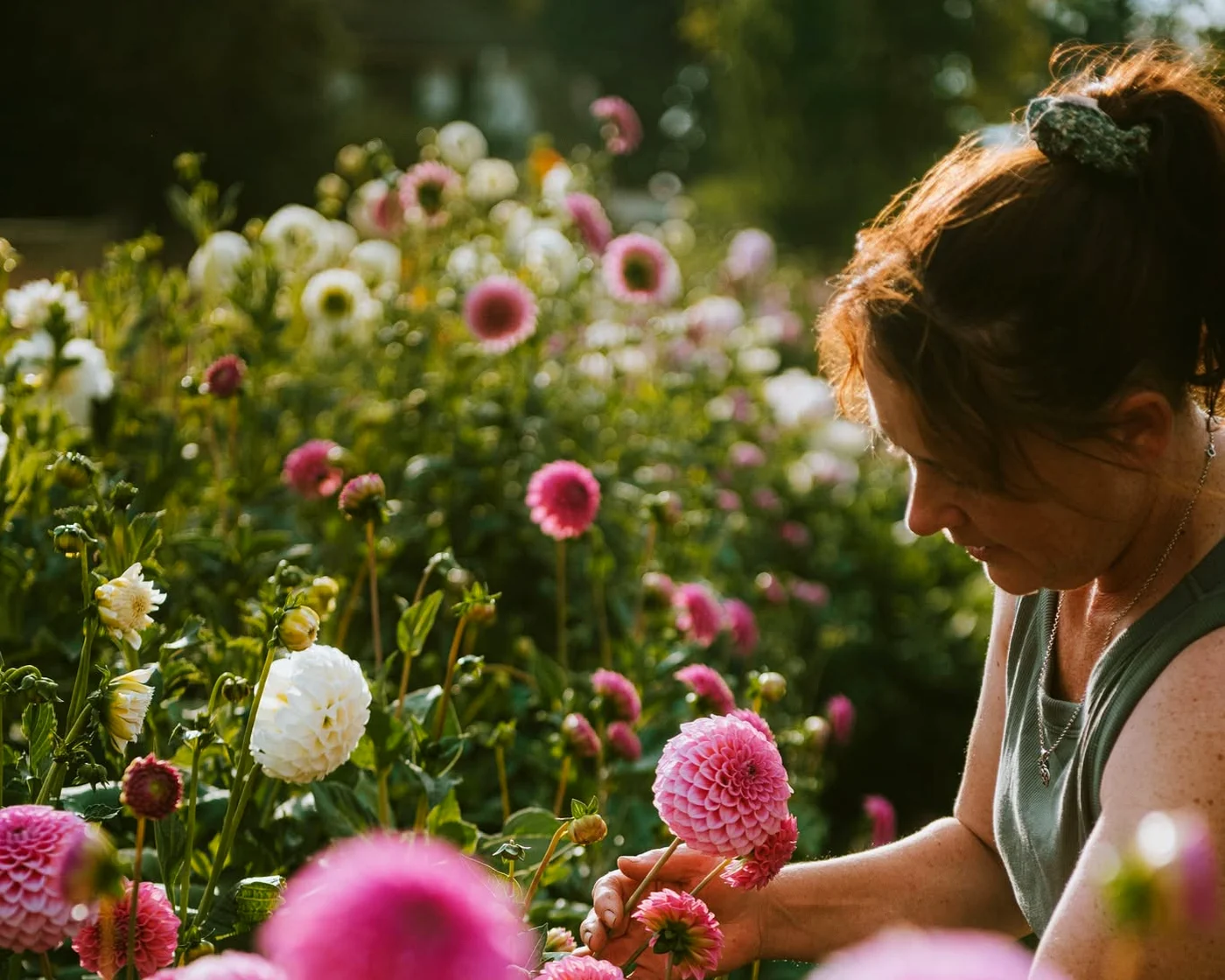
The largest dahlia job of the year arrives when there are no flowers to admire.
In winter, Amber Rhodes digs and divides the tubers at Blooms on the Hill. The task is massive, repetitive and one she openly dreads. Every tuber in her hands holds a decision about the next season: what to keep, what to divide and what deserves another place on the hill.
In 2024, the farm held more than 1,800 dahlia plants. That number promised abundance when the flowers opened. It also multiplied the work hidden beneath them: lifting, separating, labelling, storing, planting, supporting and watching each plant through the year.
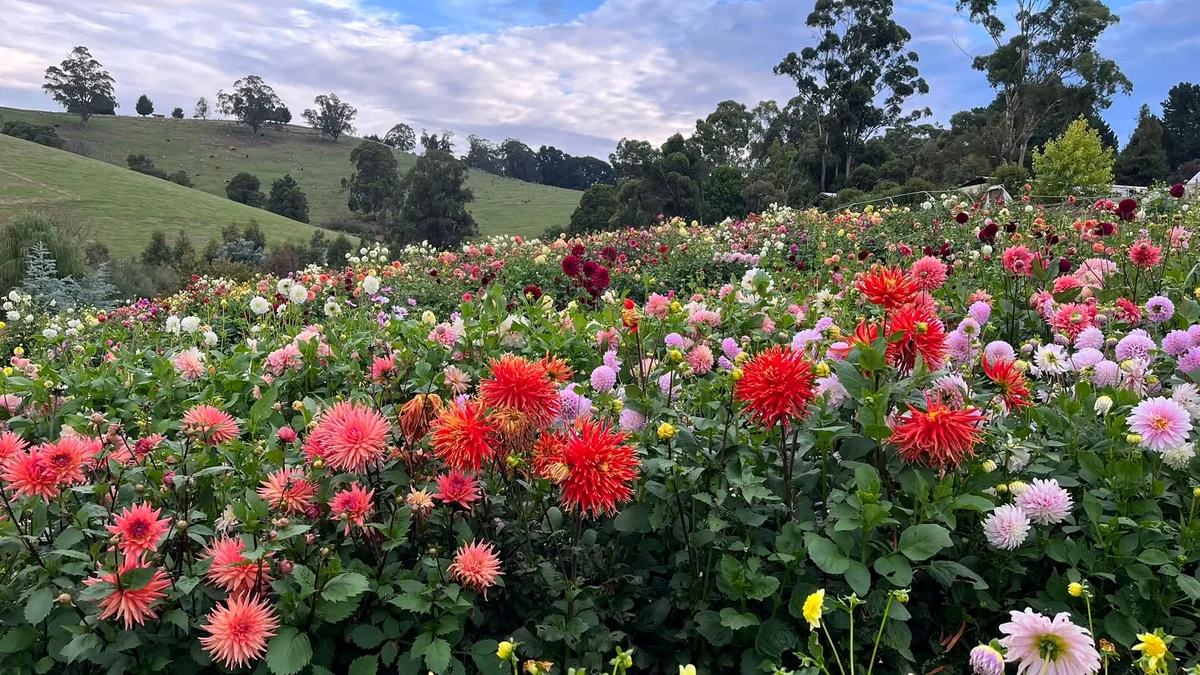
Blooms on the Hill began with an image of someone standing among buckets of dahlias. Amber wanted to grow them herself. The plants produced more flowers than she could use, so she began making bouquets. Colour first drew her towards the flowers; sharing them gave the growing a wider purpose.
Amber’s studies have included writing and photography, agriculture and floristry. Agriculture helps her understand the plant. Floristry gives the cut flower form. Writing and photography allow the life of the farm to reach people beyond the hill.
Amber waits until mid to late October to plant because frost remains a risk and the soil needs warmth. Heavy rain can rot tubers before they establish. The calendar offers guidance, while the longer forecast and signs from the ground shape the final decision.
Growing plants need support, and varieties reveal their different forms and strengths. Wedding palettes create demand for blush, peach, pale pink and neutral tones. Couples planning February and March celebrations may imagine dahlias in their day; Amber has to bring those colours to readiness at the same time as a date that cannot move.
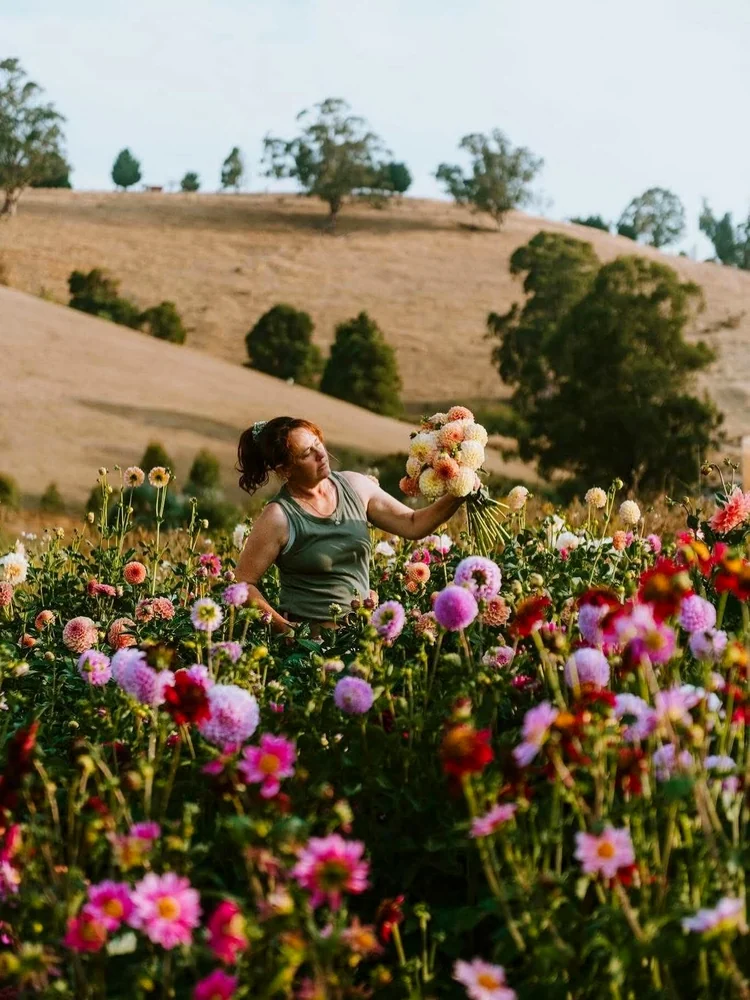
A bouquet held for an afternoon may have occupied Amber’s attention for most of a year. Its softness depends on winter labour, spring judgement and weather no grower can command.
Amber teaches people how flowers are grown, harvested and arranged. In one dried-flower workshop, twelve participants began with the same materials and produced twelve different wreaths.
Technique gave them a way to start. Each person then made choices about balance, colour, density and shape. They carried home an object marked by their own hands, along with a closer understanding of the work behind the material.
Through Power of Colour, winter holds colour inside a stored tuber. In spring, Amber places that potential back into the soil. In summer, it opens across the hill and moves into bouquets, weddings, photographs and workshops. People encounter the colour at different stages, while Amber travels with it through them all.
Productive land supports creative work, regional celebrations and shared learning. In this Garden City relationship, the farm connects rural knowledge with the people who carry its flowers into homes and important days. Workshops bring them closer to the practice and give the knowledge another season in someone else’s hands.
The dahlias return because Amber returns first. She kneels in the winter ground, lifts what has disappeared beneath it and begins deciding how next summer will look.

Power of Colour
Power of Colour Awards
Blooms on the Hill shows how colour begins in winter decisions, moves through a working flower farm and reaches people through bouquets, celebrations and shared learning. The Power of Colour Awards celebrate the wider regional relationship between gardens, growing, colour and place. This is Eden of the East Foundation’s editorial connection, not evidence that the business participates in the Awards.
Explore the Power of Colour AwardsSources
- Blooms on the Hill — official About and Contact pages Accessed 2026-08-28.
- Latrobe City — Fresh blooms straight from the farm Accessed 2026-08-31.
- Blooms on the Hill — Flowery Chat Accessed 2026-08-31.