
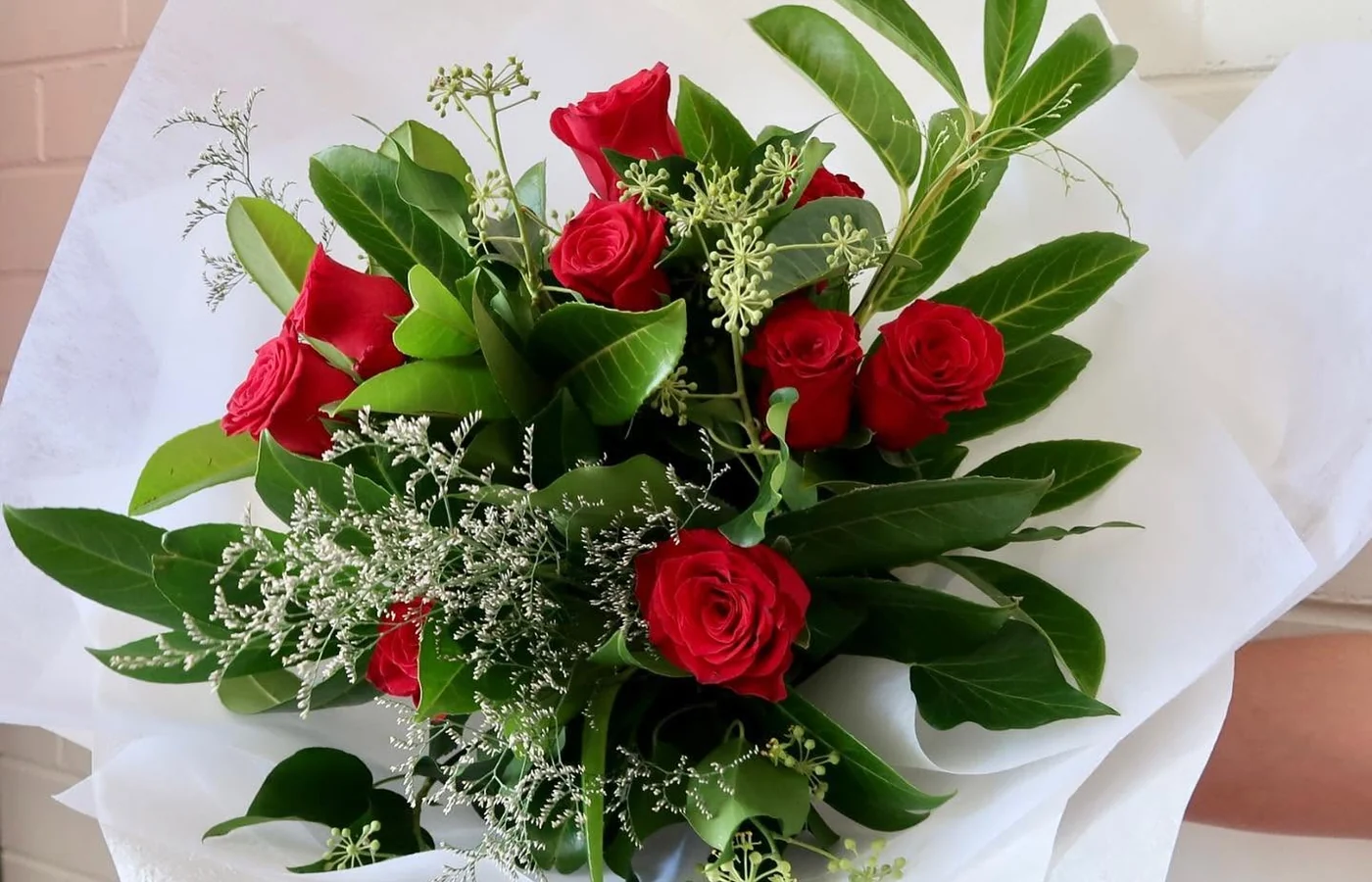
The wedding venue changed at the last minute.
The date did not.
The flowers still had to be ready, and the plans made for one setting suddenly had to belong somewhere else. The couple’s chosen palette, the personal flowers, the ceremony structures and the reception details all had to arrive together in a room they had not been designed to meet.
Studio Grace Floral Design adapted the floral work to the new venue so the bouquet, ceremony and reception still felt part of one day.
A bouquet moves with the person carrying it. Ceremony flowers have a more complicated relationship with place. An arrangement designed for an arbour responds to its height, width, background and the distance from which guests will see it. Table flowers sit among glassware, place settings and conversation. Change the venue and the florist must reconsider scale, structure, transport and installation while protecting the idea the couple chose.
Studio Grace has carried a single floral idea through bouquets and bridesmaid flowers, buttonholes and corsages, flowers worn in the hair, cake decoration, arbours, ceremony arrangements and table centres. Repeated colour, form and foliage help people experience those separate pieces as one design.
The bouquet is experienced at close range and seen from many angles. A buttonhole sits naturally on a jacket and lasts through greetings, photographs and movement. A hair piece belongs beside a face and remains secure. Cake flowers work against an edible surface. An arbour holds its presence across a room or landscape. Table arrangements contribute colour while leaving space for people to see one another.
Continuity comes from selected details carried through the day: a dominant colour, a smaller accent, a particular flower form, a line of foliage or a balance between softness and structure. Some elements appear once. Others return just often enough to make the spaces feel related.
A person may never name the repeated shade or recognise the flower that has moved from bouquet to table. They experience the room, the ceremony and the people as parts of the same occasion.
Flowers are sourced for a fixed date and conditioned so they are ready at the right moment. Personal pieces are made to be worn or carried. Larger structures require mechanics, transport and installation. Cake, ceremony and reception flowers depend on access to spaces shared with other suppliers. When a location changes, the entire sequence has to change with it.
Florists work alongside venues, celebrants, photographers, bakers, stylists and the people setting the room. Each contributes a distinct part of the gathering. The flowers connect their work through colour carried across the day.
Through Power of Colour, a palette begins as a choice between people, appears in the flowers held closest to them, rises into the ceremony setting and returns where family and friends gather. Colour connects private meaning with shared experience.
Local skill and collaboration bring nature into a regional celebration. In this Garden City relationship, flowers change how a place feels and help people recognise it as the setting of an important day in their lives.
The room changed. The route changed. The flowers still carried the couple’s idea from the promise they made into the gathering that followed.
Power of Colour
Power of Colour Awards
Studio Grace's wedding presentation shows how one palette can connect personal flowers, ceremony structures and reception details. The Power of Colour Awards celebrate the wider regional relationship between gardens, colour, making and shared place. This is Eden of the East Foundation's editorial connection, not evidence that the business participates in the Awards.
Explore the Power of Colour AwardsSources
- Studio Grace Floral Design — official website Accessed 2026-08-29.
- Studio Grace Floral Design — delivery Accessed 2026-08-29.
- ABN Lookup — Studio Grace Floral Design Accessed 2026-08-29.
- Studio Grace Floral Design — operator-published client accounts Accessed 2026-08-31.