
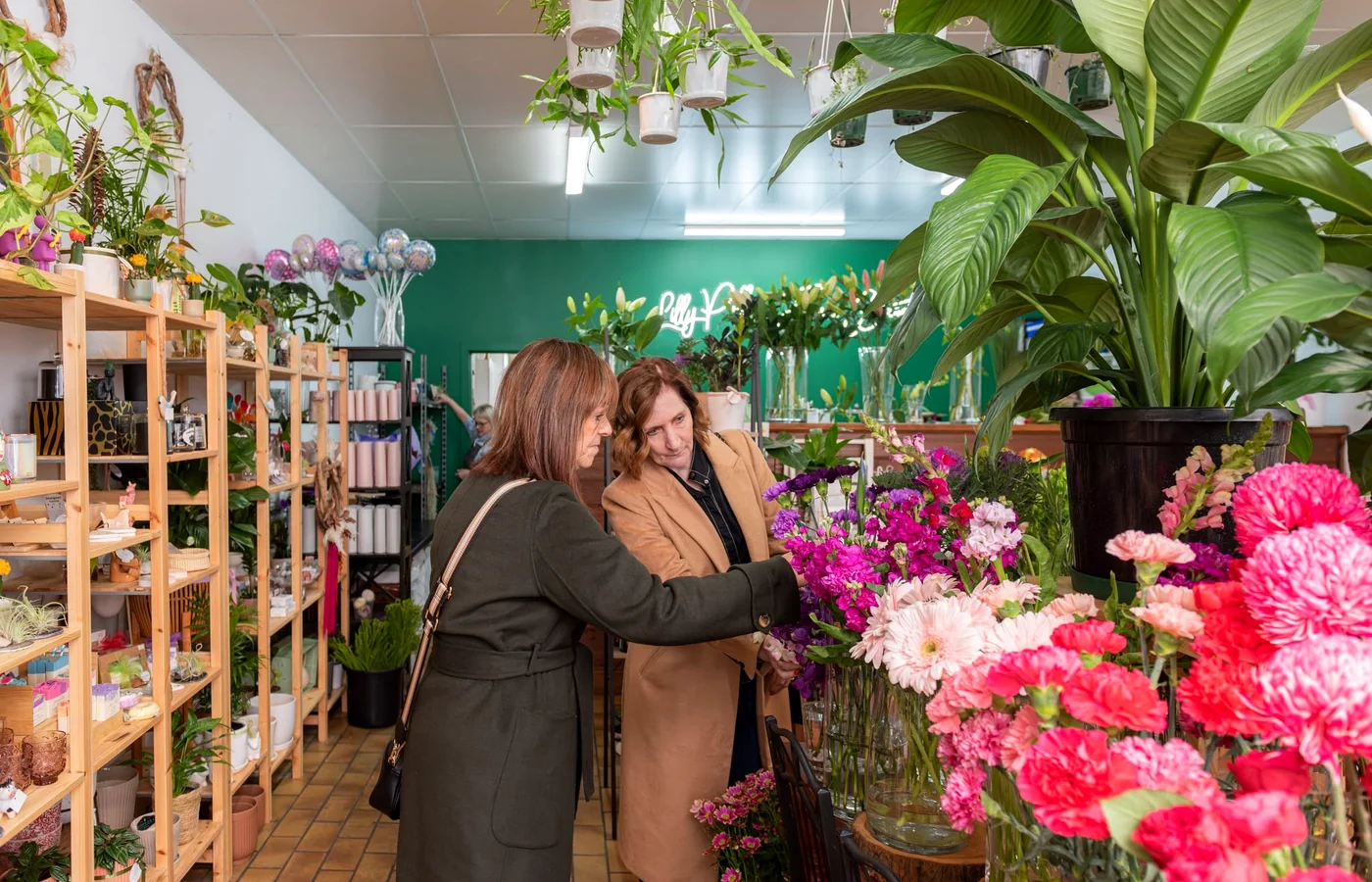
In February 2021, Lilly Pilly Flower Boutique was filled with flowers ordered for one of the most personal days in a florist’s year.
The team had been preparing since before Christmas. Five times the usual number of roses and four times the usual volume of other flowers had been ordered for Valentine’s Day. Then Victoria entered a sudden lockdown. Customers could no longer walk through the door.
Flowers cannot wait on a shelf for the next convenient trading week. They continue to open. Their stems keep taking up water. Their useful life shortens whether the door is open or closed. Stock chosen for a particular weekend can become a loss within days.
The Lilly Pilly team shifted to phone orders, home delivery and contactless collection. Each flower had been chosen for a person and a moment that still mattered, even when the shopfront closed.
At least twice a week, the Lilly Pilly team travels to Melbourne to select flowers directly from growers. Local flowers arrive through the week as well, alongside material from the Melbourne flower markets. Before the shop has a palette, the buyers read what is actually available: which stems are strong, which flowers are ready, which colours can work together and which varieties are worth carrying back to Moe.
A florist selects before knowing the people whose stories will arrive at the counter: the birthday that will need brightness, the family that will need gentleness, the person hoping to make gratitude visible.
At 12 Moore Street, someone arrives with a name, a date or a feeling they want the flowers to carry. The florist pairs that request with the flowers available that week. Customers can choose individual stems or ask for a bouquet, table centre or flowers for a cake. Seasonal substitution becomes part of the service when a particular flower is unavailable.
One week may offer the exact flower someone imagined. Another may ask the florist to find the same warmth in a different variety, or to use form and foliage to carry the idea. The florist decides what can change without losing the intention of the gift.
Fresh flowers share the shop with plants and work by other makers, including locally made candles, biscuits and glass jewellery. The counter becomes a meeting point for regional production: things grown, poured, baked or made by hand are gathered around the ways people acknowledge one another.
Colour can announce celebration, bring warmth into a difficult week or make gratitude visible. The occasion gives the colour its meaning. Through Power of Colour, the florist gives that meaning physical form in flowers grown, chosen and arranged for the moment.
Flowers move through the hands of growers, buyers, makers and a town-centre florist before entering homes, workplaces and gatherings. In Moe’s Garden City life, nature becomes part of birthdays, farewells, congratulations and ordinary acts of kindness.
During the Valentine’s weekend of 2021, a room full of flowers had already been ordered for people who could no longer enter the shop. The team found other ways to bring those flowers to them.
Someone in Moe opens a door, receives a bouquet and knows that another person was thinking of them.
Power of Colour
Power of Colour Awards
Lilly Pilly's published account connects changing seasonal flowers, locally grown material and locally made gifts with the everyday life of Moe. The Power of Colour Awards celebrate that wider regional relationship between gardens, making, colour and shared place. This is Eden of the East Foundation's editorial connection, not evidence that the business participates in the Awards.
Explore the Power of Colour AwardsSources
- Lilly Pilly Flower Boutique — official home Accessed 2026-08-28.
- Lilly Pilly Flower Boutique — FAQ and Contact Accessed 2026-08-31.