

The flowering season begins among bare stems.
Volunteers at Morwell Centenary Rose Garden prune, weed, plan and maintain thousands of plants across the public collection. They decide where to cut, what to retain and how to support the growth that will appear months later. At this stage, the next display exists as horticultural judgement and the willingness to return.
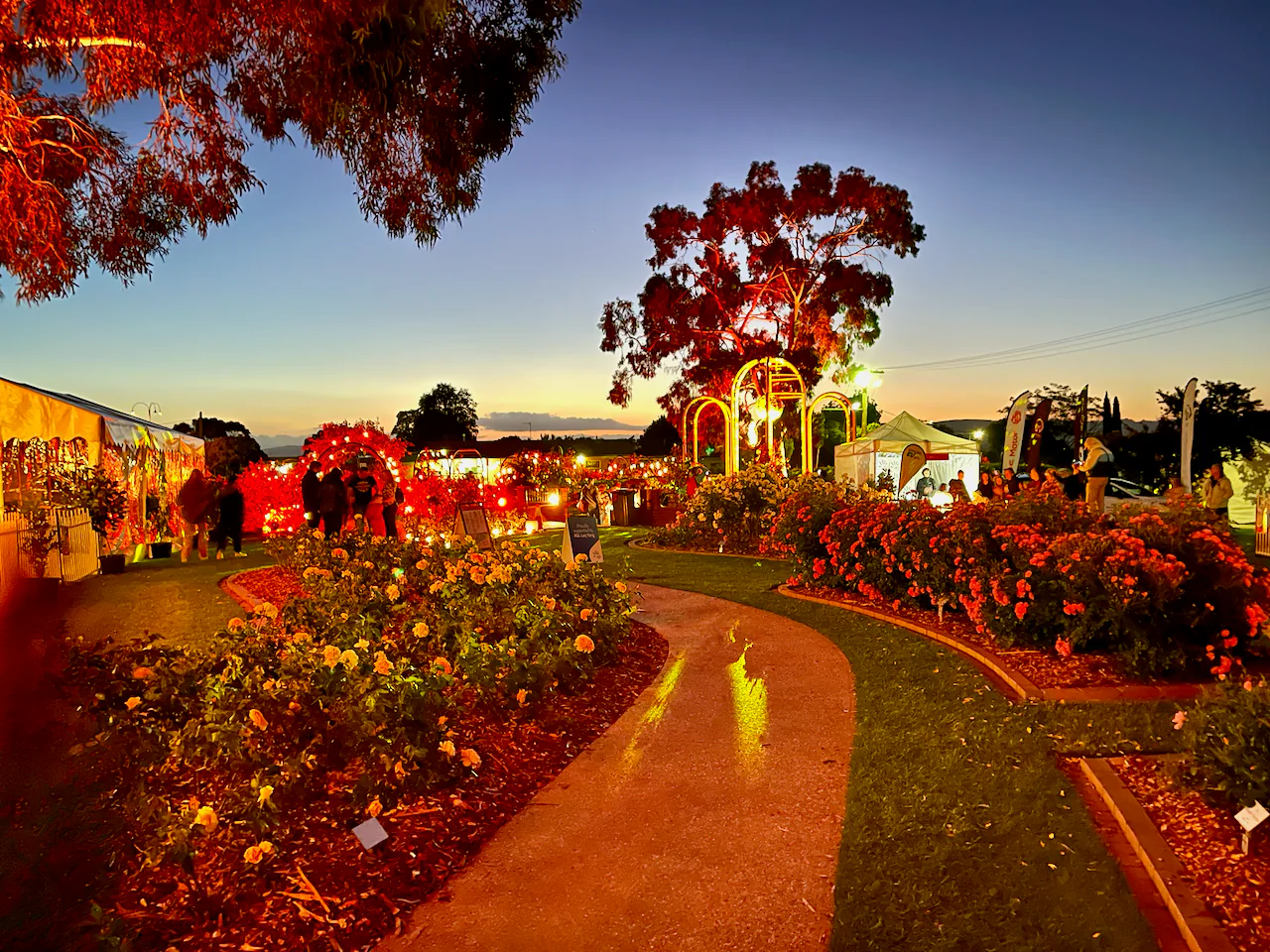
Shoots, leaves and buds gradually change the garden. By flowering time, visitors move between beds, paths, arches and structures at Morwell's western entrance. Australian and New Zealand-bred roses grow alongside varieties from elsewhere in the world, each plant carrying its own colour, form and breeding history.
The garden opened in 1992 to mark Morwell's centenary. Community members transformed the reserve into a major rose collection, then faced the larger challenge of sustaining it. Volunteers carried knowledge from one season to the next, while sponsors and Latrobe City Council supported the work and new beds and features extended the garden.
In 2009, the World Federation of Rose Societies presented Morwell Centenary Rose Garden with an Award of Garden Excellence. At the time, it was the second Australian rose garden to receive the recognition. The award acknowledged a collection that had reached an international standard through years of local attention.
The volunteers had also grown something the award could not count. At the garden's twentieth anniversary, founding figure Del Matthews spoke about the friendships formed through the work and the care members gave one another.
Her account reveals the human structure beneath the horticultural one. A rose collection needs selection, feeding, pruning, monitoring, labels and maintained paths. A volunteer organisation needs people who share knowledge, divide responsibilities, welcome contributors and notice when someone needs support.
The garden gives different skills and histories common ground. Its beauty belongs to individual roses, but the collection makes each one part of a larger experience. The same is true of the volunteers: the result becomes public because separate contributions are sustained together.
At flowering time, beds fill with colour and visitors move through the abundance. That is the celebration. The deeper achievement began earlier, when tools met bare stems and volunteers chose to return for another season—and for one another.
The Evidence
- A13-S01Official garden site
- A13-S02Latrobe City Council, 25th anniversary
- A13-S03World Federation of Rose Societies, Award of Garden Excellence
- A13-S04National Rose Society of Australia award listing
- A13-S05Latrobe Valley Express, “Twenty years of roses and friendship”
- A13-S06Latrobe City destination listing
Sources reviewed 15 August 2026.