

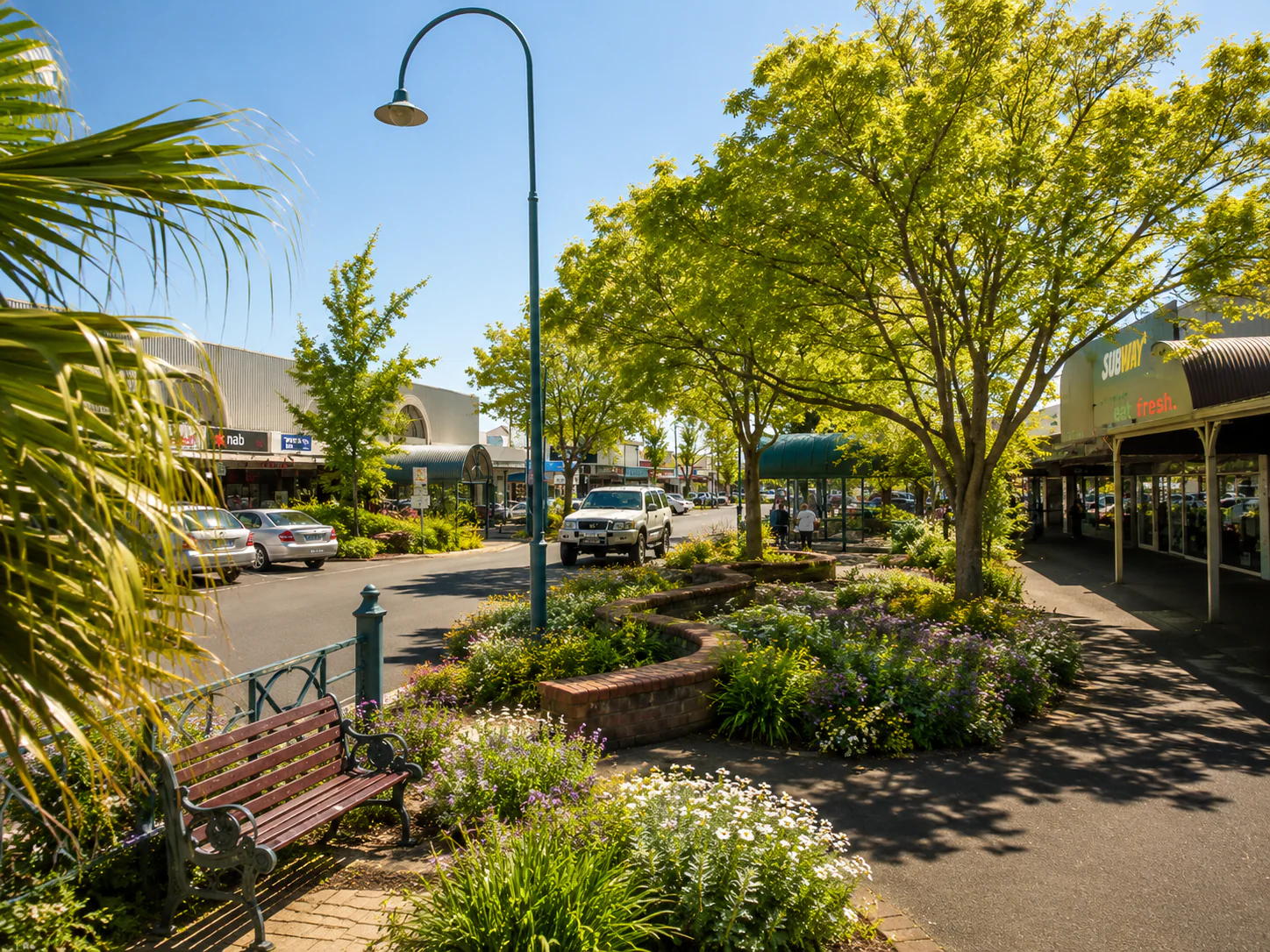
A garden meets the wider community at its edge. Leaves rise into the view from a footpath. Flowers mark a season for people who pass each day. A tree planted within private ground can give shade beyond the fence. The gardener makes particular choices, and the street receives part of the result.
This relationship has deep roots in Latrobe's story. Ebenezer Howard connected homes, work, nature, food and public life within his garden-city proposal. Yallourn's planners adapted selected principles for a new electricity town, then gardeners and residents made its parks, streets, sporting grounds and home blocks into living places.
Hugh Linaker shaped the early landscape. Jock Lawson and his teams propagated plants, maintained public gardens and cared for sporting surfaces and firebreaks. Households grew food and flowers. The horticultural society brought the results together through shows, practical support and recognition.
The town disappeared from the ground, but the work established a regional inheritance: surroundings enter everyday life through people who plan, cultivate and return.
That inheritance now appears in different forms. Community effort developed Moe Botanic Gardens as a place for planting, play and movement. Volunteers at Morwell Centenary Rose Garden maintain an internationally recognised collection and the friendships formed through the work. Across Latrobe, households and horticultural workers continue to shape private and public ground.
Each garden answers different conditions. A formal rose bed, habitat garden, vegetable plot, rural landscape, balcony or planted frontage carries its own purpose and scale. Power of Colour gives those contributions a shared frame: “Power of Colour celebrates the joyous union of society and nature, individual and community, and the beauty of living well.”
The union becomes visible when separate acts of care are seen together. Recognition can direct attention towards the skill behind a garden, the knowledge shared across a fence and the contribution a private planting makes to a street. An annual record can preserve names, images and stories as seasons and households change.
The Yallourn Botanic Garden provides an opportunity for a central place for horticulture and interpretation. The distributed gardens remain the source of the larger picture because they keep participation inside the places where people already live and grow.
The history began with a question about how individual life and community life might strengthen one another. Power of Colour offers a practical answer at the scale of cultivation.
At the boundary, the garden remains itself. Beyond the boundary, it becomes part of the street. Across Latrobe, every garden adds to the whole.
The Evidence
- A15-S01Power of Colour Brand Foundation v1.1
- A15-S02Power of Colour Festival Development Reference
- A15-S03Prototype canonical record
- A15-S04Collection historical research, articles 01–14
- A15-S05Eden Story Writing Standard for final voice and social adaptation